
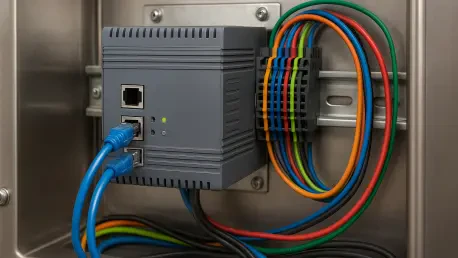
Digital transformation provides significant operational value but requires a shift from simple port-blocking to semantic protocol understanding. The myth of the isolated factory floor has been shattered by the relentless march of industrial networking, where the once-impenetrable air-gap exists

Tracing the logic of a multi-step agent through raw application logs is often a manual and error-prone process that slows down the iteration cycle. As the complexity of agentic systems increases, the gap between simple model output and the intricate chain of reasoning behind it grows wider.

A technical post-mortem of a stalled CI/CD pipeline illustrates that headless environments require tools to be explicitly designed for non-interactivity rather than forced through piped terminal inputs. The increasing reliance on automated schema synchronization tools, while beneficial for rapid

The addition of a Search Term Landing Page Report helps practitioners eliminate the arduous manual cross-referencing previously required to track the customer journey. Digital marketing landscapes in 2026 demand a level of precision that black-box automation often struggles to deliver, making this

Profile card skeletons should utilize specific dimensions for avatars and bio lines to ensure the layout remains perfectly stable when real data loads. Modern user interfaces in 2026 demand an immediate visual response to interaction, even when the underlying data is still traversing the network.
While initial digital transformations focused on migration speed, mature organizations are now redirecting their efforts toward achieving heighted operational efficiency and financial control. The global landscape of information technology is undergoing a fundamental shift as organizations move