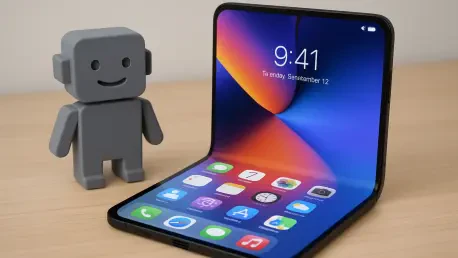

The mobile landscape changed significantly when folding screens moved from experimental prototypes to mainstream consumer electronics, and developers can now simulate and optimize applications for Apple’s new foldable iPhone Duo using a public beta of the Claude Code Desktop app for macOS. This integration addresses the logistical hurdle of developing for premium hardware that carries a nearly two-thousand-dollar price tag. By providing a virtual environment, Anthropic enables a broader range of creators to experiment with the unique dual-screen architecture of the latest iOS devices. The tool facilitates a seamless transition between various hardware states, ensuring that digital experiences remain fluid regardless of the physical configuration. This move represents a major shift in how AI-assisted coding tools interact with specific hardware targets. It allows engineers to focus on user experience and interface consistency rather than the limitations of physical testing.
Advanced Simulation Mechanisms
The primary technological breakthrough within this update involves the granular control offered over the virtual iPhone Duo hinge. Developers possess the ability to instruct the AI assistant to move the simulated device into specific physical states, ranging from a closed position to a fully extended tablet mode. What sets this apart is the precision of the hinge mechanics, as the software supports angles from 1 to 179 degrees. This level of detail is essential for verifying how an interface responds to the “tabletop” mode, where the screen is partially folded and resting on a flat surface. By testing these intermediate states, creators can ensure that critical UI elements like navigation headers or checkout prompts do not become lost in the fold. The system provides a real-time feedback loop where the visual output of the simulator is analyzed by the underlying model, allowing for a more intuitive understanding of design challenges within a responsive development environment.
Efficiency in the development workflow is further enhanced by Claude’s integration with Apple’s native “App Resizability” frameworks. The assistant automatically scans for layout malfunctions that occur when an application moves between the 5.4-inch outer display and the 7.6-inch inner screen. These transitions often result in awkward cropping or shifted navigation buttons in older software builds that were not originally designed for foldable technology. When a scaling issue is identified, the AI analyzes the project’s specific codebase and provides actionable suggestions for logic fixes within SwiftUI or UIKit environments. Furthermore, a dedicated Xcode plugin streamlines the process by supporting live previews and direct documentation searches. This creates a unified environment where a developer can identify a visual bug, receive a code-based solution, and implement the fix without ever leaving their primary workspace, reducing the total time required for repetitive testing.
Strategic Integration and Security
Lowering the financial barrier to entry is perhaps the most significant impact of this virtual support system. By removing the immediate necessity for a physical iPhone Duo during the initial build phase, smaller development studios can allocate their resources toward innovation rather than hardware procurement. However, utilizing these advanced features requires a specific technical stack, including a Mac running the latest desktop version of Claude and Xcode 27.1. It is important to note that while the simulator is highly sophisticated, it functions as a bridge rather than a total replacement for final hardware validation. Security also remains a paramount consideration for teams using this beta tool. Because the AI processes screenshots of the active simulator to identify bugs, developers must maintain a clean testing environment. Avoiding the use of sensitive personal accounts during these sessions ensures that intellectual property and data remain protected while leveraging visual analysis.
The integration of Claude Code into the foldable ecosystem marked a turning point for adaptive software design. Developers who successfully navigated this transition focused on building highly responsive layouts that anticipated user needs across multiple form factors. As the industry looked toward the period from 2026 to 2028, the emphasis shifted from basic compatibility to the creation of unique dual-screen features that maximized the 7.6-inch canvas. Those who adopted early virtual testing protocols reduced their time-to-market and avoided the pitfalls of rigid interface designs. Moving forward, the most effective strategy was a hybrid approach that combined AI-driven simulation for rapid prototyping with physical device testing for final quality assurance. This ensured that applications were not only functional but also performed optimally under real-world conditions. Ultimately, these virtual tools empowered a new generation of software that fully embraced the flexibility of the foldable era.