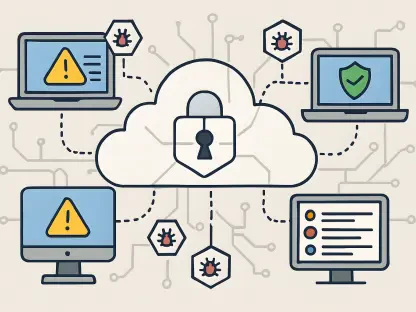

Living off the land strategies represent a survivalist approach to hacking where the environment’s own resources sustain the intrusion throughout its lifecycle. This methodology fundamentally alters the traditional dynamic of cybersecurity, shifting the focus away from external malicious files and toward the internal misuse of legitimate system components. In the current landscape of 2026, the reliance on signature-based detection has reached its functional limit, as sophisticated threat actors no longer need to develop custom viruses to compromise a network. Instead, they exploit the highly privileged administrative tools that are already pre-installed on every workstation and server, turning the very infrastructure meant for maintenance and security into a weapon for subversion. This malwareless paradigm allows attackers to bypass perimeter defenses with ease, as their activities often appear identical to those of a legitimate system administrator. By blending in with the daily noise of network traffic and administrative tasks, these intruders can maintain persistence for extended periods, exfiltrating sensitive data or moving laterally across departments without ever leaving a footprint on the disk. Consequently, the cybersecurity industry has been forced to abandon the “bunker” mentality of the past in favor of a more nuanced, behavior-oriented defense strategy that prioritizes context over content.
Understanding the Mechanics: The Malwareless Intrusion
The term “Living off the Land” is not merely a technical descriptor but a strategic metaphor borrowed from the world of survivalism. In a wilderness setting, living off the land involves sustaining one’s life through the natural resources found in the immediate environment rather than relying on brought supplies. In a digital environment, this translates to an attacker arriving at a target network “empty-handed,” without a payload of specialized malware that could be intercepted at the gateway. Once initial access is gained—often through a simple phishing link or a stolen credential—the intruder begins to “harvest” the utilities provided by the operating system itself. These preexisting tools are used to perform reconnaissance, escalate privileges, and eventually achieve the final objective of the mission. Because these tools are native to the environment, they do not require installation, meaning there is no new software for a security scanner to flag as suspicious or unrecognized. This method effectively turns the victim’s own investment in powerful management software into a liability that facilitates the attacker’s progression.
To categorize these utilities, security researchers often refer to them as LOLBins (Living off the Land Binaries) and LOLBas (Living off the Land Binaries and Scripts). These include standard administrative files, libraries, and script interpreters that are essential for the daily operations of any enterprise. The inherent danger lies in the fact that these tools are almost always digitally signed by trusted vendors like Microsoft, Apple, or various Linux distribution maintainers. Because they are signed and trusted, they are frequently excluded from the most rigorous monitoring policies to prevent system performance degradation or administrative friction. IT teams rely on these tools to push updates, manage remote servers, and troubleshoot user issues, making them omnipresent in the background of any large network. An attacker leveraging these tools is essentially hiding in plain sight, using the same “keys to the kingdom” that the authorized guardians use to keep the network running. This creates a massive visibility gap where the tool being used is legitimate, but the intent behind its activation is entirely malicious.
Targeted Tools: The Arsenal Within the Operating System
PowerShell and Windows Management Instrumentation (WMI) stand as the most prominent examples of utilities co-opted for Living off the Land maneuvers. PowerShell is a task automation and configuration management framework that provides an incredibly versatile command-line shell and scripting language. For an intruder, its most valuable feature is the ability to execute code directly in a computer’s random-access memory (RAM) without ever writing a file to the physical storage drive. This fileless execution is a nightmare for traditional security tools that focus on scanning the hard drive for malicious code. Similarly, WMI is a set of specifications for consolidating the management of devices and applications in a network. In the hands of a threat actor, WMI becomes a powerful vehicle for lateral movement. By issuing remote commands through WMI, an attacker can leap from one machine to another across a global enterprise, all while appearing to be a routine administrative query or a scheduled system update. These tools provide the high-level permissions and network access needed to dismantle security configurations from the inside out.
The scope of these attacks is not limited to high-level scripting engines; even seemingly mundane system utilities can be repurposed for malicious ends. Certutil, a command-line program originally designed to display and configure certificate authority information, is frequently misused to download files from remote servers, acting as a stealthy downloader for secondary payloads. The Background Intelligent Transfer Service (BITS), which usually handles the quiet delivery of system updates in the background, can be manipulated to exfiltrate sensitive data without alerting the user or the network monitoring team. This vulnerability extends into the Linux and Unix domains as well, where ubiquitous tools like bash, ssh, curl, and wget are leveraged to establish persistent remote access or move data to external repositories. Because these programs are fundamental to the operation of the modern internet and professional server environments, their execution is rarely considered an immediate cause for alarm. The ubiquity of these tools across different platforms ensures that the strategy remains viable regardless of whether the target is a localized office or a sprawling cloud-based infrastructure.
The Failure of Legacy Defense: Why Signatures Are Obsolete
Traditional antivirus and perimeter security solutions have long relied on a signature-based detection model, which functions much like a digital “most wanted” list. When a file enters the system, the security software checks its unique hash or code patterns against a database of known threats. If a match is found, the file is blocked. However, this methodology is completely bypassed by the strategy of using native tools. Since the executable file for a tool like PowerShell or Certutil is legitimate and has not been altered, its signature remains “clean.” There is no malicious file for the scanner to catch because the attacker is using a program that the security software has already been told to trust. The problem is no longer the binary itself, but rather the specific command-line arguments and the context in which it is being used. This shift renders static, file-centric defenses nearly useless, as they cannot distinguish between a system administrator running a script to fix a bug and an attacker running a script to steal a database.
Furthermore, these attacks take advantage of the sheer volume of legitimate activity in a modern corporate network. In a large organization, administrative scripts and management utilities may be executed tens of thousands of times every hour as part of standard IT operations. This creates an environment where a single malicious command is effectively a needle in a massive haystack of legitimate traffic. Monitoring every single instance of a native tool being used would generate such a high volume of false positive alerts that security teams would be overwhelmed and likely ignore the actual threat. Beyond the advantage of stealth, this strategy also offers a significant economic benefit to the attacker. Developing custom, sophisticated malware that can bypass modern defenses is an expensive and time-consuming process. By leveraging tools that are already pre-installed and battle-tested on the target system, threat actors significantly reduce their development costs and minimize the risk of their custom code being captured and analyzed by security researchers, which would render their expensive tools useless for future operations.
Evolving Security: From Detection to Behavioral Analysis
To effectively combat the rise of malwareless attacks, the cybersecurity industry has pivoted toward Endpoint Detection and Response (EDR) and Extended Detection and Response (XDR). These modern platforms move beyond the simple “is this file bad” question and instead focus on collecting vast amounts of telemetry data to monitor behavior. These systems track the entire chain of events surrounding a process, identifying not just what tool is running, but who started it and what it is trying to do. For example, if a standard office application like a word processor suddenly launches an administrative tool like PowerShell to make a network connection to an unknown IP address, an EDR system will flag this as a highly suspicious process relationship. By understanding the typical parent-child relationships of system processes, security teams can identify anomalies that suggest a legitimate tool is being hijacked. This focus on how a tool is used rather than what the tool is provides the visibility necessary to catch an intruder who is attempting to hide behind authorized software.
In addition to monitoring endpoint processes, organizations are increasingly deploying Security Information and Event Management (SIEM) systems integrated with User and Entity Behavior Analytics (UEBA). These technologies use machine learning algorithms to establish a baseline of normal behavior for every user and device on the network. This behavioral profiling is essential for detecting the subtle deviations that characterize an intrusion. For instance, if an accountant who typically only uses financial software and works during standard business hours suddenly begins using command-line utilities at three in the morning to access a server they have never touched before, the UEBA system will assign a high risk score to that activity. The individual actions—logging in and running a script—might be technically legitimate within the system’s rules, but the context reveals a high probability of credential theft or an insider threat. This shift toward context-aware security allows organizations to detect sophisticated attacks in real time, even when no known malicious code is present, by identifying the behavioral breadcrumbs left behind by an intruder.
Future-Proofing Networks: Implementing the Zero Trust Framework
A central pillar in the defense against such sophisticated maneuvers is the adoption of the Zero Trust methodology. This framework operates on the fundamental principle of “never trust, always verify,” regardless of whether a request originates from inside or outside the network perimeter. In a Zero Trust environment, the fact that a user has successfully logged in does not grant them a blanket license to use every utility on their machine. Access is continuously validated, and permissions are strictly limited through the principle of least privilege. This means that if a user’s job role does not require the use of powerful administrative tools like PowerShell, those tools are restricted or disabled for that specific user profile. By ensuring that only a small, verified group of administrators can access the land’s resources, an organization significantly shrinks the attack surface available to an intruder who has managed to compromise a standard employee’s workstation. This restrictive environment makes it much more difficult for an attacker to find the necessary tools to progress their mission.
Beyond privilege management, the hardening of the system environment itself is a critical step in a modern defense strategy. This involves the proactive disabling of unnecessary features, legacy protocols, and tools that are not essential for the organization’s core business functions. Hardening policies can include the implementation of Constrained Language Mode for scripting engines, which limits the types of commands that can be executed, or the use of application control policies that only allow a pre-approved list of binaries to run. When these configurations are combined with robust logging and continuous monitoring, the environment becomes much less hospitable to an attacker. Every attempt to use a restricted tool or bypass a policy creates a detectable event that can be immediately triaged by an automated response system. The goal of this approach is not to eliminate the use of powerful management tools, but to create a transparent and highly regulated ecosystem where every action is accounted for and any deviation from the established norm is met with a swift and decisive response.
Strategic Next Steps: Building a Resilient Digital Ecosystem
The historical progression of cyber defense reached a turning point when the industry realized that blocking malicious files was no longer sufficient to ensure network integrity. In response to the rise of malwareless strategies, experts moved toward a model where the legitimacy of a process was determined by its behavior and intent rather than its origin. Security administrators adopted comprehensive logging practices that captured every command-line argument and network connection, providing a forensic trail that was previously unavailable. This evolution allowed organizations to move from a reactive posture—cleaning up after an infection—to a proactive one, where intruders were identified while they were still in the reconnaissance phase. The transition required a significant investment in both technology and personnel training, as security analysts had to learn to interpret complex behavioral patterns rather than simply clicking “delete” on a virus alert. This fundamental shift in perspective became the foundation for the resilient digital architectures that define the current landscape of information security.
Moving forward, the successful mitigation of these threats depended on the integration of automated response capabilities and the continuous refinement of behavioral baselines. Organizations that successfully defended their assets were those that stopped viewing security as a static perimeter and instead treated it as an ongoing process of verification. They implemented automated playbooks that could instantly isolate a workstation the moment a suspicious process chain was detected, effectively neutralizing the threat before lateral movement could occur. Furthermore, the collaboration between IT and security departments became more tightly integrated, ensuring that the tools used for management were configured with security as the primary consideration. By turning the attacker’s reliance on native tools against them—using those same tools to log and report on every action—defenders reclaimed the home-field advantage. This strategic pivot ensured that while attackers might still attempt to live off the land, the land itself had become a vigilant and unforgiving environment that no longer offered a place for them to hide.