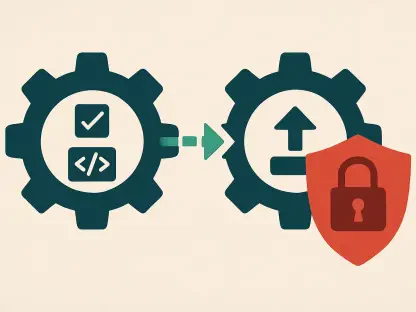
Achieving policy truth means ensuring that what is written in an employee handbook matches the technical rules programmed into a hybrid-cloud firewall. This alignment has become the primary challenge for cybersecurity leaders who must oversee increasingly fragmented infrastructures that span on-premises data centers, multiple public clouds, and edge computing nodes. As the complexity of digital estates increased throughout the decade, the industry moved away from manual spreadsheets and periodic reviews toward integrated, automated systems that manage security intent in real-time. Organizations now recognize that the term security policy management encompasses two distinct functional lanes: Network Security Policy Management (NSPM) and Written-Policy Lifecycle Management. The former focuses on the technical orchestration of firewall rules, security groups, and micro-segmentation, while the latter manages the creation, distribution, and attestation of formal governance documents. Bridging the gap between these two lanes is no longer a luxury but a requirement for maintaining a resilient security posture in a regulatory environment that demands continuous proof of compliance rather than static snapshots of security controls. By establishing a unified understanding of these disciplines, enterprises can better navigate a market saturated with tools that often claim to solve the same problems using vastly different methodologies and technological foundations.
Advanced Network Security Orchestration: Intent and Application Centricity
The shift toward orchestration over simple management has redefined how large-scale enterprises handle their firewall estates. Tufin stands at the forefront of this movement by providing a comprehensive “intent layer” that abstracts the technical complexities of multi-vendor environments. For a global enterprise managing thousands of devices, defining individual rules is no longer feasible. Tufin allows these organizations to set high-level segmentation goals, such as isolating development environments from production data, which the platform then translates into specific technical configurations across AWS, Azure, and legacy on-premises firewalls. While the implementation of such a robust platform requires significant operational maturity, the resulting ability to automate change requests safely is a critical advantage. By ensuring that every technical change is automatically checked against the central security policy before being pushed to production, the platform prevents the introduction of risky or non-compliant rules that could provide an entry point for attackers or lead to costly regulatory failures.
Building on the concept of high-level management, AlgoSec introduces a specialized philosophy that focuses on the application rather than the network address. In the modern business environment, security teams are often disconnected from the business units they protect, leading to a situation where firewall rules remain in place long after an application has been decommissioned. AlgoSec addresses this by mapping network connectivity flows directly to the business applications they support. This application-centric view allows for a much more intuitive understanding of the network, making it possible to identify exactly which rules are necessary for a specific service to function. When a business service is retired, the tool identifies all associated rules across the entire infrastructure, allowing for their safe removal. This prevents the “rule bloat” that characterizes many aging networks and ensures that the attack surface is constantly minimized. This approach bridges the communication gap between technical security staff and business owners, ensuring that security decisions are always grounded in operational necessity.
Real-time visibility and the elimination of technical debt are the primary goals for organizations implementing FireMon. This platform is engineered to detect compliance drift the moment it occurs, providing a “live” audit of the network environment. In a high-velocity environment where changes occur daily, maintaining a clean rulebase is essential for both security and performance. FireMon excels at surfacing shadowed rules—those that are never reached because a preceding rule handles the traffic—and redundant rules that add unnecessary complexity to the firewall’s processing load. By providing detailed cleanup analytics, the system allows security teams to maintain a lean, efficient rulebase that is easier to manage and less prone to errors. Furthermore, for organizations that require deep visualization of their network risks, RedSeal offers an alternative by modeling the entire hybrid network topology to identify potential attack paths. Rather than just managing rules, it simulates how an attacker could move through the network, helping teams understand the potential “blast radius” of a vulnerability and prioritize remediation efforts based on actual exposure.
Strategic Selection and Maturity: Mid-Market and Vendor Reliability
Not every organization requires the heavy-duty orchestration capabilities of an enterprise-grade platform, which has led to the rise of specialized “value-tier” solutions. ManageEngine Firewall Analyzer serves this mid-market segment by providing the essential building blocks of security policy management without the high cost and complexity of full-scale automation engines. It focuses on the most common pain points: rule cleanup, configuration audits, and basic compliance reporting. For a company that needs to move away from manual tracking but does not have the resources to manage a platform like Tufin, this tool offers a low operational bar and rapid deployment. It provides the visibility needed to satisfy auditors and improve the security posture by identifying risky rules and tracking changes, making it an ideal choice for organizations at the middle stage of their security maturity. This tier of the market demonstrates that effective policy management is as much about finding the right fit for organizational capacity as it is about technical features.
The process of selecting a security policy tool also involves a significant degree of corporate due diligence, as the stability of the vendor is just as critical as the software itself. A notable example in the current landscape involves Skybox Security, a longtime leader in the space that has faced questions regarding its corporate status and long-term roadmap. Industry analysts currently advise a cautious approach, recommending that potential buyers verify the vendor’s financial stability and support commitments before signing multi-year contracts. This trend highlights a broader shift in the 2026 procurement landscape, where the risk associated with the vendor’s business health is treated with the same scrutiny as the technical vulnerabilities the software is meant to manage. Organizations are increasingly looking for partners that can provide long-term stability, as the integration of a policy management tool into the enterprise architecture is a significant investment that cannot be easily reversed if a vendor fails or pivots their strategy unexpectedly.
Reliability also extends to how these tools handle the increasing complexity of cloud-native environments and the integration of micro-services. While traditional NSPM tools were built for the age of hardware firewalls, the market has split between those that have successfully adapted to the cloud and those that remain tethered to legacy architectures. The most effective solutions now treat a cloud security group or a container network policy with the same rigor as a physical firewall rule. This level of technical depth is necessary to prevent the “security silos” that occur when cloud teams and traditional network teams use different sets of tools and policies. By choosing a platform that provides a unified view across all environments, an organization can ensure that its security intent is enforced consistently, regardless of where the workload is running. This integration is the only way to achieve a holistic view of risk and maintain a truly resilient infrastructure in a world where the boundaries of the network are constantly shifting.
Governance and Document Lifecycle: The Path to Compliance
Moving into the “written-policy” lane, the focus shifts from technical rules to the governance frameworks that guide the entire organization. LogicGate Risk Cloud has emerged as a leader in this space by offering a flexible, no-code interface that empowers non-technical policy owners. In many enterprises, the process of drafting, reviewing, and approving security policies is a bureaucratic nightmare involving multiple departments and manual email chains. LogicGate automates this document lifecycle, allowing teams to build custom review cycles and exception workflows that match their specific organizational structure. Because it is a no-code platform, the people responsible for the policies—such as compliance officers or legal teams—can manage the system themselves without constant intervention from IT. This decentralization of policy management ensures that documents are kept up to date and that exceptions are tracked and remediated in a transparent manner, making the entire governance process more agile and responsive to changing business needs.
The burden of complying with multiple regulatory frameworks simultaneously has created a demand for tools that can map a single policy to various requirements. Hyperproof has become the standard-bearer for this “multi-certification” challenge, providing a centralized platform where one policy document can satisfy the requirements of SOC2, ISO 27001, HIPAA, and other international standards. This “map once, satisfy many” approach eliminates the redundant work that often plagues compliance teams during audit season. Instead of collecting the same piece of evidence for five different auditors, Hyperproof allows the team to link a single control to multiple frameworks, providing a clear audit trail that demonstrates compliance across the board. This efficiency is vital for modern companies that operate in multiple jurisdictions and must navigate a complex web of privacy and security regulations. By serving as a central source of truth for both policies and the evidence that proves their enforcement, the platform transforms compliance from a periodic scramble into a continuous, manageable process.
For organizations that are focused specifically on achieving certification for the first time or maintaining a lean compliance department, tools like Secureframe and ZenGRC offer specialized advantages. Secureframe provides a “turnkey” solution by offering a library of auditor-approved policy templates that can be customized to the organization’s needs, significantly reducing the time required to build a governance framework from scratch. Its integration with HRIS systems also allows for the automated tracking of employee policy acceptance, ensuring that every new hire has signed the required documents. On the other hand, ZenGRC appeals to teams that need a lean, efficient lifecycle platform without the heavy implementation requirements of traditional enterprise software. It focuses on the core tasks of version control and control mapping, providing the necessary oversight for the policy lifecycle while remaining accessible to smaller teams. Both platforms demonstrate that effective document management is about reducing the administrative friction associated with compliance, allowing the organization to focus on its core mission while maintaining a strong governance foundation.
Operationalizing Policy Truth: From Signatures to Enforcement
Netwrix provides a unique and increasingly essential bridge between the theoretical world of written policies and the practical world of technical enforcement. While most GRC platforms are satisfied when an employee clicks an “I accept” button on a policy document, Netwrix goes a step further by using its PolicyPak technology to actually enforce those settings on the user’s endpoint. If a corporate policy dictates that a specific browser configuration must be used or that certain applications are prohibited, Netwrix can push those settings directly to the device, ensuring that the policy is not just a signed document but a technical reality. This level of enforcement is becoming a standard requirement for auditors in 2026, as they move away from trusting “paper-based” compliance and toward demanding proof of technical enforcement. By closing the loop between what the employee agreed to and how their computer actually functions, Netwrix provides a level of security assurance that traditional document management tools simply cannot match.
Achieving a state of policy truth requires a strategic approach that begins with identifying the organization’s primary pain points before selecting a tool. Successful implementations often start with a pilot program that targets the “ugliest” and most complex part of the current environment, such as a legacy firewall rulebase or a particularly difficult compliance framework. By testing a tool against these high-friction areas, the organization can quickly determine if the platform is capable of handling its specific challenges and providing a measurable return on investment. Furthermore, the implementation of automation must be handled with care. Experts recommend using “safety gates” where the system simulates a change and identifies the risk before any rules are actually pushed to production. This period of risk simulation allows the security team to build trust in the tool’s logic and ensures that automated changes do not inadvertently create security gaps or cause network outages, which can be devastating to business continuity.
Successful organizations moved beyond simple software acquisition and instead prioritized deep integration between their technical and administrative silos. They treated the selection of security policy tools as a long-term commitment to organizational transparency and operational discipline. By implementing automated orchestration for their network environments and rigorous lifecycle management for their governance documents, these enterprises eliminated the discrepancies that previously existed between their stated intent and their technical reality. They recognized that a policy which existed only on paper was a liability, and they took the necessary steps to ensure that every rule and regulation was continuously audited and actively enforced. This proactive stance allowed them to respond to new threats and regulatory shifts with unprecedented speed, transforming their security posture from a reactive defensive measure into a dynamic pillar of organizational resilience. Through this focused effort, they achieved a state where policy truth was not just a goal, but a fundamental characteristic of their digital operations.