
The practice of killing processes by program name instead of specific process IDs poses a critical threat to multi-agent environments where one session might accidentally terminate a different session’s server. In the current landscape of 2026, the proliferation of AI-driven coding assistants has fundamentally altered how engineering teams interact with their local development environments. It is now commonplace for a single developer to run numerous concurrent sessions, often utilizing multiple git worktrees to handle different features or bug fixes simultaneously. However, these autonomous agents typically operate with a blind spot regarding the presence of other active processes. They assume exclusive control over the machine, resulting in a series of invisible conflicts that compromise data integrity and system stability. By sharing the same process table, network ports, and memory pool, these agents create a high-risk scenario where the actions of one session can silently disrupt the work of others. Addressing these risks requires a sophisticated understanding of how command-level collisions occur in shared environments.
1. Understanding Common Command Collisions
Risks of Mass Staging. One of the most frequent risks involves mass staging in shared directories, where agents use aggressive commands to prepare changes for version control. In a typical scenario, a session might be in the middle of a complex architectural refactor within the source directory, while a second session completes a minor bug fix in the same checkout. If the second session executes a command like git add -A followed by a commit, it unintentionally captures all the unvetted and unfinished work from the first session. This results in a polluted commit history where experimental code is merged into the main branch alongside legitimate fixes. Because git does not throw an error during this process, the developer may only discover the regression much later during a code review or a difficult git bisect operation. Such incidents highlight the danger of using “take everything” command forms in a shared working tree, as they fundamentally ignore the potential for concurrent activity from other automated or human-operated sessions.
Process and Port Interference. Beyond file system conflicts, generic process termination and network port overlaps create significant operational instability. An AI agent attempting to restart a local development server might use a command like pkill node or taskkill on Windows. While this effectively stops the target server, it also kills every other Node.js process on the machine, including those supporting other active worktrees and test runners. Similarly, when two sessions attempt to bind to the same network port, such as port 3000, the second session will either crash or silently switch to an alternative port. If the agent continues to run tests against the original port, it will be evaluating the code from the first session rather than its own, leading to false positives and deceptive test results. These collisions demonstrate how agents fail to recognize that the host environment is a shared ecosystem, where global commands have far-reaching consequences that extend well beyond the immediate task at hand.
Resource Scans and File Deletion. System-wide resource scans and destructive file operations further complicate the stability of shared development machines. When an agent attempts to diagnose disk usage by running heavy I/O commands like du -sh or launching parallel search processes, it can saturate the system’s throughput. This activity causes noticeable lag for every other active session, slowing down essential tasks such as git status checks, compilation steps, and unit test execution. Additionally, cleanup routines that involve removing directories or worktrees present a major risk if those resources are still in use by another session. An agent might delete a folder it perceives as redundant, only to leave another active agent in a broken state with missing dependencies or source files. These interactions demonstrate that the rationality of an individual agent does not necessarily translate to system-wide efficiency. Without specific coordination, the collective impact of multiple agents degrades the reliability of the entire environment.
2. Procedures for Implementing Guardrails
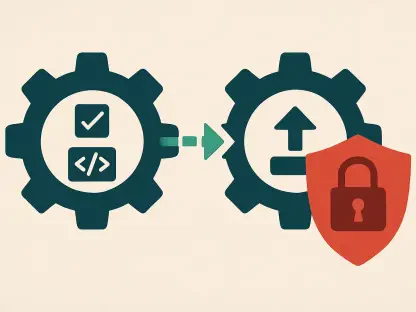
Integrating Hook Systems. To effectively mitigate these risks, a robust hook system can be integrated into the toolchain to intercept and evaluate commands before they reach the shell. By registering a PreToolUse hook for both Bash and PowerShell, the system can receive pending tool calls as structured JSON data for immediate inspection. The first line of defense in this architecture is a rapid filtering mechanism that checks the raw command text for known risky patterns or high-impact keywords. If a command does not match any predefined danger zones, it is allowed to execute instantly, ensuring that the guardrails do not introduce perceptible latency for standard operations. This initial screening process is critical for performance, as it avoids the overhead of deep system analysis for the vast majority of harmless commands. By focusing on identifying specific command shapes that are known to cause collisions, the system maintains a high level of responsiveness while providing a necessary layer of protection.
Contextual Evaluation and Feedback. When a potentially dangerous command is identified, the guardrail system performs a deep evaluation of the current system context. This analysis includes inspecting the process table to identify active IDs, checking network interfaces for occupied ports, and verifying the status of other concurrent sessions. If the system determines that the proposed command will likely interfere with another active session or cause the loss of uncommitted work, it blocks the execution. Instead of a generic error, the system returns a detailed explanation on the standard error stream. This feedback is crucial because it informs the AI agent of the specific reason for the denial and suggests a safer course of action. For example, instead of allowing a global kill command, the system might provide the agent with the exact ID of its own server. This guidance allows the model to correct its behavior in a single turn, transforming a potential conflict into a moment of coordination and helping the agent operate more effectively.
Command Unwrapping and Failure Policies. To ensure comprehensive protection, the guardrail system must be capable of identifying risky intents even when they are wrapped in multiple layers of shell commands. Agents frequently use wrappers like sudo, eval, or bash -c to execute their tasks, which can often bypass simple string-matching filters. A sophisticated parser is employed to recursively unwrap these commands, exposing the core executable and its arguments for inspection. This ensures that a pkill command remains visible even if it is embedded within a complex script. Furthermore, the system adheres to a fail-open policy to protect developer workflow continuity. In the event that a guardrail encounters an internal error or cannot access the necessary system data, it defaults to allowing the command to run. This design philosophy acknowledges that while protection is vital, the prevention of work stoppage is the higher priority. This balance ensures that the tool remains a reliable assistant rather than an unpredictable barrier.
3. Instructions for Analyzing History and Installing the Tool
Plugin Installation and Setup. Setting up these protective measures is a straightforward process that integrates directly with the existing agent interface. Users can initiate the installation by executing the command /plugin marketplace add dooly6276/claude-bulkhead, which adds the specialized bulkhead plugin to their local environment. Following this, the command /plugin install bulkhead@bulkhead is used to finalize the setup and activate the real-time guardrails for all future sessions. This installation enables the hooks that monitor Bash and PowerShell tool usage, providing an immediate safety net against accidental command collisions. The process is designed to be user-friendly, requiring no manual editing of configuration files or complex environment variables. By adopting this tool, developers can immediately harden their machines against the common risks associated with running multiple AI sessions in parallel. This proactive approach ensures that the environment remains stable and that the advantages of automation are not undermined by disruption.
Historical Scanning and Review. Once the protection system is active, it is highly valuable to conduct a retrospective scan of previous sessions to identify historical risks and hidden conflicts. The command /bulkhead:scan 30d allows users to replay their last month of transcripts against the current rule set, generating a detailed report on how many unsafe commands were attempted during that period. This analysis helps developers understand their specific risk profile and highlights the areas where agents are most likely to interfere with one another. For those working outside the interactive interface, a standard terminal command like bulkhead scan --since 14d provides a quick summary of recent collisions. The inclusion of a --json flag further enables the export of this data for automated analysis or integration into larger team-wide reporting tools. This historical perspective is essential for identifying recurring patterns of risky behavior and provides the empirical evidence needed to justify the implementation of more stringent guardrails.
Advancing System Stability. In review, the implementation of these safety measures provided a necessary framework for managing the complexities of a multi-agent development environment. The introduction of real-time hooks and historical scanning allowed engineering teams to identify and neutralize critical data risks before they resulted in permanent loss. Developers successfully moved away from an environment of silent failures toward a model of transparent and coordinated automation. By addressing the fundamental issues of process termination and shared directory management, the workspace became significantly more resilient and predictable. The transition to this more disciplined approach to AI session management secured the integrity of version control systems and stabilized the performance of local development hardware. Ultimately, these steps ensured that the rapid pace of software creation was maintained without sacrificing precision. The lessons learned from these session scans established a new standard for the safe deployment of autonomous coding agents.