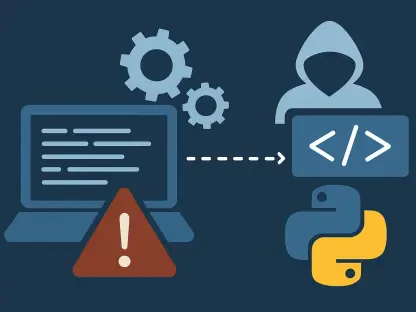

The rapid evolution of cyber threats has forced a fundamental shift in how organizations approach the security of their software development lifecycles, moving away from reactive patches toward autonomous, proactive defense mechanisms. In the current landscape of 2026, the emergence of offensive

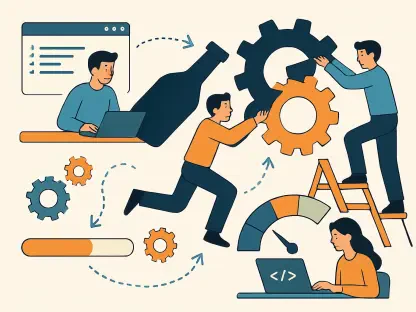
The traditional barrier between defining a business problem and deploying a production-ready solution has almost entirely dissolved as autonomous AI agents take over the heavy lifting of modern software engineering. It is no longer a matter of developers typing out every line of syntax; instead,
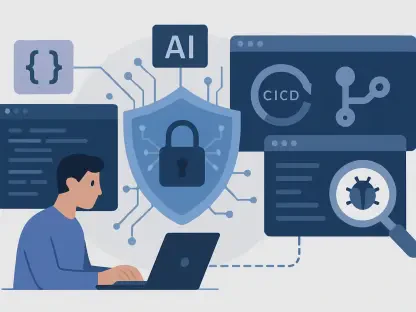
The traditional bottleneck of software delivery has long been the manual code review, where engineers spend hours scrutinizing pull requests for syntax errors and architectural flaws while development cycles grind to a halt. In the modern landscape of the Google Cloud Platform, this process has

Vijay Raina has spent more than 20 years shipping software, witnessing firsthand the rise and fall of countless technical trends. As an expert in enterprise SaaS technology and software architecture, he has transitioned from manual coding to a role where he spends much of his time overseeing AI
The assumption that upgrading internal tooling invariably results in higher efficiency has been challenged by recent developments in how autonomous systems handle complex software engineering tasks. While software engineering often operates on the foundational belief that superior tools lead to

The global energy landscape is currently undergoing a massive structural shift where traditional operational efficiency must be augmented by rapid computational intelligence to remain competitive. Repsol has successfully navigated this transition by evolving from its historical roots in oil and gas