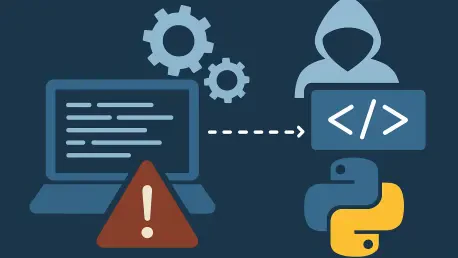

The sudden realization that a single unvalidated string can bypass every firewall in your infrastructure remains the most chilling nightmare for modern software engineers today. In 2026, the complexity of cloud-native Python applications has made identifying these vulnerabilities more difficult than ever. A developer might notice a suspicious function call, but understanding whether a user can actually trigger it requires navigating a labyrinth of variable reassignments and conditional logic. This is where the shift from simple pattern matching to sophisticated data flow analysis becomes a necessity for maintaining a secure production environment.
The transition toward automated tracing tools like rce-path has redefined the expectations for a standard security audit. By mapping the distance between an external request and a dangerous execution sink, teams can finally stop chasing false positives and start addressing legitimate threats. This process does not just find “bad code”; it builds a narrative of how data travels through an application. In the current landscape, having a tool that can provide evidence-based insights is the difference between a minor patch and a catastrophic breach.
Moving Beyond the Search for Dangerous Keywords
The simple discovery of an eval() or os.system() call in a Python codebase is rarely the end of a security review; it is only the beginning. In previous development cycles, security tools often stopped at identifying these keywords, leaving the heavy lifting of verification to human researchers. Determining whether a sink is truly exploitable requires a tedious manual investigation into the lineage of its arguments. Identifying a vulnerability hinges on whether an attacker can bridge the gap between a remote request and these execution sinks, a task that has grown increasingly complex as applications scale.
By automating the discovery of these data flows, developers can shift their focus from finding “bad words” to evaluating the actual reachability of dangerous code. This approach recognizes that an eval() statement using a hardcoded configuration string is fundamentally different from one using a direct URL parameter. The current objective for security engineers in 2026 is to minimize the noise generated by static analysis while maximizing the depth of the findings. This evolution ensures that the most critical paths receive immediate attention during the development lifecycle.
The Challenge of Manual Data Flow Analysis
Static analysis in Python is notoriously difficult due to the dynamic nature and flexible syntax of the language. When a scanner flags a suspicious function, a human reviewer must still account for variable assignments, string formatting, and conditional branching. These elements can obscure the path of a malicious input, making it appear safe when it is actually under the control of an external actor. Without a structured way to visualize these connections, the risk of overlooking a critical vulnerability increases exponentially with the size of the repository.
Origins and Trust Boundaries
A primary concern in any security audit is the origin of data and how it moves across trust boundaries. A function parameter might look dangerous, but if it is only ever populated by a hardcoded literal, the risk is negligible. The real threat emerges when data moves from a Flask request object to a shell command without sufficient validation. Identifying where data crosses from an untrusted source to a high-privilege sink is the cornerstone of effective vulnerability research in 2026.
The Visibility Gap in Standard Tools
Traditional grepping or basic linting often fails to show the “how” and “why” of a data path. These tools provide a snapshot of a single line but lack the context necessary to understand the broader application logic. Reviewers need to see the specific expressions that carry an input to its destination and identify where the analyzer’s certainty ends. This transparency ensures that no assumption goes unchecked during the audit process, allowing for a more rigorous defense against injection attacks.
Core Mechanics of the RCE-Path Analyzer
Built to provide a structured approach to vulnerability research, rce-path utilizes the internal structures of the Python language to map out risks without executing the target code. This safety-first approach is essential when dealing with potentially compromised repositories or third-party libraries. By operating on a static representation of the code, the analyzer can perform deep inspections without the overhead or risk associated with a dynamic runtime environment.
Abstract Syntax Tree and Control Flow
The tool operates by parsing code into an Abstract Syntax Tree (AST) and performing per-scope control-flow analysis. This allows it to track inputs through assignments, f-strings, and basic loops while maintaining a record of every step in the sequence. By understanding the structure of the code, the analyzer can distinguish between a variable that is simply reassigned and one that is transformed through concatenation or other operations, providing a clear chain of evidence for the reviewer.
Defining Sources and Sinks
The analyzer relies on predefined models for “sources” (where data enters) and “sinks” (where data is executed). It currently tracks network-derived inputs like Flask request data and monitors sinks including subprocess modules, os.popen, and built-in execution functions like exec(). These models are updated to reflect the most common entry points in modern Python frameworks, ensuring that the tool remains effective against contemporary attack vectors that surface throughout 2026 and 2027.
Handling Uncertainty and Boundaries
Unlike tools that guess when data flow becomes unclear, rce-path explicitly records unresolved calls to maintain technical integrity. It performs a “clean” scan that does not require installing dependencies or running build hooks, keeping the analysis environment isolated and secure. This design philosophy prevents the tool from making dangerous assumptions, instead flagging areas where a human expert must intervene to verify the safety of a particular code path.
Enhancing Security Audits with AI and Automation
While static analysis provides the evidence, integrating advanced models and automated pipelines can streamline the interpretation of complex findings. The goal is to reduce the cognitive load on security researchers by providing context-aware summaries of detected paths. In 2026, the synergy between deterministic static analysis and probabilistic large language models became a standard feature for high-velocity development teams.
Optional AI Annotation Layers
Users can augment their reports using OpenAI or local Ollama instances to explain findings or assess exploitability. This layer is strictly additive; the AI interprets the static evidence provided by the scanner without altering the underlying data or fingerprints. This ensures that the primary findings remain grounded in hard evidence while providing a conversational interface for researchers to explore the potential implications of a specific code path.
Integration into CI/CD Pipelines
With support for JSON output and specific exit codes, the tool can be integrated into modern development workflows. Teams can set policies to fail builds if a modeled static path to a dangerous sink is detected, ensuring that new code changes are scrutinized before deployment. This proactive stance moves security from a final check to a continuous process, allowing developers to catch and fix vulnerabilities as they are introduced.
Implementing a Traceable Review Workflow
To effectively use rce-path, researchers should follow a systematic process of scanning, interpreting, and verifying results within a local environment. This methodology ensures that the tool is used to its full potential, providing a comprehensive view of the application’s security posture. By following a structured workflow, teams can ensure that their audits are both repeatable and thorough.
1. Install and Initialize the Environment
The process begins by ensuring the environment is running Python 3.11 or a newer version to take advantage of modern AST improvements. Security professionals can install the package via PyPI and prepare the local repository for scanning. This initial setup is designed to be lightweight, requiring no complex configurations or environmental dependencies to begin the first pass of the code analysis.
2. Generate and Review Markdown Reports
Running the scanner against a specific file or directory produces a readable Markdown report. This report categorizes findings by evidence tiers, such as static_path for confirmed flows or sink_only for unresolved inputs. By presenting findings in a human-readable format, the tool enables quick triaging of issues, allowing reviewers to distinguish between trivial findings and critical security risks at a glance.
3. Analyze the Evidence Chain
The reviewer must examine the “ordered evidence” provided in the report to confirm the validity of a path. This involves looking for the specific line numbers where variables are assigned or concatenated and evaluating the reachability field. By verifying that the source is truly a network-facing entry point, the researcher can determine if the path represents a legitimate threat that requires immediate remediation or is a false positive.
4. Configure Analysis Budgets and Rules
A dedicated configuration file allows teams to define exclusions or set specific analysis budgets for their projects. This helps focus the tool on the most critical parts of the application while skipping irrelevant test suites or third-party libraries that might clutter the report. Tailoring the scan to the specific needs of the project ensures that the results are as relevant and actionable as possible for the engineering team.
The shift toward automated data-flow analysis provided a tangible path forward for organizations struggling with security debt. By prioritizing evidence over intuition, the industry established a more resilient defense against the ever-evolving landscape of injection vulnerabilities. These structured workflows allowed development teams to interact with legacy codebases with greater confidence, reducing the time spent on manual verification. Moving forward, the focus remained on expanding these models to support a wider array of frameworks, ensuring that security remained a core component of the software development lifecycle.