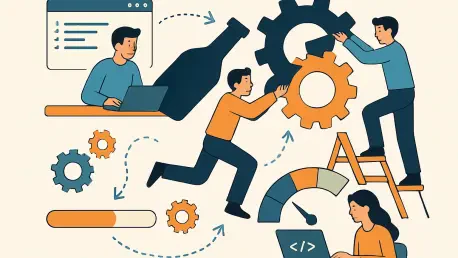

Artificial intelligence creates a dangerous temptation to bypass the discovery phase, which often results in engineering teams solving the wrong problems with high-speed execution. This shift has fundamentally altered the economics of technical debt, where the cost of generating syntax is negligible, but the price of correcting architectural missteps remains steep. By 2026, the traditional constraints of software development have migrated from the physical act of typing to the cognitive act of discerning intent. While large language models can produce vast quantities of code, they lack the institutional memory and business intuition required to ensure that the rapid output aligns with long-term user needs. This evolution forces a transition from a world characterized by execution scarcity to one defined by judgment scarcity. Organizations must recognize that extreme velocity is a significant liability if it is applied toward the wrong objectives. Consequently, the primary engineering challenge has evolved from managing syntax to managing the upstream pressure of planning. As development velocity increases, the risk of creating technically sound but strategically worthless products has become the defining hurdle of the current technological era.
Shifting Focus Toward Strategic Design
The Crisis: Upstream Planning
The unprecedented acceleration of AI-assisted coding has created a structural vulnerability in the project initiation phase. Historically, the high financial and temporal costs of manual development served as a natural deterrent against poorly defined requirements, forcing teams to engage in weeks of rigorous discovery and evidence-based research. Today, the ability to generate a functional prototype in minutes often encourages stakeholders to bypass these essential investigative stages. This leads to a persistent cycle of build-and-fix, where teams spend more time iterating on flawed premises than they would have spent on thorough initial planning. The bottleneck is no longer the capacity to produce features, but the ability of human leadership to define them with sufficient precision. Without a disciplined approach to requirements mapping, organizations find themselves trapped in a high-speed treadmill of rework, producing technically sound code that fails to meet actual user needs or solve real-world business problems.
Furthermore, the automation of documentation and requirements drafting via AI introduces a layer of artificial consensus that can be deceptive. While an AI can synthesize a requirements document based on general best practices, it lacks the capacity to verify those requirements against the specific constraints of the market or the unique regulatory obligations of a firm. Human-led planning remains the only reliable method for validating these automated drafts against actual usage data and nuanced stakeholder feedback. If organizations treat AI-generated plans as final rather than as initial drafts, they risk institutionalizing errors early in the lifecycle. The new friction point in development is the verification of business alignment, which requires a deep understanding of the competitive landscape. Engineering success now depends on the ability to pause the momentum of AI tools to ensure that every line of code generated contributes directly to a validated value proposition, rather than just filling a repository with functional but irrelevant logic.
The Evolution: Architectural Judgment
In an AI-augmented environment, the role of the software architect has moved from the periphery to the very center of the engineering process. Large language models excel at local optimization, such as writing a specific function or a single component, but they frequently struggle to grasp the global architecture of a complex, distributed system. This limitation creates a significant bottleneck in structural integrity, where human engineers must act as gatekeepers to ensure that AI-generated modules fit into a cohesive and scalable framework. As the volume of code grows, the complexity of maintaining a consistent architectural vision increases. Success in 2026 depends heavily on taste and judgment, specifically the ability to choose architectural paths that prioritize long-term stability over short-term coding speed. Architects must now focus on defining the boundaries and interfaces that allow AI to operate safely without compromising the overall system health, turning architectural oversight into a primary defense against entropy.
The challenge of architectural judgment also extends to the management of technical debt, which AI can inadvertently accelerate by introducing subtle inconsistencies across a codebase. Because models are often stateless or have limited context windows, they may suggest patterns that are locally efficient but globally incompatible with existing standards. Human intervention is required to maintain a unified coding style and ensure that the modularity of the system remains intact as it scales. The bottleneck has shifted toward the evaluation of structural trade-offs, where engineers must decide when to accept AI-generated shortcuts and when to insist on more robust, albeit slower, designs. This necessitates a transition in the engineering workforce, where the most valuable skill is no longer the ability to write code, but the ability to critique it from a high-level systems perspective. By focusing on the long-term sustainability of the architecture, teams can prevent the rapid-fire generation of code from becoming an unmanageable burden for future maintenance cycles.
Managing Technical Risks and System Health
The Illusion: Circular Testing and Deployment
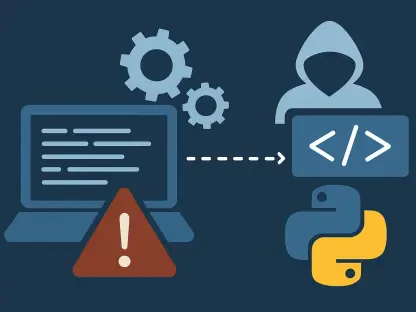
One of the most dangerous technical bottlenecks emerging in the current landscape is the circularity of AI-generated quality assurance. If an engineer uses a single prompt to generate both the application code and its corresponding unit tests, the AI is highly likely to mirror its own logic errors in both outputs. This creates a false sense of security where tests pass successfully simply because they are checking for the same incorrect behavior that the AI originally implemented. The natural pause for reflection that occurred when humans manually transitioned from writing code to writing tests is disappearing, leading to a loss of critical skepticism. To mitigate this, a new bottleneck of manual review has emerged, where humans must validate code against external API contracts and intended production behavior rather than internal logic alone. This shift ensures that the automated testing suites are not just confirming hallucinations but are genuinely verifying the software against its intended functional goals.
Deployment also remains a high-touch human activity because AI often lacks the specific production context required for a safe and successful release. While automated systems can draft configuration files or CI/CD pipelines, they frequently overlook operational nuances such as specific downtime limits, readiness checks, or rollback criteria unique to an organization’s infrastructure. Without human gatekeepers who understand the intricacies of the live environment, AI-generated configurations risk causing timeouts, failed requests, or fragmented user experiences. The bottleneck here is the significant gap between a generic code snippet and a production-ready deployment, requiring humans to provide the essential last mile of operational oversight. Effective deployment strategies now combine the speed of automated systems with the nuanced experience of human operators who can anticipate the unpredictable behavior of live traffic. This balance is critical for maintaining high availability and ensuring that the velocity provided by AI does not come at the cost of system reliability.
The Future: Institutional Memory and Growth
A subtle but dangerous bottleneck in the maintenance phase involves the potential erasure of fragile code that exists to handle undocumented edge cases or historical incidents. AI models often view specific retry blocks, odd null checks, or legacy workarounds as unnecessary technical debt and may suggest removing them to clean up the logic. However, these hacks frequently represent years of accumulated institutional knowledge about system quirks that are not captured in formal documentation. Removing them without understanding their history reintroduces old bugs, forcing teams to solve the same problems twice and wasting significant resources. Human engineers must now act as historians, focusing on the preservation of a system’s narrative and documenting the rationale behind non-standard code. This preservation of institutional memory is becoming a vital counterweight to the optimization bias of AI, ensuring that the software remains resilient against the obscure failures that have been solved in the past.
The relocation of bottlenecks has profound implications for the professional growth of the software engineering workforce. Junior engineers, who historically learned their craft by writing boilerplate and simple functions, are now being thrust into the role of evaluators—a complex task that requires the very experience they have not yet acquired. Meanwhile, senior engineers report that over half of their time is now dedicated to fixing subtle, AI-generated bugs that require deep diagnostic skills. The most successful engineering teams recognize this shift by treating AI as an accelerator for execution while doubling down on human-centric processes like evidence-based design and rigorous architectural review. Leaders prioritize the preservation of operational context and transform the engineering role into one of high-level verification and strategic navigation. By formalizing the evaluator role and investing in deep-system mentorship, organizations ensure that their talent is equipped to manage the friction of an automated production environment.