

Million-token documents stopped being edge cases and started becoming baselines when DeepSeek made 1M tokens the default context in V4 on April 24, pairing that leap with open weights and turnkey APIs. The release arrived in two preview models—V4-Pro and V4-Flash—that reframed long-context not as a

When fraud signals age by even a few hundred milliseconds, loss curves bend sharply, customer experiences suffer, and risk models drift away from the operational truth, so Coinbase rethought how features for fraud detection, anti–money laundering, and personalization should be computed at the

A sudden surge in citizen demand, a critical update to a classified system, and an opportunistic phishing wave can collide within the same hour, creating a perfect storm that only a resilient, hybrid IT posture can withstand without degrading public services or jeopardizing national security.

Every delayed pull request that idles in CI behind a 16‑minute container rebuild is an invoice arriving silently in the DevOps budget, and it is often stamped by a Dockerfile that “worked once” but now dictates bloated layers, broken caches, and unreproducible builds. What reads like a simple

Data pipelines stressed by swollen models, tight energy budgets, and unrelenting latency targets have pushed ML teams to hunt for efficiency gains that do not sacrifice accuracy or rewrite entire stacks overnight, and that pressure set the stage for Perforated AI’s announcement that its “Dendritic
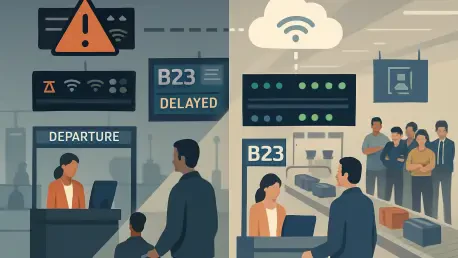
A single network outage can ripple from a departure gate to the baggage hall and onward to a crowded immigration queue, turning a routine day into a sequence of missed connections, delayed turnarounds, and costly service recoveries that test the patience of travelers and strain airline and airport