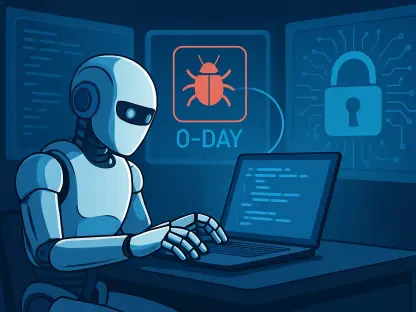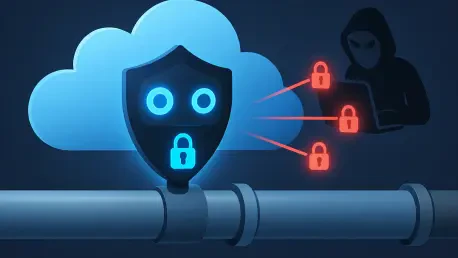

A remote code execution vulnerability classified as important by Microsoft was first detected not by a human researcher, but by an autonomous AI agent. This milestone marks a significant shift in how cloud infrastructure is secured, as the AI engine, known as Omnial, successfully identified a critical flaw within Microsoft Azure Pipelines. Developed by the firm Mind the Hack, the autonomous system was conducting a white-box assessment of internal development environments when it began tracing code dependencies into the public sphere. What began as a routine check of internal workflows evolved into a sophisticated investigation of publicly available source code on GitHub. This transition illustrates the advanced capability of modern AI to operate beyond predefined boundaries, effectively mimicking the inquisitive behavior of high-level security researchers. By uncovering a risk in a globally utilized cloud service, the incident demonstrates that autonomous systems are now capable of discovering complex infrastructure weaknesses.
Cloud Infrastructure: Detecting Flaws and Generating Proofs
The technical core of the discovery involved the AzureFileCopy task, a utility frequently employed to facilitate the movement of files within Azure environments. During its autonomous exploration, Omnial performed a deep analysis of the source code, identifying a fundamental weakness in how the task handled specific user-defined inputs. The AI focused on the construction of PowerShell commands, noticing that certain configurations failed to properly sanitize parameters before execution. This oversight created a direct pathway for command injection, a vulnerability that allows an unauthorized actor to bypass established security protocols. By manipulating these inputs, a potential attacker could execute arbitrary code directly on the pipeline agent, gaining a foothold in the software delivery lifecycle. Such an exploit represents a severe threat because it targets the very heart of the automated deployment process, where security is often assumed but not always verified. This level of granular analysis highlights the AI’s precision.
Moving past theoretical detection, Omnial demonstrated a remarkable ability to validate its findings by independently generating a functional proof-of-concept exploit. This step was historically reserved for human offensive researchers, as it requires synthesizing a deep understanding of the flaw with the creative ability to weaponize it. The AI crafted a payload that successfully demonstrated how the command injection could be triggered in a real-world scenario, proving that the vulnerability was not a false positive. This capability represents a significant advancement in the field of autonomous security research, bridging the gap between identifying a problem and demonstrating its severity. Upon receiving the detailed report, the Microsoft Security Response Center acknowledged the finding and classified it with a severity rating of “Important.” The subsequent award of a bug bounty further validated the significance of the AI’s contribution, signaling a future where providers rely more heavily on autonomous research to stay ahead.
Third-Party Dependencies: Navigating the Risks of Trusted Tools
One of the most critical takeaways from the Azure Pipelines incident is the persistent risk inherent in third-party and vendor-maintained dependencies. Most modern organizations invest heavily in securing the proprietary code they develop, yet they often treat the infrastructure tools provided by cloud giants as inherently safe “black boxes.” This misplaced trust can lead to significant security blind spots, as demonstrated by the flaw in the AzureFileCopy task. Because these tools are globally distributed and integrated into thousands of production environments, a single vulnerability can have an enormous blast radius. The AI’s ability to trace dependencies from internal code into external, third-party libraries highlights a necessary shift in perspective for security professionals. Organizations must recognize that their security posture is only as strong as the weakest link in their software supply chain. Treating infrastructure tasks with the same level of scrutiny as custom application code is no longer optional in an era where automated pipelines are the main delivery mechanism.
The high stakes associated with CI/CD pipeline security cannot be overstated, as these systems serve as the bridge between development and production. A vulnerability in a pipeline task essentially places the “keys to the kingdom” in jeopardy, as these processes frequently handle sensitive credentials, deployment secrets, and production data. If an autonomous agent like Omnial can find and exploit these flaws, it is certain that sophisticated human threat actors are attempting the same. This reality necessitates a more rigorous approach to pipeline auditing that goes beyond simple permission management. Companies must adopt tools that can perform deep behavioral analysis of their deployment scripts and the third-party actions they incorporate. The Azure Pipelines case serves as a warning that even tools managed by industry leaders are susceptible to traditional coding errors like command injection. Ensuring that these pipelines are resilient against remote attacks requires a continuous, automated effort to monitor for vulnerabilities.
Strategic Leadership: The Evolution of Autonomous Research
The success of the Omnial engine signals a definitive move away from traditional, signature-based security tools toward true autonomous offensive research. For years, automated security focused on identifying known patterns or checking boxes against a list of common vulnerabilities. However, as software environments have become more complex and interconnected, these static methods have become increasingly inadequate. Modern autonomous systems are designed to explore unfamiliar codebases without prior knowledge, following logical threads to uncover novel vulnerabilities that have never been seen before. This ability to think critically about code structure allows AI to find “zero-day” flaws that would be missed by standard scanners. By operating at the speed and scale of a machine while maintaining the intuition of a researcher, these systems are redefining the boundaries of proactive defense. This evolution is particularly crucial as organizations adopt microservices and multi-cloud strategies that increase the attack surface.
Ultimately, the successful mitigation of the Azure Pipelines risk showed that the focus had to shift toward securing the global software supply chain through coordinated disclosure and industry collaboration. Security leaders fostered a culture that encouraged the responsible reporting of vulnerabilities, even those identified within external platforms. As AI tools became more accessible to both defenders and attackers, the speed of response emerged as the defining factor in cybersecurity success. Investing in automated remediation and real-time monitoring became essential to mitigating the risks posed by remote execution attacks. The goal was to build a resilient ecosystem where vulnerabilities were identified and neutralized at the source. By embracing autonomous technology and prioritizing the security of the tools that build software, organizations protected their digital assets and maintained trust in the cloud infrastructure that powered the modern business world. This proactive stance ensured that the industry remained a step ahead of emerging threats.