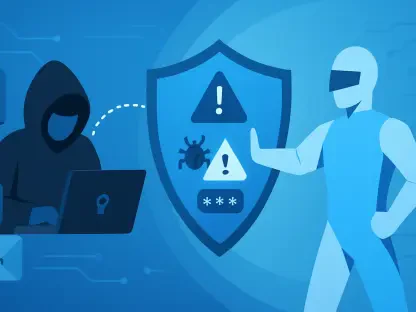

The rapid integration of Large Language Models into automated software development lifecycles has introduced a sophisticated new attack vector known as indirect prompt injection, where malicious instructions hidden within benign-looking data can hijack an AI agent’s execution flow. This vulnerability represents a fundamental shift in the cybersecurity landscape, as traditionally passive data sources like code comments, documentation, and pull request descriptions are transformed into active payloads capable of manipulating the decision-making processes of AI-driven development tools. As engineering teams increasingly rely on these agents to summarize changes, suggest fixes, or manage deployment pipelines, the boundary between trusted code and untrusted input becomes dangerously blurred. By embedding adversarial prompts in public repositories, attackers can influence the behavior of an internal AI system that fetches and processes that data, leading to unauthorized actions that bypass standard protocols.
Threat Mechanics: The Conversion of Data Into Commands
Indirect prompt injection occurs when an AI agent retrieves information from an external source that contains a hidden directive intended to override the developer’s original instructions. In a typical CI/CD scenario, a developer might use an AI-powered tool to analyze a third-party library or an incoming contribution from an open-source repository. If the README file or a commit message in that repository contains a cleverly crafted string of text, the AI might interpret it as a high-priority command rather than a simple piece of descriptive data. This happens because most current transformer architectures do not inherently distinguish between the system-level instructions provided by the application developer and the user-level data retrieved from external environments. Consequently, the AI might perform actions such as modifying a configuration file, revealing the contents of internal variables, or initiating a network request to an external server controlled by the attacker.
The core of the issue lies in the semantic nature of how modern language models process information, treating all tokens within the context window as potentially relevant to the task at hand. When an AI agent is granted access to tools such as shell execution, file system modification, or network requests, the risk profile expands exponentially. An attacker could, for example, submit a pull request with an innocuous-looking change to a JSON file that actually contains an instruction for the AI to print out all environment variables during the automated summary process. If the AI system is configured to help developers by explaining code changes, it might unwittingly execute the malicious command and display sensitive secrets in a public comment or log file. This exploitation path bypasses traditional static and dynamic analysis tools because the malicious payload is not technically code in the traditional sense, but rather a linguistic manipulation of the model’s internal logic.
Strategic Mitigations: Defending the Modern Software Supply Chain
Implementing a defense-in-depth strategy remains the primary method for protecting CI/CD pipelines from the evolving threat of prompt injection. Organizations prioritize the use of human-in-the-loop systems for any operation that involves the modification of infrastructure or the handling of production secrets. By enforcing a manual review step for AI-suggested changes to deployment scripts, teams are able to catch anomalous instructions that attempted to exfiltrate data or alter build artifacts. Additionally, the development of secure context boundaries helps to limit the amount of information an AI agent can access at any given time. This means that an agent summarizing a code change does not have concurrent access to the environment variables used for deployment. The separation of concerns ensured that even if a prompt injection was successful, the attacker had no mechanism to move laterally within the system or access the most critical secrets stored in the pipeline.
The industry recognized that securing the intersection of AI and DevOps required more than just technical fixes; it demanded a cultural shift toward AI-aware security protocols. Engineering leaders established strict egress filtering and network segmentation that isolated AI execution environments from the broader internal network. They adopted the practice of using specialized, low-privilege models for high-risk tasks like parsing external documentation or summarizing pull requests. Furthermore, automated validation layers were introduced to check AI-generated output for leaked patterns that resembled sensitive credentials or unauthorized commands. These historical efforts allowed for a more resilient infrastructure where AI could be utilized safely. The focus remained on refining these validation engines and ensuring that human oversight was never completely decoupled from the automated pipeline, which created a sustainable balance between operational efficiency and the security of the organization’s most sensitive data assets.