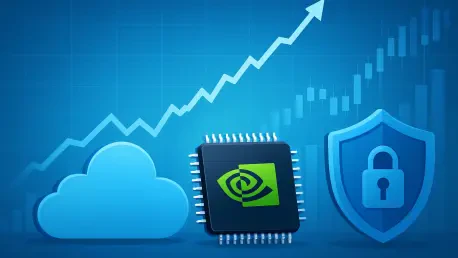

The reinstatement of Jensen Huang as Nvidia’s CEO triggered a massive rally in neocloud stocks, with CoreWeave and Nebius seeing gains between twenty and twenty-four percent. This sudden uptick marks a turning point for a sector that has faced immense pressure regarding capital expenditure and hardware availability throughout the early stages of the current year. As traditional hyperscalers struggle to keep pace with the specialized hardware requirements of next-generation model training, these boutique cloud providers are emerging as essential intermediaries in the global technology stack. The market’s reaction highlights a growing confidence that the symbiotic relationship between chip manufacturers and specialized clouds will remain a pillar of the digital economy. Beyond the immediate stock price movements, this rally signals a broader recognition of the neocloud’s unique value proposition: the ability to provide agile, high-density environments specifically tuned for large language models and generative AI training. Investors are now looking past the volatility to see a maturing industry that is becoming more integrated into the standard enterprise procurement process across various sectors.
Strategic Financial Interdependence
Market Stability: The Influence of Leadership
The relationship between Nvidia and the neocloud sector has evolved into a complex web of financial interdependence that dictates the market’s overall health and investor sentiment. When Nvidia’s executive leadership stabilized, it sent a powerful signal to institutional investors that the supply chain for H100 and B200 chips would remain predictable and secure. This stability is crucial for neocloud providers like CoreWeave and IREN, whose multi-billion dollar valuations are fundamentally tied to their ability to secure the latest silicon. Analysts have observed that the “Huang Effect” extends beyond simple stock prices; it affects the credit ratings and interest rates available to these emerging firms. Without the backing of a stable and dominant hardware partner, many specialized cloud providers would struggle to finance the massive capital expenditures required to build modern data centers. This dynamic has created a scenario where the operational success of Nvidia is intrinsically linked to the solvency of the neocloud market. As these companies continue to scale, the perceived reliability of their primary supplier remains the most significant factor in maintaining investor confidence and long-term capital flow.
Financial Architecture: Billions in Strategic Investments
Nvidia has transitioned from a mere hardware vendor to a central financial architect of the AI cloud ecosystem through aggressive direct investments and strategic partnerships. By placing $2 billion stakes in companies such as CoreWeave and Nebius, the manufacturer has effectively guaranteed a market for its most advanced products while also securing a share of the service revenue they generate. This “circular financing” model has drawn scrutiny from some market skeptics, yet it provides a necessary foundation for the rapid build-out of global AI infrastructure. For the neoclouds, having a major hardware producer as a primary stakeholder offers a level of operational security that traditional bank financing cannot provide. These investments often include options for further equity and clauses that prioritize these partners for new chip allocations, creating a significant competitive advantage over generalized clouds. This strategic alignment ensures that the most powerful compute resources are concentrated in the hands of providers who are specifically optimized to deploy them. As the industry matures, these multi-billion dollar capital infusions are expected to become the standard for establishing a dominant position in the high-performance computing market.
Technical Security and Infrastructure Integrity
Security Critiques: Challenges in Tenant Isolation
As neoclouds move toward hosting more sensitive enterprise data, the technical integrity of their platforms is coming under intense scrutiny from industry veterans. A primary concern highlighted by leadership at Databricks involves “tenant isolation,” the ability of a provider to ensure that data from one customer remains completely inaccessible to others sharing the same physical hardware. The unique architecture of AI-specific GPUs presents new challenges for security engineers, as traditional virtualization techniques may not be sufficient to prevent side-channel attacks or data leakage. Investigations have suggested that many emerging providers lack the deep expertise in physical data center security required to meet the standards of highly regulated industries. This gap in technical capability creates a significant risk for companies that are moving their proprietary research and development workloads to the cloud. For neoclouds to achieve widespread enterprise adoption, they must prove that their environments are as secure as the on-premises solutions they aim to replace. This focus on infrastructure integrity is quickly becoming the new battleground for providers seeking to differentiate themselves in an increasingly crowded and competitive marketplace.
Technical Standards: Distinguishing Top-Tier Providers
Amidst general concerns regarding cloud security, a clear hierarchy is emerging based on the results of rigorous technical audits and third-party evaluations. Only a select few providers have managed to demonstrate the robust safeguards necessary to handle the most demanding and sensitive AI workloads. For instance, recent assessments by major data platforms identified Nebius as one of the few neoclouds with the physical and logical isolation protocols required for secure enterprise research and development. This validation is critical, as it allows these providers to move beyond the experimental phase and secure long-term contracts with large-scale corporate clients. In contrast, providers that prioritize rapid scaling over security often find themselves excluded from high-value opportunities as enterprises become more sophisticated in their procurement processes. The market is now rewarding those who invest in sophisticated hardware-level security features and transparent auditing practices. As the AI economy continues to expand, the ability to provide a “clean-room” environment for model training will be a mandatory requirement rather than a luxury. Providers that fail to meet these evolving standards risk being relegated to the low-margin segments of the compute rental market.
Operational Milestones and Scaling Challenges
Infrastructure Hurdles: Managing Power and Delivery
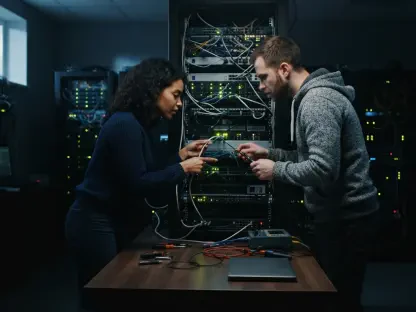
Building the physical backbone for the AI economy is proving to be a task of immense complexity, characterized by logistical bottlenecks and power grid constraints. Even with billions in funding, companies like IREN and CoreWeave must navigate complex logistical bottlenecks, from transformer shortages to local power grid constraints. For example, some facilities have seen their permanent power delivery timelines pushed into 2027, forcing them to rely on temporary solutions that limit their total active capacity. These delays can have a significant impact on quarterly revenue, especially when major clients like Microsoft are waiting for new clusters to come online. Despite these hurdles, the demand for compute is so high that even partially completed facilities are seeing massive revenue growth, with some providers reporting jumps from $71 million to $200 million in short periods. The ability to manage these large-scale industrial projects is now just as important as the ability to design high-speed networking fabrics. Consequently, the market is beginning to favor companies with proven experience in physical infrastructure management over those that focus solely on software-defined services.
The Compute Rental Model: Scarcity and Solvency
The neocloud model proved to be a resilient solution to the ongoing scarcity of high-end AI chips, as evidenced by the shifting strategies of major industry players. Even entities like SpaceX, which initially prioritized internal development, recognized the immense value in renting out excess computing power to rivals like Anthropic and Google. This transition validated the idea that high-performance GPUs were the most liquid and essential commodity of the digital era, providing a reliable path to solvency for companies with large hardware investments. Stakeholders realized that the economics of chip ownership favored those who could maintain high utilization rates through a mix of internal projects and external rentals. Looking ahead, the industry shifted its focus toward improving energy efficiency and enhancing the physical security of data centers to meet the next wave of enterprise demand. Successful organizations adopted rigorous auditing standards and diversified their power sources to mitigate the risks of infrastructure delays. This maturation process ensured that the neocloud sector remained a vital pillar of the global AI economy, offering the specialized resources necessary for the next generation of technological innovation.