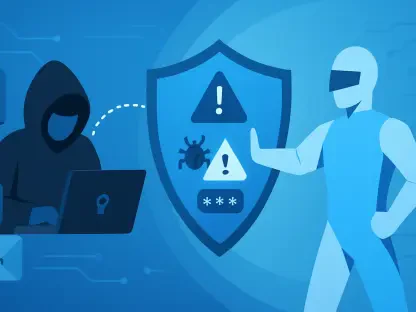

Container security has long remained the most significant bottleneck in rapid software delivery cycles, forcing developers to wade through endless lists of vulnerabilities without clear paths toward resolution. While traditional scanning tools excel at identifying Common Vulnerabilities and Exposures, they frequently leave teams stranded with hundreds of critical alerts but no automated way to patch the underlying image layers. This disconnect creates a dangerous friction between security mandates and engineering velocity, often leading to delayed releases or, worse, the deployment of insecure code under pressure. DockSec enters this space as a transformative force by utilizing advanced machine learning models to bridge the gap between detection and remediation within containerized environments. By analyzing the intricate dependencies inside Dockerfiles and base images, the platform does more than just flag issues; it generates precise, testable fixes that align with established security best practices. This shift represents a move from passive monitoring toward active defense that empowers teams to maintain high standards without sacrificing speed.
The Evolution of Vulnerability Management: From Noise to Action
Modern application development relies heavily on third-party libraries and container images, which inadvertently introduces a massive attack surface that human operators can no longer manage manually. Historically, security teams focused on perimeter defense, but the shift toward cloud-native architectures moved the battleground into the build pipeline itself. Tools that merely generate PDF reports of vulnerabilities have become obsolete in a world where speed is a competitive advantage. Developers today face a phenomenon known as vulnerability fatigue, where the sheer volume of alerts leads to apathy or the suppression of critical warnings. This environment demands a more sophisticated approach that prioritizes issues based on reachability and real-world exploitability. DockSec addresses this by filtering out the noise and concentrating on the vulnerabilities that actually pose a threat to the production environment. Instead of overwhelming the user with data, the system provides context-aware insights that explain how a flaw impacts the architecture.
The shift toward microservices has compounded the difficulty of vulnerability management, as each individual service often maintains its own unique set of dependencies and base images. In large enterprises, managing thousands of containers simultaneously creates a logistical nightmare that traditional security operations centers are ill-equipped to handle. Without automation, the time between the discovery of a critical vulnerability and the deployment of a patch can span weeks, leaving the organization exposed to potential exploitation. DockSec mitigates this risk by providing a centralized control plane that offers granular visibility into every container image across the entire fleet. This allows security administrators to enforce uniform policies and ensure that no outdated or vulnerable images are running in production environments. By leveraging AI to categorize and prioritize these threats, organizations can allocate their limited human resources to the most pressing security concerns. This strategic alignment is essential for navigating the complexities of modern cloud-native security.
Implementation and Integration: From Automation to Governance
At the core of this advancement lies a sophisticated engine that leverages large language models trained specifically on secure coding patterns and infrastructure-as-code configurations. When a vulnerability is detected, DockSec does not simply recommend an update; it analyzes the compatibility of the proposed patch with the existing application stack. This ensures that a security fix does not inadvertently break production by introducing breaking changes in library dependencies or runtime environments. The AI simulates the impact of the change within a virtualized sandbox before suggesting a pull request to the developer. This level of technical validation significantly reduces the burden on quality assurance teams and accelerates the approval process for security-related updates. Furthermore, the platform learns from historical remediation data, becoming more accurate with each patch it suggests across different container distributions. This continuous improvement loop ensures that the suggestions remain relevant even as the landscape of threats and software versions evolves rapidly throughout 2026.
The introduction of autonomous remediation signaled a major turning point for organizations that prioritized both security and agility. To maximize the benefits of these tools, technical leaders focused on establishing clear governance policies that defined which tiers of vulnerabilities required automated versus manual intervention. They recognized that while AI could handle the bulk of standard patching, complex logic flaws still necessitated human oversight. Organizations also invested in comprehensive testing suites that integrated seamlessly with automated fix suggestions to ensure that every AI-generated patch was validated for performance. This proactive stance allowed teams to move from a reactive firefighting mode to a state of continuous improvement where security was treated as a first-class citizen in the development lifecycle. Moving forward, the most successful strategies emphasized the importance of high-fidelity data and the integration of security telemetry into every stage of the build process. By adopting these automated workflows, enterprises effectively closed the window of exposure that hackers previously exploited.