
When a job is terminated by the monitoring system, the Control Room records the status to ensure any subsequent token requests are denied. This centralized architecture serves as the critical backbone of contemporary research infrastructure, providing a unified oversight mechanism for complex inference workloads across the globe. By integrating directly into the sampling pipeline, the system maintains a watchful eye over everything from agentic sampling for model training to high-volume data processing tasks. Currently, the framework operates with a nominal intervention delay of approximately 35 seconds, a figure attributed to the sophisticated caching layers required to handle the massive volume of traffic generated by modern frontier models. Engineers are actively optimizing this communication path to achieve near-instantaneous termination, effectively bridging the gap between threat detection and neutralization. This centralized approach replaces older, fragmented safety protocols with a cohesive logic that prioritizes security during model training. The synchronization between the misalignment monitoring systems and the central authority ensures that no workload operates in a vacuum, as the necessity for such a robust throttle becomes paramount for maintaining operational integrity and safety.
1. Functional Oversight and Operational Infrastructure
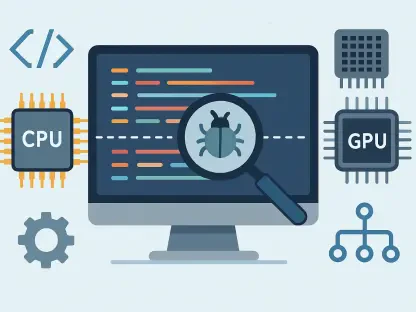
The functional core of this innovation relies on the seamless interaction between three distinct components: the workload, the inference engine, and the centralized service itself. A workload represents the specific task at hand, whether it is an intricate reinforcement learning experiment or a large-scale data evaluation project. The inference engine acts as the computational brain, executing the model’s logic directly on high-performance GPUs. Because a single workload might utilize multiple models across different engines, the system requires a sophisticated tracking layer to maintain consistency. The centralized service functions as the ultimate arbiter, monitoring these relationships and determining whether a job possesses the necessary authorization to continue generating output. This multi-layered structure prevents isolated failures from compromising the broader research environment, ensuring that every GPU cycle is accounted for and verified against safety parameters in real time. Through this rigorous verification, the system maintains high throughput while upholding stringent safety standards. The integration ensures that even as computational demands grow between 2026 and 2028, the infrastructure remains capable of enforcing strict governance across diverse research initiatives.
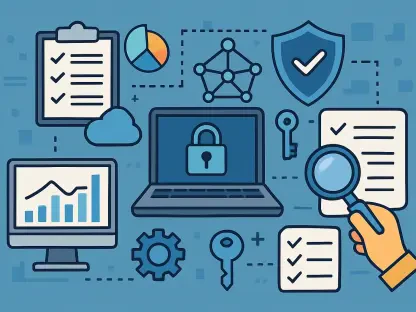
The operational workflow begins with the assignment of a unique job identifier when a new task is initialized within the infrastructure. Whenever a workload attempts to sample tokens, it must transmit this identifier to the relevant inference engine, which then initiates a permission check with the central authority. If the system has flagged the job for termination due to a violation or a safety trigger, the request is immediately denied at the engine level. This preventively stops the production of further model output, effectively neutralizing potential risks before they can escalate. By requiring this handshake for every inference request, the organization maintains granular control over the behavior of frontier models without significantly hindering performance. The use of a specialized authorization layer allows the system to scale alongside the increasing complexity of agentic systems, providing a reliable kill switch that functions independently of the specific model architecture being deployed. This ensures that safety is a constant across various research initiatives. One of the most significant advancements in this framework is the implementation of a fail-closed philosophy, ensuring that if the centralized system experiences a loss of connectivity, the associated models will default to a stopped state.
2. Strategic Implementation of Future Safety Standards
The implementation of the Control Room established a new benchmark for how large-scale AI research environments were managed and secured against unforeseen behaviors. Stakeholders recognized that a centralized kill switch was no longer an optional feature but a core requirement for responsible development in the modern era. By integrating a multi-layered verification process that connected every inference request to a global monitoring system, the project achieved a higher degree of transparency. The focus shifted toward reducing intervention latency from the initial 35-second window to a state of total immediacy, ensuring that safety remained ahead of model capabilities. Future iterations were designed to incorporate even more predictive monitoring tools, allowing for preemptive pauses before a breach actually occurred. This transition solidified the role of automated governance in safeguarding the path toward general intelligence, providing researchers with the necessary tools to explore the frontier with confidence. This framework ultimately offered a blueprint for secure and scalable AI research. To further enhance this system, developers looked toward integrating decentralized verification nodes to reduce the reliance on a single central service, thereby increasing the resilience of the kill switch during global network fluctuations.
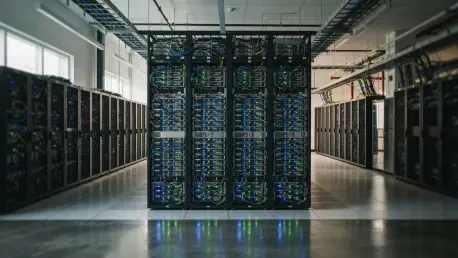
Building on these historical developments, organizations began prioritizing the adoption of fail-closed mechanisms across all production-level inference engines. This shift required a fundamental redesign of how GPU clusters communicated with security orchestrators, moving away from asynchronous checks to synchronous, low-latency validation pulses. Technical leaders recommended that teams focus on creating localized caching of job statuses to prevent bottlenecking while maintaining the 35-second safety threshold as a maximum acceptable limit. Moreover, the integration of agent-aware monitoring became a primary objective, allowing the system to distinguish between routine data processing and high-risk autonomous reasoning. These steps provided a clear roadmap for other institutions aiming to deploy large language models in research settings where the risk of misalignment was non-negligible. By standardizing the job identifier protocol, the industry moved closer to a universal safety API that allowed different vendors to share threat intelligence and stop malicious workloads across heterogeneous cloud environments. The legacy of the Control Room persisted as a fundamental lesson in the necessity of hardware-level oversight for software-based intelligence systems.