
The integration with Databricks allows companies to use their protected backup data as a governed source for AI and analytics through OpenSharing and the Unity Catalog. This landmark announcement, unveiled during the SHIFT 2026 customer event, signals a fundamental transition for Commvault Systems Inc. from a traditional provider of data backups to a leader in automated, AI-integrated recovery ecosystems. In the current enterprise environment, the mere existence of a backup copy is no longer a sufficient guarantee of business continuity. As cyber threats become more sophisticated and internal systems grow more interconnected, the speed of restoration has become the primary metric of success. By addressing the specific complexities of modern applications and the unique risks introduced by autonomous AI agents, the firm is working to shorten the recovery window from several weeks to a fraction of that time. This transformation focuses on creating a resilient digital flow that can withstand the pressures of modern data management and security challenges.
The Evolution of Disaster Recovery
Addressing the Industry Readiness Gap: A New Challenge
A significant takeaway from the recent presentations is the identification of a massive “readiness gap” that currently plagues the global corporate sector. While many organizations have invested heavily in data duplication, they often lack the underlying infrastructure components required to make that data functional in the event of a catastrophic failure. Internal research suggests that a large enterprise typically requires an average of twenty-eight days to return to a baseline level of operations after a major outage. This delay is not caused by slow data transfer speeds but by the arduous manual labor required to rebuild user identities, cloud configurations, firewall rules, and complex application dependencies. Without these structural elements, restored data remains an inaccessible pile of digital information. The industry has reached a point where manual restoration processes are no longer tenable, necessitating a shift toward automated systems that can handle the intricacies of modern identity-driven and cloud-native environments.
Overcoming the Limitations: Beyond Traditional Restoration
The difficulty of modern recovery lies in the fact that applications are no longer self-contained units but are instead woven into a vast web of external services and security protocols. When a cyberattack occurs, simply restoring a database does not fix the broken links to network security settings or specialized cloud microservices. This inherent complexity has traditionally forced IT teams into “war rooms,” where they spend weeks manually checking spreadsheets and rebuilding server environments from scratch. The current approach seeks to eliminate these bottlenecks by treating the entire application environment as a single, restorable entity. This requires a deep understanding of how different components interact, from the initial user authentication phase to the final data output. By focusing on functional infrastructure rather than just raw files, organizations can ensure that their recovery efforts result in a fully operational business unit rather than just a collection of recovered folders that cannot communicate with the rest of the network.
Automated Solutions and AI Protection
Streamlining Restoration: The Role of Recovery Studio
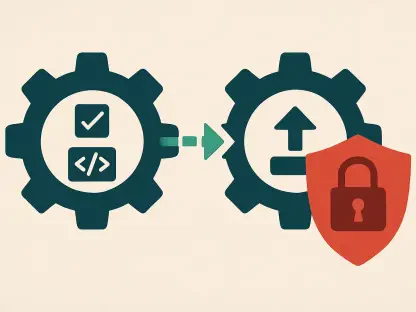
To bridge the readiness gap, the introduction of Recovery Studio represents a major shift toward what experts call a “DevOps moment” for disaster recovery. This service is engineered to automate the reconstruction of entire business applications through the use of sophisticated, automated runbooks. Instead of IT staff manually executing hundreds of individual steps, Recovery Studio orchestrates the rebuilding of every component in the correct logical sequence. This includes the restoration of identity systems and cloud-specific configurations that are vital for day-to-day operations. Furthermore, the platform integrates threat scanning directly into the recovery workflow to ensure that any resource being moved back into the production environment is verified to be free from malware. This automated orchestration effectively replaces the chaotic and error-prone manual processes of the past with a single, streamlined digital flow. It provides a level of precision and speed that was previously unattainable for large-scale enterprise environments.
Securing the AI Frontier: The AgentRecover Solution
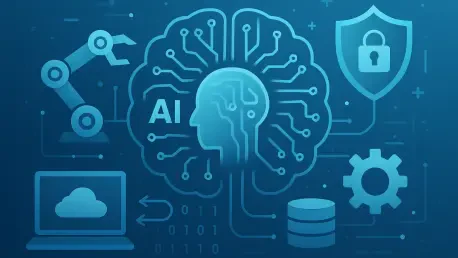
As enterprises increasingly deploy autonomous AI agents to manage internal processes and interact with customers, a new class of vulnerabilities has emerged. These agents operate at machine speed, meaning a single malfunction or compromise can result in widespread data corruption before a human administrator can intervene. To counter this, the updated AgentRecover tool provides a specialized mechanism for reversing damage caused by these automated systems. Whether the agents are operating on platforms like Microsoft Foundry or Amazon Web Services’ Bedrock AgentCore, the tool maps the entire ecosystem the agent touches. This allows administrators to audit activity logs and identify unauthorized changes with high precision. Instead of rolling back an entire database and losing hours of legitimate work, the system permits the surgical restoration of only those specific elements affected by a rogue agent. This ensures that the high-speed efficiency of artificial intelligence does not become a catastrophic liability during a recovery event.
Strategic Alliances and Data Mobilization
Turning Passive Backups: From Dark Data to AI Assets
The mobilization of so-called “dark data”—the unstructured information currently sitting idle in backup repositories—is a primary objective of the latest strategic partnerships. Collaboration with leaders like Nvidia and Databricks is designed to transform these passive archives into active assets for business intelligence. By using specialized reference designs and microservices, such as Nvidia NIM and the Nemotron Retriever, companies can now extract and organize content from their backups more efficiently than ever before. This process enables AI applications to pull from historical enterprise data to improve the accuracy of their outputs. The integration with the Unity Catalog ensures that this data remains governed and secure, maintaining the original ownership and access permissions throughout the lifecycle. By turning the backup layer into a high-quality data source, organizations can avoid the high costs and logistical hurdles of building separate data pipelines, essentially getting double the value from their existing storage investments.
Integrating Governance: The Zscaler Partnership Strategy
Security and governance remain the most significant hurdles for organizations looking to scale their use of artificial intelligence. The partnership with Zscaler addresses these concerns by focusing on runtime governance and the proactive detection of unauthorized AI agent activity. While many security tools focus on perimeter defense, this collaboration provides the tools necessary to monitor how employees and automated systems interact with AI models in real time. This is particularly critical during an emergency recovery scenario, where the pressure to restore services quickly can sometimes lead to the bypassing of standard security protocols. By maintaining strict governance during both daily operations and crisis events, the alliance ensures that data integrity is never sacrificed for the sake of speed. This strategic layer of security provides the confidence necessary for enterprises to fully embrace automated workflows, knowing that their AI ecosystem is being monitored and protected by a robust framework of specialized security and detection tools.
Practical Deployment and Market Future
Implementation Timelines: Rollout and Availability Details
The rollout of these advanced technologies is scheduled to follow a structured, phased approach that began in late 2024 and continues into the current cycle. Early access for Recovery Studio and the Databricks integration was provided to select regions to ensure the systems could handle the diverse needs of global enterprises. Support for major platforms like Microsoft Foundry and Amazon Bedrock AgentCore followed shortly after, providing a broad foundation for AI-driven resilience across different cloud environments. As we move through 2026, the general availability of these services has expanded, with pricing models designed to scale based on the volume of data managed within these orchestrated recovery flows. The final stages of the current roadmap involve the widespread release of the Nvidia-based reference designs, which are slated for full integration in 2027. This phased deployment allowed the firm to refine its automated runbooks and governance tools based on real-world feedback from early adopters in the financial and healthcare sectors.
Future Considerations: Strategic Pathways for Resilience
The collective vision established during the recent cycle focused on a future where data protection was inextricably linked to AI governance. It was observed that organizations which successfully integrated automated recovery into their broader IT strategy experienced significantly lower costs associated with downtime and cyber insurance premiums. The transition toward an AI-aware model of data management proved to be the most effective way to handle the massive volumes of unstructured data that previously hindered corporate growth. Leadership teams prioritized the elimination of manual labor in disaster recovery, recognizing that the speed of the modern threat landscape required a machine-speed response. These developments suggested that the traditional boundaries between security, backup, and business intelligence had permanently dissolved. By treating backup data as a governed asset rather than a hidden insurance policy, firms positioned themselves to leverage their historical information for competitive advantage while maintaining the highest possible standards of cyber resilience.