
Defense teams require the ability to share vital information across different security tiers without compromising the safety of their internal networks. In high-stakes environments where every kilobyte of data could hide a sophisticated cyber threat, the friction between operational speed and rigid security protocols remains a primary obstacle for military personnel. Modern battlefield operations and strategic planning increasingly rely on the rapid exchange of documents, maps, and intelligence reports that must traverse various classification boundaries. However, the inherent risk associated with file attachments often forces a trade-off between caution and efficiency. When intelligence is delayed due to manual sanitization or cumbersome security gates, the impact on mission success can be devastating. As national security entities look toward more integrated communication frameworks, the focus has shifted from merely blocking known threats to ensuring that every piece of data entering a protected domain is inherently safe and structurally sound.
Securing Data: Addressing Vulnerabilities in Cross-Domain Communication
Conventional cybersecurity measures have long relied on signature-based detection and heuristic analysis to identify malicious software within incoming files. While these methods are effective against established threats, they frequently struggle with zero-day vulnerabilities or highly customized exploits tailored for defense targets. Malicious actors often embed active content, such as macros or scripts, within seemingly innocuous documents like PDF or Office files to bypass perimeter defenses. Even if a file is scanned and cleared by an antivirus engine, it may still harbor hidden metadata or structural anomalies that can lead to data exfiltration or unauthorized system access. This vulnerability is particularly acute in cross-domain environments where information moves from lower to higher security tiers. Relying on the ability to recognize a threat is no longer sufficient; the complexity of modern document formats provides too many hiding spots for sophisticated malicious code.
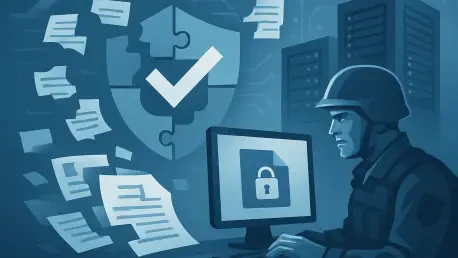
The integration of Content Disarm and Reconstruction technology within secure collaboration platforms like MindLink provides a paradigm shift in how defense agencies handle file transfers. Instead of trying to detect what is “bad,” this approach focuses on verifying what is “good.” By adopting a zero-trust architecture, the system treats every file as a potential carrier of malicious content. When an attachment is shared, the software dissects the file into its constituent parts, validates those parts against the original file format specification, and then discards anything that does not belong or could pose a risk. The result is a brand-new file that contains only verified, safe data, while the original, potentially dangerous version is quarantined. This method ensures that even the most advanced or unknown threats are neutralized before they ever reach the recipient. It allows for the seamless flow of communication without the fear that an attachment could compromise a network.
Localized Infrastructure: Strategic Deployment and Operational Integrity
One of the most significant challenges in defense communications is the requirement for systems to operate in air-gapped or highly restricted network environments. Many commercial collaboration tools are designed for cloud-native architectures, making them unsuitable for mission-critical work that must remain entirely on-premises for security reasons. The partnership between MindLink and Glasswall addresses this by offering a localized deployment model where the file reconstruction engine is embedded directly into the communication platform. This eliminates the need for data to leave the secure enclave for processing, maintaining the integrity of the sovereign boundary. By keeping the security checks within the local environment, defense organizations can ensure that their most sensitive data remains under their direct control at all times. This localized approach is essential for maintaining operational security during tactical deployments where connectivity to external services is unavailable.
The ultimate objective of implementing these localized and rigorous file reconstruction standards was to ensure that the speed of information exchange matched the tempo of modern conflict. By automating the removal of threats and the validation of file structures within secure enclaves, defense teams successfully bridged the gap between different security domains, allowing for rapid decision-making based on trusted data. Moving forward, organizations must prioritize the adoption of zero-trust file handling as a standard component of all sovereign cross-domain solutions. Future efforts should focus on expanding these reconstruction capabilities to encompass a wider range of multimedia formats and real-time data streams to stay ahead of evolving cyber tactics. Leaders should also consider how these automated workflows can be integrated into broader artificial intelligence frameworks to further enhance the detection of anomalous behavior within structured data. Investing in these technologies now will ensure resilience.