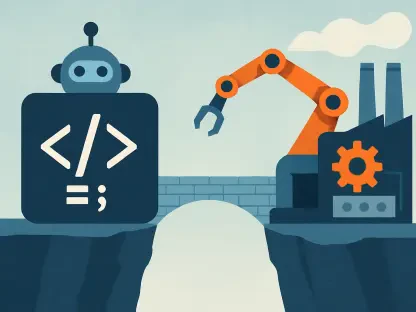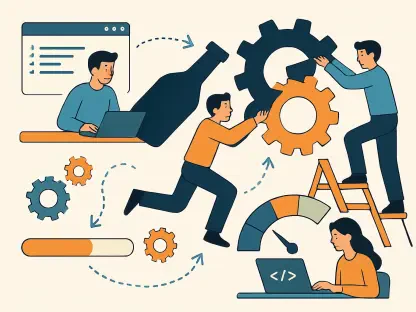

The rapid transition from simple large language model assistants to sophisticated agentic AI systems has fundamentally rewritten the rules of software production in a way that traditional management structures are struggling to match. In this environment, software is no longer just written by

Modern web applications have become so complex that traditional automated scanners often fail to identify deep-seated logic flaws that require human-like reasoning and context-aware analysis. This gap has long forced security researchers to rely on tedious manual testing for sophisticated

As Nigeria’s digital landscape accelerates into a high-velocity era of financial innovation and government automation, the integrity of underlying software systems has become the ultimate determinant of national economic resilience. For too long, the "move fast and break things" mantra dominated

New Zealand’s digital landscape is currently defined by a striking contradiction between executive optimism and operational reality that threatens the stability of the local economy. According to the latest Datacom Data Sovereignty Report, approximately eighty-five percent of local business and

The reliance on traditional binary software testing models in the era of advanced machine learning represents a fundamental misunderstanding of how probabilistic intelligence operates within enterprise environments. For decades, the industry has operated under the comfort of the "green light,"

Modern software development often feels like a tug-of-war between the rigid safety of compiled code and the flexible intelligence of generative models. JetBrains Research has stepped into this fray with KotlinLLM, a prototype that changes how developers think about the lifecycle of AI-generated