


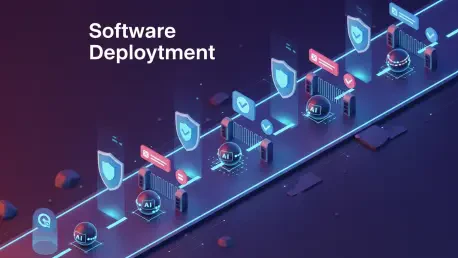

The rapid transition from simple large language model assistants to sophisticated agentic AI systems has fundamentally rewritten the rules of software production in a way that traditional management structures are struggling to match. In this environment, software is no longer just written by humans aided by tools; it is increasingly conceptualized and executed by autonomous agents that can navigate complex codebases, resolve dependencies, and implement features with minimal intervention. This shift creates a significant disparity between the speed at which machines can generate code and the speed at which human experts can verify its safety and accuracy. Without a structured approach to oversight, the sheer volume of automated output risks introducing technical debt and security vulnerabilities that could compromise the stability of critical infrastructure. To prevent such chaos, engineering leaders must fundamentally change their perspective on governance, moving away from micro-managing individual lines of code and toward high-level risk management. The goal is not to police every automated action but to maintain human accountability and systemic integrity in an era where the primary labor of coding is being handed over to intelligent machines. By focusing on verified delivery and decision traceability, organizations can harness the power of these agents while ensuring that the final products remain robust, secure, and fully understood by the human architects responsible for them.
The Evolution of AI in Software Engineering
The evolution of artificial intelligence in software engineering represents a journey from basic assistive technologies to the current era of fully autonomous agents. This progression began with simple chat interfaces where developers could ask for code snippets or help with debugging specific logic problems. These early tools eventually matured into integrated code completion features that anticipated the next few lines of syntax, significantly reducing the cognitive load on individual programmers. However, the current standard involves agentic AI models that do not just suggest code but act as independent contributors within the development lifecycle. These agents can interpret high-level business requirements, plan a series of architectural changes across multiple services, and execute the necessary updates without constant human prompting. This transition has forced a re-evaluation of how software is built, as the focus has moved from individual tasks to entire workflows. The ability of these systems to handle multi-step reasoning and complex problem-solving means that they are no longer just tools for the developer; they are becoming partners that manage the more repetitive and labor-intensive aspects of software creation. As this trend continues to accelerate, the primary challenge lies in ensuring that the increased output does not outpace the organization’s ability to maintain high standards of quality and security.
The surge in AI-generated output has fundamentally changed the daily responsibilities of senior engineers and technical architects. In the past, a senior developer might spend a significant portion of their day writing core logic and performing deep manual reviews of their peers’ work. Today, the sheer volume of code being produced by autonomous agents makes it physically impossible for a human to review every single line with the same level of scrutiny. Consequently, the focus of senior leadership has shifted toward evaluating the reasoning and intent behind the AI’s choices rather than just the final syntax. This requires a new way of working where governance begins at the planning and design phases rather than being an afterthought at the end of a sprint. Engineers must now act as orchestrators, defining the constraints and objectives that guide the AI agents while concentrating their own efforts on high-level architecture and cross-system integration. This shift in focus is essential because it allows humans to leverage their unique capacity for strategic thinking and ethical judgment, which remains beyond the reach of even the most advanced autonomous systems. By concentrating on the logic and design decisions made by the agents, senior staff can ensure that the rapid pace of development does not lead to a loss of system coherence or the accumulation of unmanageable technical debt.
Distinguishing Between Labor and Accountability
A core principle of modern governance is the recognition that while artificial intelligence can perform the labor of coding, only humans can be held accountable for the outcomes. AI models are exceptionally proficient at following complex instructions and generating functional code, but they lack the capacity to understand the real-world consequences of a software failure or a data breach. In a corporate environment, this means that every piece of machine-generated code must have a human owner who is responsible for its performance and security. Organizations must establish clear lines of authority to ensure that the speed of automation does not lead to an “accountability gap,” where no one is truly responsible when something goes wrong. By maintaining human experts as the ultimate authority for business outcomes, companies can ensure that technological advancement remains aligned with organizational goals and ethical standards. This human-centric approach to accountability acts as a vital safety net, providing a necessary check on the autonomous actions of AI agents and ensuring that the final software products are reliable and trustworthy for the end users who depend on them every day.
AI agents often make silent assumptions when they encounter instructions that are not perfectly clear or detailed. These hidden choices can lead to subtle bugs or security flaws that are difficult to detect once the code has been integrated into a larger system. To mitigate this risk, governance frameworks must include mechanisms that force these automated decisions into the open for human verification. One effective strategy is to keep the design documentation and the implementation steps separate, requiring the AI to explain its reasoning before it is allowed to commit any changes. This transparency allows human reviewers to catch errors in logic or potential security risks early in the process, before they become entrenched in the codebase. By requiring agents to justify their technical choices, teams can maintain a high level of control over the development process without sacrificing the efficiency gained through automation. This structured approach to transparency ensures that even as the labor of coding becomes more automated, the critical decisions that shape the software remain subject to human scrutiny and informed approval, thereby reducing the likelihood of catastrophic errors or unforeseen system behaviors.
Implementing Risk-Based Safety Gates
Not all software changes carry the same level of danger, and a sophisticated governance model must reflect this reality by using risk-based safety gates. High-risk areas, such as those involving financial transactions, sensitive user data, or core security protocols, still require rigorous human review and manual testing to ensure total accuracy. In contrast, low-risk updates, such as minor UI adjustments or internal documentation changes, can often move through faster, more automated pathways with less human intervention. By categorizing tasks based on their potential impact on the system, engineering leaders can allocate their limited human resources to the areas where they are most needed. This tiered approach to oversight allows the development team to maintain a high velocity for routine tasks while ensuring that critical components receive the attention and validation they require. Implementing these safety gates helps to create a balanced development environment where speed and safety are not mutually exclusive, but rather complementary components of a robust engineering culture that prioritizes both innovation and system stability across the entire technology stack.
Organizations can effectively test and refine these automated pathways by using a technique known as “shadow mode” before fully delegating authority to AI agents. In this setup, the AI system suggests decisions and generates code that is then compared against actual human judgment in real-time, without the AI’s output actually being deployed to the live environment. This process allows teams to measure the accuracy and reliability of the AI’s suggestions against established human standards over a significant period. Once the system demonstrates that it can consistently match or exceed human performance in specific low-risk categories, it can be granted more autonomy to approve those types of updates automatically. This gradual transition builds trust in the automated tools and provides a data-driven justification for reducing manual oversight in certain areas. Shadow mode serves as a powerful validation tool, ensuring that the organization does not move too quickly into full automation without first proving that its AI agents can operate safely within the established governance framework. This methodical approach to scaling autonomy minimizes the risk of widespread errors while maximizing the efficiency gains offered by modern agentic development workflows.
Maintaining Decision Traceability and Quality
In the era of agentic development, understanding why a specific code change was made is often more important than simply having a log of the code itself. Effective governance must focus on decision traceability, ensuring that every major update to the software is accompanied by a clear record of the factors that influenced the AI’s reasoning and the human who ultimately approved the change. This information should be stored as structured metadata that remains attached to the code throughout its entire lifecycle, facilitating future audits and troubleshooting efforts. When an issue arises in production, having access to the original intent and the decision-making process allows engineers to quickly identify the root cause and implement a fix. This level of traceability is essential for maintaining a high-quality codebase, as it prevents the accumulation of “mystery code” that no one understands or feels comfortable changing. By prioritizing the documentation of logic and intent, organizations can ensure that their software remains maintainable and transparent, even as the volume of machine-generated contributions continues to grow at an exponential rate.
The standard definition of when a task is considered finished must also evolve to meet the unique challenges of the AI era. It is no longer sufficient for code to simply pass a suite of automated tests; developers and AI agents must also provide a concise summary of how the work was checked and verified. This summary should include details on the edge cases that were considered, the potential security implications that were analyzed, and the rationale for any significant architectural choices. Requiring this level of verification ensures that the human in the loop fully understands the logic behind the AI’s output, even if they did not write the code themselves. This practice reinforces the principle of accountability and encourages a more thorough review process that goes beyond superficial syntax checks. By raising the bar for what constitutes a completed task, engineering teams can maintain a high standard of quality and ensure that every deployment is backed by a clear understanding of the underlying logic. This shift in the “definition of done” is a critical component of a modern governance strategy that seeks to balance the speed of automation with the necessity of human oversight and system integrity.
Advanced Validation and Security Controls
Traditional testing methods are frequently inadequate for the unpredictable and often non-deterministic nature of AI-generated code. Modern deployment pipelines must include advanced validation steps designed specifically to catch common AI errors, such as the use of fabricated APIs or the introduction of unnecessary complexity that could lead to performance bottlenecks. A fundamental rule in this new paradigm is that the AI agent responsible for writing the code should never be the same system that is used to test it or verify its correctness. By enforcing a strict separation of duties between the creator AI and the validator AI, organizations can create a more objective and reliable review process. This approach mimics the classic “two-key” system used in high-security environments, where independent entities must agree before a significant action is taken. These automated validation pipelines act as a first line of defense, filtering out low-quality or erroneous code before it ever reaches a human reviewer. This not only improves the overall quality of the software but also allows human engineers to focus their attention on more complex architectural issues that require deep context and professional judgment.
Security remains the most significant challenge when employing autonomous agents for software development. AI models may inadvertently introduce vulnerabilities by using insecure libraries or bypassing established safety protocols in their pursuit of an efficient solution to a given problem. Consequently, governance frameworks must enforce strict, automated rules for scanning code for known vulnerabilities and managing the access that agents have to sensitive data and production environments. It is essential to implement the principle of least privilege, ensuring that an AI agent never has more power or access than is absolutely necessary for the specific task at hand. Furthermore, continuous security monitoring must be integrated into the development lifecycle to detect any unusual patterns or unauthorized changes that might indicate a compromised agent or a flawed logic path. By treating security as a foundational element of the governance strategy, organizations can protect their digital assets and maintain the trust of their customers while still benefiting from the rapid innovation cycles enabled by agentic AI. These robust security controls provide the necessary guardrails to prevent automation from becoming a liability in an increasingly complex and hostile threat landscape.
Scaling Governance for Enterprise Innovation
Corporate governance must proactively address the phenomenon of “Shadow AI,” where employees outside the formal engineering department build their own tools and automated workflows that may bypass critical security and compliance rules. In 2026, the accessibility of agentic AI means that non-technical departments can easily generate complex software solutions to solve immediate business problems. While this democratization of development can drive innovation, it also creates significant risks if these tools are not brought under a centralized governance framework. Companies must require that every software change, regardless of who created it, follows a standardized process that respects data privacy, access controls, and security standards. By providing a clear and accessible path for all employees to follow, organizations can ensure that grassroots innovation does not compromise the overall stability of the enterprise. This holistic approach to governance recognizes that the risks and rewards of AI development are distributed across the entire company and requires a unified strategy to manage them effectively. Protecting the organization from the unintended consequences of unmanaged automation is a prerequisite for achieving long-term success in a technology-driven market.
The ultimate goal of a modern governance framework is to build a “paved road” for development, where the most secure and compliant methods of building software are also the most efficient and user-friendly. When the right way to do things is also the easiest way, developers and AI agents are naturally incentivized to follow established safety protocols. This approach turns governance from a perceived barrier to innovation into a powerful tool for accelerating the delivery of high-quality software. By providing pre-approved templates, automated security scanners, and standardized deployment pipelines, organizations can reduce the friction associated with compliance and allow teams to focus on creating value. This “paved road” strategy ensures that every project starts from a secure foundation and remains aligned with corporate standards throughout its development. When organizations focus on verified delivery rather than just raw output, they can safely harness the full power of agentic AI to grow their business and respond to market changes with unprecedented speed. This strategic alignment between governance and velocity is the key to maintaining a competitive advantage in an era where software excellence is the primary driver of corporate success and industry leadership.
Strategic Integration of Autonomous Workflows
The transition toward agentic AI development in 2026 has required a fundamental cultural shift within the engineering community, moving from a culture of manual craftsmanship to one of strategic oversight. As autonomous agents take on more of the daily technical labor, the role of the human engineer has evolved to focus on the definition of requirements, the setting of ethical boundaries, and the validation of complex systemic interactions. This evolution does not diminish the importance of technical expertise; rather, it amplifies it, as the consequences of architectural decisions are now magnified by the speed of automated execution. Organizations that have successfully navigated this change have done so by investing in the continuous education of their staff, ensuring that they possess the skills necessary to manage and audit the intelligent systems they deploy. This proactive approach to workforce development ensures that the human element remains the most critical component of the development lifecycle, providing the essential judgment and creativity that machines cannot replicate. By fostering a culture of collaboration between humans and AI, businesses can create a more resilient and innovative engineering environment that is capable of tackling the most challenging problems of the modern era.
Organizations that successfully navigated this transition established a clear separation between automated production and human validation to ensure that velocity never compromised safety. These leaders implemented rigorous peer-review protocols where AI-generated code was subjected to the same scrutiny as human-written contributions, but with an added focus on detecting logical hallucinations and architectural drift. By treating AI agents as non-accountable entities, companies forced human architects to sign off on every significant deployment, thereby maintaining a clear line of responsibility for all software failures. The industry adopted standardized decision-traceability logs that recorded the specific prompts and environmental data used by agents, allowing for rapid auditing and remediation when issues arose. Technical teams also developed “paved road” environments that automatically applied security guardrails and compliance checks, effectively turning governance into a feature that accelerated development rather than a hurdle that slowed it down. These proactive measures allowed businesses to scale their software capabilities at an unprecedented rate while keeping their digital infrastructure secure and reliable. Ultimately, the move toward verified delivery proved to be the most effective way to integrate autonomous agents into the modern enterprise without succumbing to the risks of unmanaged automation.







