
The relentless pursuit of operational excellence in software quality assurance often hits a significant bottleneck during the manual peer review of complex test documentation suites. In 2026, the primary mission for engineering teams involves the total elimination of manual repetition within quality assurance workflows to accelerate delivery cycles without compromising reliability. This long-term vision focuses on the seamless conversion of business requirements and architectural designs into comprehensive test cases and automation scripts through the advanced utilization of the Model Context Protocol. By establishing a robust bridge between local development environments and centralized test management systems, organizations can ensure that every validation step is aligned with current engineering standards. This shift reduces the cognitive load on individual testers and fosters a culture where high-quality documentation is verified autonomously before code is deployed.
1. Strategic Review Processes
To initiate this transformation, the engineering team established a rigorous automated review process that begins the moment a quality assurance professional updates a task. Within the Allure TestOps environment, the workflow is triggered when the status of a specific test case is officially changed to a review state, signaling that the documentation is ready for scrutiny. This state transition serves as a digital handshake between the human engineer and the underlying artificial intelligence infrastructure that will perform the first pass of evaluation. By standardizing this entry point, the system ensures that no test case bypasses the necessary quality gates required for production readiness. This preliminary step is crucial because it provides a clear temporal marker for when the automated agent should begin its deep analysis of the data, ensuring the review process is both predictable and transparent for all stakeholders involved.
Once the status transition is detected, the process allows an autonomous agent to pull the relevant data from the test management platform for a comprehensive evaluation. The agent is programmed to weigh the test case against stringent internal standards, looking for gaps in logic or departures from established formatting protocols that a human might overlook. After completing the assessment, the agent posts the detailed evaluation results as a new comment directly on the test record, providing immediate feedback to the author. Finally, the agent updates the test case status to a fixing category or another appropriate alert state to notify the engineer that revisions are necessary before further progress can occur. This loop effectively creates a continuous feedback mechanism that operates at a much higher frequency than manual reviews, allowing engineers to address issues in real time while the context of the test design is still fresh.
2. MCP Server Implementation
The technical implementation of the review system relies on a specialized server constructed using the Python programming language and the FastMCP framework. This architectural choice provides a streamlined environment for developing tools that can interact with complex large language models while maintaining a high degree of modularity and scalability. A critical component of this stack is the generated API client, which facilitates secure and efficient communication between the local server and the remote test management services. By leveraging Python’s extensive library ecosystem, the development team was able to create a highly responsive interface that handles data serialization and network requests with minimal latency. This foundation ensures that the system can scale to accommodate many concurrent review requests as the volume of test documentation grows, maintaining stability and performance under significant operational pressure.
Operating the protocol server involves a specific logic sequence that begins with a trigger to contact the external management API for data retrieval. Once the connection is established, the server gathers essential test case details, including step descriptions, associated attachments, and complex scenario outlines that define the scope of the validation effort. This collected information is then formatted and transmitted to a large language model, which processes the text through a series of analytical layers designed to detect inconsistencies. After the analysis is finalized, the server records the resulting review note back into the management platform, ensuring that the findings are permanently archived and accessible. This bidirectional flow of information is what makes the integration powerful, as it allows the model to act not just as a passive observer but as an active participant in the documentation lifecycle for modern projects.
3. The Cursor Environment
Selecting an appropriate primary interface for this automation effort led the team to adopt the Cursor editor as the central hub for all quality assurance activities. This decision was driven by several practical considerations, including the significant reduction in licensing costs compared to maintaining multiple specialized tools for every member of the engineering staff. Furthermore, team familiarity with modern code editors ensured that the learning curve for the new automated workflows remained manageable for both junior and senior personnel. Cursor provides a stable and highly customizable prototype environment where new features can be tested and refined without disrupting the broader production ecosystem. By integrating the review capabilities directly into the editor, engineers can stay within their primary development context, reducing the need for constant context switching between browsers and technical documentation tools.
The project elements within the editor are configured with specific rules that govern how the review prompts are generated and applied to the incoming test data. A custom slash command was implemented to allow users to trigger the review process with a single keystroke, simplifying the interaction model for the entire team. Additionally, user rules were established to ensure that every prompt application remains consistent across different projects and test types, preventing drift in the quality of the automated feedback. These rules act as a template that guides the large language model, ensuring it remains focused on the specific criteria defined by the organization’s quality standards. This level of customization allows the engineering department to fine-tune the behavior of the AI agent, making it an extension of the team’s collective expertise rather than a generic utility with non-specific suggestions.
4. Standards for Quality
To ensure the AI agent provides valuable feedback, it is strictly programmed to verify that every test case meets a high threshold for clarity and precision. This involves the systematic removal of vague language and the replacement of subjective terms with measurable metrics that can be easily validated during execution. For instance, instructions like “check the performance” are flagged in favor of specific requirements like “verify the response time is under two hundred milliseconds.” The agent scrutinizes each sentence to ensure that the intent is unmistakable, reducing the risk of human error during the actual testing phase. By enforcing this level of linguistic rigor, the system helps create a documentation library that serves as a single source of truth for both manual testers and automated systems, ensuring that expectations are clearly defined and results are interpreted consistently across the team.
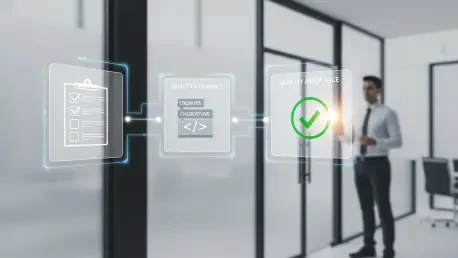
Structural integrity is another key pillar of the quality guidelines, requiring the agent to verify that titles, preconditions, and atomic steps are correctly formatted. The AI checks that each test case has a logical flow, with preconditions that set the stage and atomic steps that cover only a single action to maintain simplicity. Beyond basic structure, the system evaluates the technical readiness of each case by checking for the availability of necessary test data and the overall suitability for future automation efforts. If a test case relies on data that is not specified or uses steps that are too complex for script conversion, the agent identifies these as high-priority fixes. This proactive assessment ensures that the documentation is not just readable but also functional, laying the groundwork for a transition toward more advanced automated execution strategies where scripts are generated from high-quality descriptions.
5. Sequential Logic Analysis
The project incorporates a secondary protocol server specifically designed to force a step-by-step logical progression through the analysis of every test document. This sequential thinking approach prevents the large language model from making broad assumptions and instead requires it to evaluate the internal logic of the test case in a structured manner. The first phase of this progression involves a deep dive into the preconditions, ensuring they are sufficient to support the subsequent actions without ambiguity. By breaking the analysis into discrete logical segments, the system can identify subtle contradictions that might be missed in a single-pass review. This methodology ensures that the evaluation is thorough and that every aspect of the test design is considered before a final judgment is rendered, leading to much more reliable feedback that engineers can trust as they refine their work for upcoming releases.
Following the initial check, the system evaluates the steps and expected results to ensure they are logically connected and lead to a verifiable outcome. The agent also verifies the validity of the test data and assesses the determinism of the test, ensuring that the same inputs will consistently produce the same outputs across different environments. Finally, the system determines the overall suitability for automation, providing a score that helps managers prioritize which cases should be scripted first. This detailed assessment allows the team to understand not just whether a test is good, but why it is effective or where it falls short of the ideal. By emphasizing logical consistency and technical detail, the sequential thinking integration elevates the automated review from a simple grammar check to a comprehensive technical audit that mirrors the thought process of an experienced lead quality engineer on the project.
6. Practical Workflow Steps
To conduct a review in a live environment, a quality assurance engineer follows a simple but effective workflow that begins within the Allure TestOps platform. After locating the specific test case that requires verification, the engineer transitions to the Cursor editor to initiate the automated analysis sequence. By executing the review command, the engineer triggers the integration, which automatically fetches the relevant documentation from the server for local processing. This seamless transition between the management platform and the development tool allows for a high degree of efficiency, as the engineer does not need to manually copy and paste content between different windows. The system handles the heavy lifting of data retrieval, allowing the professional to focus on the high-level strategy and the creative aspects of test design while the AI manages the repetitive task of checking for compliance.
In scenarios where the automated data retrieval might be incomplete due to complex attachments or external dependencies, the engineer can provide a screenshot to supplement the analysis. Cursor then uses the protocol server to combine this visual information with the fetched text data, allowing the model to assess the content based on the project-specific rules defined earlier. Once the evaluation is complete, the engineer reviews the findings within the editor and transmits the finished review as a fresh comment back to the management platform. This final step ensures that the feedback is recorded where it is most useful, providing a clear path for any necessary revisions. The entire process is designed to be frictionless, empowering the team to perform multiple reviews per hour and significantly increasing the overall throughput of the quality assurance department without requiring any additional resources.
7. Findings and Improvements
The implementation of this automated system has led to the successful identification of several common errors that previously plagued the manual documentation process. One of the most frequent issues identified was the presence of missing data or vague preconditions that would have led to inconsistent test execution results. The AI also effectively flagged poor title naming conventions and non-measurable expected results, which are critical for maintaining a clean and professional test repository. By catching these issues early, the team has significantly reduced the amount of rework required during the automation scripting phase, where vague instructions often lead to broken code. The consistency of the AI feedback has also helped to standardize the writing style across the department, as engineers learn to anticipate the criteria that the agent will use to evaluate their documentation submissions.
Looking ahead, the team has identified several areas for further refinement to increase the utility of the automated review agent. Future improvements will focus on prompt optimization to reduce the frequency of false positives and measuring the accuracy of the reviews across larger, more diverse datasets. There is also a plan to increase the level of automation by allowing the system to suggest specific text replacements rather than just pointing out errors, which would further accelerate the fixing process for the engineers. By analyzing the data gathered during these initial stages, the department can fine-tune the underlying models to better reflect the unique technical challenges of their specific industry. This iterative approach ensures that the system evolves alongside the software it is designed to protect, maintaining its relevance and effectiveness as new technologies and methodologies emerge.
8. The Optimized Lifecycle
The final workflow was optimized to ensure that the initiation of the process by a quality assurance engineer immediately triggers the Cursor command for maximum efficiency. As the protocol connects the systems, the extraction of test case data occurs in the background, allowing the engineer to continue working on other tasks until the analysis is ready for review. The large language model performs the evaluation with high precision, comparing the document against the established quality standards and the sequential logic rules. A new comment is then generated in the management platform, closing the loop and providing a permanent record of the quality check. This consolidated approach minimizes the time spent on administrative tasks and maximizes the time spent on actual testing activities, ensuring the engineering team maintains a high velocity while adhering to the most stringent quality requirements.
In recent development cycles, the engineering department successfully transitioned to this autonomous framework to address the complexities of modern software delivery. The team integrated the protocol servers into their daily operations and observed a marked improvement in the consistency of their test documentation across all product lines. By adopting these actionable steps, the organization prepared itself for future challenges where the volume of required testing will likely exceed human capacity. The focus shifted from basic error detection to a proactive model where quality was built into the documentation from the very beginning of the lifecycle. This evolution proved that combining specialized protocols with modern code editors could revolutionize the way quality assurance teams operate, providing a scalable solution that enhanced both the speed and the accuracy of the entire software development process for years to come.