
The days of engineers staring at green-and-red dashboards to find a needle in a haystack are quickly vanishing as autonomous reasoning takes the driver’s seat in modern infrastructure. This shift is not merely a technical upgrade but a fundamental reimagining of how digital stability is maintained

The European digital landscape is currently navigating a pivotal transition point defined by a profound structural misalignment rather than a lack of raw technological resources. This discrepancy is often described as a "Goldilocks problem," where the individual components of a world-class cloud
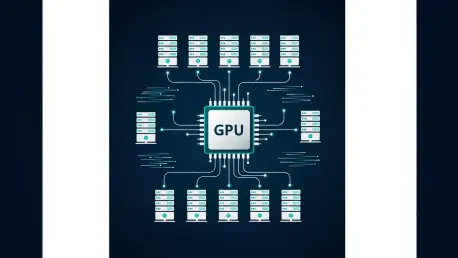
The rapid proliferation of sophisticated generative artificial intelligence models has fundamentally transformed the underlying requirements for enterprise data centers and high-performance computing clusters in the modern landscape. As organizations race to integrate large language models and

Traditional AI coding assistants often struggle with the dynamic nature of enterprise applications, remaining disconnected from the actual runtime environment where code must perform. While tools like GitHub Copilot or Claude have become adept at suggesting syntax, they operate in a vacuum, lacking

The traditional request-response model is currently giving way to a system that does not just execute code, but reasons through it—turning back-end architectures from passive pipes into autonomous decision-makers. As Large Language Models transition from external tools to core primitives, back-end

The professional services industry has reached a critical juncture where the sheer volume of unstructured data often exceeds the cognitive capacity of even the most skilled human experts. In sectors such as auditing, legal review, and compliance, the traditional reliance on manual document