
Alibaba Cloud’s President of International Business, Feifei Li, emphasized that the Dutch expansion is essential for businesses that need to scale their AI workloads securely. This strategic move marks a significant shift in the European cloud landscape as the provider opens two sophisticated data centers in Amsterdam. The initiative responds to a growing urgency among local enterprises to manage sensitive information within geographic borders while leveraging the immense computational power required for modern machine learning. By establishing a local presence, the firm addresses the intricate tapestry of European data sovereignty and privacy regulations that often act as a barrier to global cloud adoption. This infrastructure allows organizations to process high-volume datasets with minimal latency, providing a robust foundation for real-time digital services. Moreover, the localized approach mitigates risks associated with cross-border data transfers, fostering a more resilient and transparent ecosystem for technological growth across the continent.
Advanced Security Frameworks and Collaborative Ecosystems
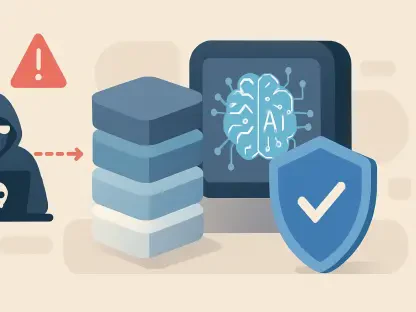
To support the rapid proliferation of artificial intelligence, a comprehensive suite of computing products has been introduced to the Netherlands, ranging from elastic storage solutions to advanced container services. A major highlight of this deployment is the emphasis on agentic AI services, which provide specialized tools designed to safeguard autonomous digital agents. For instance, the ACS Agent Sandbox offers hardware-level security to isolate critical processes, while the Agent Security Center provides a proactive defense mechanism against emerging threats. Additionally, the launch of AI Security Guardrails 2.0 enhances risk detection capabilities, ensuring that AI models operate within ethical and safe boundaries. These innovations are tailored for enterprise-grade environments where the deployment of complex AI agents requires both high performance and rigorous safety standards. This technological foundation enables companies to innovate rapidly without compromising their operational integrity or safety.
Situating physical infrastructure within the Netherlands allows local organizations to maintain absolute control over their data residency, which is a non-negotiable requirement for many public sector and highly regulated industries. This regional focus ensures that sensitive workloads are processed locally, bypassing the legal and technical hurdles often found in international data routing. To further bridge the gap between private and public environments, the Apsara Stack has been introduced as a hybrid cloud solution. This platform is specifically designed for enterprise and public sector workloads that necessitate the scalability of the public cloud while maintaining the control of private infrastructure. Furthermore, the partnership with JetBrains, a Netherlands-based software firm, plans to integrate Qwen models into its AI coding assistant, emphasizing the trend toward giving developers more choice in their toolsets while maintaining control over their AI workflows. This alignment is particularly important for financial institutions.
The launch of the Amsterdam region demonstrated a clear path forward for enterprises seeking to reconcile the power of global cloud technology with the necessity of local control. It became evident that security was no longer a secondary feature but the primary driver of cloud adoption in the AI era. By implementing specialized security guardrails and hardware-level isolation, organizations successfully mitigated the risks associated with autonomous agent deployment. Moving forward, businesses were encouraged to evaluate their existing infrastructure to identify areas where hybrid solutions could provide better regulatory compliance. It was observed that the ability to choose between various AI models empowered developers to create more tailored and efficient applications. Prioritizing data sovereignty and local processing capacity proved to be a winning strategy for maintaining trust with end-users. These strategic steps ensured that the foundation for next-generation intelligence remained secure and scalable.