
The current global market landscape is defined by the heavy capital requirements of AI infrastructure expansion alongside critical macroeconomic signals from the Federal Reserve. As we move through the middle of 2026, the traditional boundaries between technology sectors and the broader economy have blurred, creating a high-stakes environment where computational capacity is as vital as monetary liquidity. Investors are grappling with a market that is simultaneously driven by the promise of agentic AI and tempered by the reality of persistent inflation and geopolitical instability. This convergence has led to a noticeable increase in volatility, as market participants attempt to price in both the transformative potential of new technologies and the restrictive pressures of a hawkish central bank. Consequently, every data center announcement and every shift in the Fed’s dot plot carries disproportionate weight, forcing a radical shift in asset allocation strategies for both retail and institutional players across the globe.
Navigating the Complexities of Global Infrastructure and Policy
Strategic Expansion: Specialized Compute and Hardware
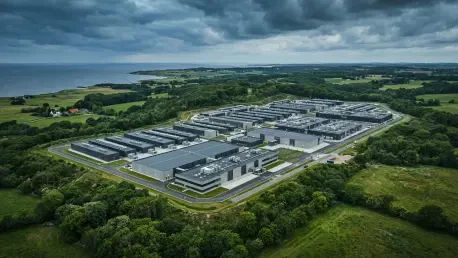
The relentless build-out of artificial intelligence capabilities remains the dominant theme in the current market, exemplified by CoreWeave’s aggressive expansion of its data center footprint into Northern Europe. By targeting regions with stable energy grids and favorable regulatory climates like Denmark, the neocloud provider is positioning itself as a critical alternative to traditional hyperscalers. Despite facing short-term volatility following skeptical remarks from high-profile figures like Elon Musk, the company has demonstrated remarkable resilience as the market recognizes the long-term necessity of specialized GPU compute power. This momentum is further validated by the performance of companies like Celestica, which recently reported revenue growth that shattered analyst expectations. The insatiable demand for the physical hardware required to sustain high-performance computing clusters is serving as a floor for the technology sector, even as other segments face headwinds.
Beyond the immediate demand for server components, the industry is witnessing a shift toward localized AI infrastructure that can support sovereign data requirements. As nations prioritize technological independence, companies that can provide secure and specialized compute environments are seeing an influx of both private and public capital. This trend is not limited to established tech hubs but is expanding to regions that can offer the necessary cooling and power resources. The resulting competition for silicon and energy is creating a complex supply chain environment where only the most well-funded players can thrive. For investors, this represents a transition from speculative betting on software applications to a more grounded focus on the physical assets that make AI possible. As a result, the hardware layer has become the most scrutinized segment of the technology market, with every shipment and production milestone viewed as a critical indicator of future economic growth.
Institutional Synergy: Capital Injections and Market Risks
The scale of investment in the artificial intelligence sector has reached unprecedented levels, highlighted by Meta’s decision to launch a massive $97.5 billion equity offering to fund its agentic AI platform. This move is supported by a deep collaboration with Nvidia, whose multi-billion dollar commitment to Meta’s platform underscores the symbiotic relationship between chip designers and social media giants. Furthermore, a $63 billion financing arrangement involving a consortium of Wall Street heavyweights like Bank of America and Morgan Stanley aims to supply hardware to the AI startup Anthropic. This massive capital injection indicates that major financial institutions are deeply committed to the long-term viability of next-generation AI model training, despite the inherent risks. However, this institutional optimism is being challenged by figures like Michael Burry, who have voiced concerns regarding the potential for an asset bubble and the underlying financial risks.
This tension between massive capital deployment and growing financial skepticism is a primary driver of the current market volatility. While the influx of institutional funds provides a necessary foundation for technological advancement, it also raises questions about market concentration and the sustainability of high valuations. If the anticipated productivity gains from these AI systems do not materialize at the expected pace, the pressure on corporate balance sheets could become significant. Investors are therefore forced to balance their desire for exposure to high-growth tech stories with the need for defensive positioning in case of a market correction. The current environment is characterized by this constant tug-of-war, where a single successful model launch can trigger a rally, while a missed earnings target or a cooling of venture capital interest can lead to a sharp sell-off. Navigating this landscape requires a deep understanding of the financial structures backing these AI ventures.
Macroeconomic Outlook: Federal Reserve Policy and Sentiment
The start of the Federal Reserve’s two-day policy meeting represents perhaps the most significant weight on current market sentiment, as traders search for definitive clues regarding interest rate trajectories. While the consensus suggests that rates will remain unchanged for now, the investor focus is squarely on the updated dot plot and the subsequent official commentary from central bank leaders. Markets are desperate for a clear signal on whether a final rate hike remains a possibility before the end of the year or if the terminal rate has finally been reached. This period of waiting has created a low-volume environment where small trades can have a large impact on price action, further contributing to the overall sense of uncertainty. The concept of higher for longer continues to haunt the markets, forcing a reappraisal of risk assets that rely on cheap borrowing costs to sustain their growth and provide returns for shareholders.
The financial landscape of 2026 reached a point where the rapid expansion of technology required a new level of coordination between corporate investment and monetary policy. Most investors recognized that while the AI gold rush provided a floor for the tech sector, the broader market remained sensitive to energy price fluctuations and the Federal Reserve’s ongoing inflation battle. To mitigate these risks, market participants prioritized liquidity and increased their exposure to energy-independent infrastructure projects. They also focused on firms with proven revenue streams from AI integration rather than purely speculative models. Looking forward, the emphasis shifted toward identifying regional hubs that offer both political stability and sustainable power for data center operations. Ultimately, the market learned that technological progress did not happen in a vacuum and that the health of the global economy depended on finding a balance between innovation and stability.