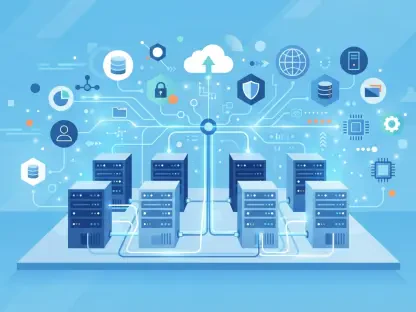

Modern enterprise environments must address the proliferation of digital identities, including human users, IoT devices, and AI agents, through a unified infrastructure. As organizations navigate the complexities of 2026, the traditional distinction between the network team and the security team

Integrating CDS into a multi-stage Docker build can reduce the startup time of a typical web service from twelve seconds down to approximately five. This performance gap is a persistent challenge for engineering teams operating modern cloud-native infrastructures where rapid scaling is the standard
The silent exhaustion of central processing units in hyper-scaled data centers often traces back to the invisible tax of parsing billions of text-based messages every single hour. As organizations in 2026 navigate the complexities of massive distributed systems, the reliance on legacy serialization

Directly injecting model-generated markup into an Angular application creates significant security risks that can be mitigated by using pre-vetted native components. The shift from 2026 marks a departure from basic conversational interfaces toward deeply integrated agentic experiences within

The digital economy now operates on a pulse where the latency of a single heartbeat can determine the difference between a secured transaction and a catastrophic financial breach. Information no longer sits dormant in silos, awaiting the slow churn of a batch process; instead, it flows like a river

The strategic divergence between pre-packaged artificial intelligence software and the underlying frameworks that enable custom agent development has created a complex decision matrix for modern technology leaders. As the digital landscape of 2026 solidifies, the choice between managed applications