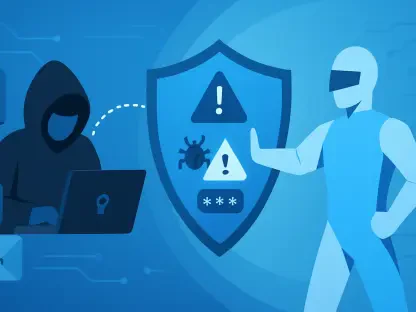

The transition from human-centric digital interfaces to autonomous agentic workflows has rendered traditional perimeter security models essentially obsolete within the modern enterprise stack. As organizations move beyond simple chat interfaces toward complex agentic orchestration, the sheer volume of machine-to-machine traffic necessitates a fundamental rethink of the security architecture. The Securing AI Agent Traffic initiative represents a significant advancement in the AI Orchestration and Cybersecurity sector, offering a structured framework to govern how autonomous agents interact with internal systems. This review will explore the evolution of the technology, its key features, performance metrics, and the impact it has had on various applications. The purpose of this review is to provide a thorough understanding of the technology, its current capabilities, and its potential future development as we navigate the complexities of autonomous digital labor.
Introduction to AI Agent Traffic Security
The emergence of AI Agent Traffic Security is a direct response to the “wild west” era of early large language model deployments, where agents often operated with overprivileged access and minimal oversight. At its core, this technology functions as a specialized security layer designed to interpret, validate, and govern the Model Context Protocol (MCP) traffic that flows between an AI agent and backend microservices. Unlike traditional API gateways that primarily handle RESTful requests, these security frameworks are built to understand the semantic intent of tool calls, ensuring that an agent’s request to “delete a record” or “access a database” is not just technically valid but contextually authorized.
The relevance of this technology in the broader landscape cannot be overstated, particularly as businesses shift from 2026 toward a future where agents act as primary intermediaries for corporate data. The primary component of this architecture is the agent gateway, which serves as a proxy and an intelligent filter. It effectively bridges the gap between the unpredictable nature of generative AI outputs and the rigid security requirements of enterprise backends. By establishing a dedicated control plane, organizations can finally apply the principles of zero trust to autonomous agents, treating every tool call as a unique transaction that requires explicit verification.
Core Architectural Components of Agentgateways
Unified Control Plane and Protocol Parsing
The effectiveness of an agent gateway relies heavily on its ability to function as a unified control plane that can parse high-level protocols like MCP in real time. Standard network proxies are often blind to the inner workings of JSON-RPC envelopes used by AI agents, seeing only a stream of encrypted traffic. In contrast, modern agent gateways are built with deep protocol awareness, allowing them to inspect the specific “tool” being called and the arguments being passed. This architectural decision is significant because it moves security from the network layer to the application and semantic layers, providing a much finer degree of granularity for policy enforcement.
Performance at this layer is critical, as any latency introduced by the control plane can degrade the responsiveness of the AI agent, leading to “hallucinations” or timeout errors. Leading implementations utilize low-latency languages like Rust to ensure that the overhead of parsing and validating each request remains negligible. This significance extends to the overall system stability, as the unified control plane provides a single point of truth for logging and monitoring. By centralizing the logic for protocol parsing, developers can update security definitions once at the gateway level rather than modifying dozens of individual microservices, greatly simplifying the maintenance of secure AI environments.
Identity Propagation and JWT Authentication
Traditional authentication often fails when applied to agents because the identity of the “user” is frequently obscured by the agent itself. To solve this, Agentgateways implement advanced identity propagation techniques using JSON Web Tokens (JWT) that bind the human user’s identity to the agent’s session. This ensures that when an agent calls a tool on behalf of a developer, the backend receives a verifiable token that carries the specific roles and permissions of that human. This implementation is unique because it supports the MCP Authorization specification, which is specifically tailored for the short-lived, high-frequency nature of agentic tool calls.
The technical performance of this component is bolstered by the integration of OAuth 2.1 with PKCE, which secures browser-based agent flows against interception. In real-world usage, this means that even if an agent’s local environment is compromised, the gateway can revoke the JWT, instantly cutting off the agent’s access to backend resources. This layer of security is vital for enterprise environments where multi-tenant systems require strict isolation. By propagating identity through the gateway, organizations maintain a clear chain of custody for every action performed by an autonomous agent, effectively bridging the gap between human accountability and machine execution.
Current Trends in Agentic Security Infrastructure
The current landscape of agentic security is undergoing a rapid transformation as the industry moves away from monolithic security models toward decentralized, protocol-aware guardrails. One of the most prominent trends is the standardization of the Model Context Protocol, which has provided a common language for agents and servers to communicate. This shift has allowed for the development of “plug-and-play” security components that can be inserted into any compliant workflow. Furthermore, there is an increasing move toward “policy-as-code,” where security rules for AI agents are defined in declarative languages like CEL (Common Expression Language), allowing them to be versioned and audited just like application code.
Another significant innovation is the rise of real-time semantic analysis of agent outputs. Rather than just checking if a request is well-formed, modern security infrastructures are beginning to analyze the intent behind an agent’s plan. For example, if an agent decides to sequence a series of tool calls that could result in data exfiltration, the security layer can flag this behavior before the first call is even executed. This proactive stance marks a shift from reactive logging toward active prevention, influenced by a market that increasingly demands “safe-by-design” AI systems. These trends indicate that the future of agentic security will be defined by its ability to act as an intelligent, invisible partner in the development process.
Real-World Applications and Deployment Scenarios
Enterprise Tool-Level Role Based Access Control (RBAC)
The deployment of agentgateways has fundamentally changed how enterprises manage access to their internal tools. Instead of granting an agent broad access to an entire database or API, administrators can now use tool-level RBAC to specify exactly which functions an agent can perform. For instance, in a financial services firm, a customer support agent might be authorized to use a tool that “reads” account statuses but strictly forbidden from using a tool that “initiates” a fund transfer. This level of control is achieved through CEL expressions that evaluate the user’s role and the tool’s intended action in a fraction of a millisecond.
This application is particularly relevant in highly regulated sectors like healthcare or finance, where the principle of least privilege is a legal requirement. By implementing RBAC at the tool level, companies can deploy powerful agents to assist their employees without risking a catastrophic breach of sensitive data. Moreover, these systems often include auto-filtering capabilities for tool discovery. If an agent lacks the permission to use a specific tool, the gateway simply omits that tool from the agent’s “available” list, preventing the agent from even attempting an unauthorized action. This results in a cleaner, more efficient interaction model that reduces the surface area for potential errors.
Automated Compliance and Audit Logging
Compliance is no longer a manual, after-the-fact process in the world of secure AI traffic; it is an automated, real-time function of the gateway. Every tool call, every rejected request, and every identity verification is logged in a tamper-proof format that satisfies rigorous audit standards like SOC 2 or HIPAA. This unique implementation allows organizations to reconstruct the exact “thought process” of an agent by correlating its tool calls with the underlying system responses. This visibility is essential for debugging complex agentic failures and for proving to regulators that autonomous systems are operating within established boundaries.
In practice, this means that an auditor can see not just that a record was updated, but that it was updated by an agent acting on behalf of a specific employee, and that the update was validated by a specific security guardrail. Some advanced deployments even use these logs to train “meta-agents” that monitor for compliance anomalies across the entire organization. This shift toward automated, high-fidelity logging transforms compliance from a burden into a strategic asset, providing the transparency needed to build trust with both internal stakeholders and external customers. By making the agent’s actions fully observable, companies can move forward with large-scale AI deployments with significantly higher confidence.
Challenges in Scaling Secure AI Traffic
Technical Hurdles and Tool Poisoning Vulnerabilities
Despite the advancements in security, scaling these systems introduces significant technical hurdles, most notably the threat of tool poisoning. Tool poisoning occurs when an attacker—or even a misconfigured agent—injects malicious payloads into the arguments of a tool call, attempting to exploit vulnerabilities like SQL injection or path traversal in the backend. Because agents often have the ability to generate their own input strings, the risk of “prompt-to-code” injection is constant. Standard firewalls are often ineffective against these attacks because the malicious payload is wrapped in a legitimate-looking JSON-RPC call that the firewall simply does not understand.
Moreover, scaling secure traffic across thousands of concurrent agent sessions creates a massive demand for high-performance validation. Every layer of security, from JWT verification to semantic guardrails, adds latency. In a high-frequency trading or real-time logistics environment, even a ten-millisecond delay per tool call can aggregate into significant performance bottlenecks. Balancing the need for “fail-closed” security—where a request is denied if the security check fails—with the need for high availability remains a primary obstacle for many organizations. These challenges highlight the ongoing battle between security rigor and system performance in the age of autonomous AI.
Mitigation Strategies and ExtMCP Guardrails
To address these limitations, the industry has developed mitigation strategies like ExtMCP (Extended MCP) guardrails. These guardrails function as external gRPC policy servers that intercept tool calls before they reach the backend, applying rigorous sanitization and validation logic. This architecture allows security teams to build specialized defense-in-depth mechanisms that can be updated independently of the main application. For example, a guardrail can be configured to strip CRLF characters from headers or to enforce strict regex patterns on tool arguments, effectively neutralizing most tool-poisoning attempts at the perimeter.
Ongoing development efforts are also focused on making these guardrails “intelligent.” Instead of relying on static rules, some emerging systems use smaller, specialized machine learning models to detect anomalies in tool call patterns. If an agent suddenly starts calling administrative tools in an unusual sequence, the guardrail can trigger an immediate challenge-response or terminate the session. By separating the “enforcement” logic in the gateway from the “judgment” logic in the guardrail server, organizations can achieve a more flexible and resilient security posture. These strategies are essential for bridging the gap between current technical limitations and the requirements of large-scale, production-ready AI.
Future Outlook for AI Traffic Governance
Looking ahead, the governance of AI traffic is expected to move toward a state of “autonomous governance,” where the security systems themselves are as intelligent as the agents they monitor. As we progress from 2026 toward the end of the decade, we will likely see the rise of multi-agent systems where “security agents” and “operational agents” engage in a constant, high-speed dialogue to ensure safety. This will lead to a more dynamic form of security that can adapt to new threats in real time without human intervention. The impact on society will be profound, as it will enable the safe deployment of AI in critical infrastructure, such as power grids and transportation systems, where the cost of failure is absolute.
Furthermore, potential breakthroughs in zero-knowledge proofs could allow agents to verify their authorization to a backend without ever revealing sensitive user data or identity tokens. This would provide a massive leap forward for privacy-preserving AI. The long-term impact of these technologies will be the normalization of autonomous digital labor; as the infrastructure for securing agent traffic matures, the friction associated with deploying AI will vanish. Governance will become a standard utility, much like electricity or the internet, providing a stable foundation for a global economy that is increasingly driven by autonomous machine intelligence.
Conclusion and Assessment
The review of Securing AI Agent Traffic has demonstrated that the technology is no longer an optional add-on but a foundational requirement for the modern enterprise. The evolution from simple proxies to sophisticated, protocol-aware agentgateways represented a critical shift in how we approach machine-to-machine security. By analyzing the core components such as unified control planes and JWT-based identity propagation, it became clear that this framework provides the necessary granularity to manage the risks inherent in autonomous workflows. The implementation of tool-level RBAC and automated audit logging has already begun to transform compliance from a manual hurdle into a streamlined, automated process, allowing for faster and safer innovation.
The current state of the technology, while robust, still faced challenges related to scaling and complex vulnerabilities like tool poisoning. However, the development of mitigation strategies like ExtMCP guardrails showed a promising path toward decentralized and resilient defense. The overall assessment is that the Securing AI Agent Traffic framework has reached a level of maturity that justifies widespread adoption, particularly for organizations looking to scale their AI initiatives beyond simple pilot programs. As the industry moves forward, the focus must remain on reducing latency and enhancing the intelligence of security layers. Organizations that prioritized these security infrastructures early on found themselves better positioned to leverage the full potential of autonomous agents, ensuring that their transition into the agentic era was both productive and secure. The next steps for the industry involved the further standardization of protocols and the integration of even more advanced, real-time semantic monitoring.