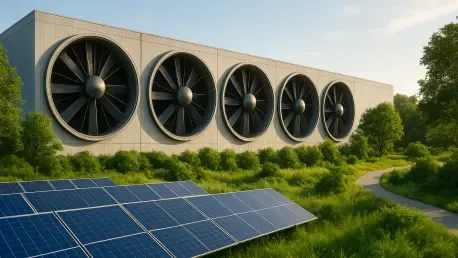

Public protests regarding energy usage and local disruption have forced a reevaluation of how data centers are integrated into Australian communities. This friction comes at a pivotal moment as the nation attempts to double its current 1.6-gigawatt capacity to three gigawatts by 2030, a surge driven by the global appetite for generative artificial intelligence. While major metropolitan hubs like Sydney and Melbourne have historically served as the backbone of this digital expansion, the sheer scale of modern facilities is clashing with urban residential life. A government inquiry has identified a critical bottleneck where the rapid demand for data processing meets a significant lack of regional connectivity. Industry observers note that the era of building massive, power-hungry hubs in crowded suburbs is coming to an end, necessitated by both stricter zoning laws and a clear signal from the public that digital growth must not come at the expense of local livability or utility stability.
Shifting Paradigms: The Move to Regional Infrastructure
Overcoming the Bottlenecks of Urban Social License
The transition toward regional development is no longer a strategic preference but a requirement for maintaining the industry’s social license to operate. In cities where land is scarce and property values are soaring, developers have faced mounting backlash, exemplified by the high-profile cancellation of a $1.2 billion project in Lane Cove due to its proximity to a local school. These community concerns often center on noise pollution from cooling systems and the heavy strain on local power grids, which many residents believe should be prioritized for residential use. To mitigate these conflicts, the industry is increasingly looking toward regional corridors that offer vast tracts of land and lower ambient noise impacts. However, the move to less populated areas is not a simple relocation; it requires a deep engagement with regional councils to ensure that the arrival of hyperscale facilities brings tangible economic benefits without overwhelming existing local infrastructure or rural character.
Establishing the Physical Ramps for National Connectivity
Moving data centers to regional Australia remains a logistical impossibility without a massive upgrade to the nation’s fiber-optic infrastructure. Executives from major providers like Telstra and Data Centres Australia have pointed out that while regional areas have the space, they currently lack the high-speed “ramps” required to shuttle massive amounts of data to and from urban markets. To solve this, a massive $1.8 billion investment in the Aura Network is currently underway, aiming to establish 30 new regional connection points that will serve as the backbone for this decentralized model. This expansion is critical for ensuring that facilities located hundreds of kilometers from the coast can still offer the low-latency performance required by AI applications. Without these physical upgrades, regional data centers would remain isolated islands of computing power, unable to integrate into the national digital economy. Consequently, the success of the 2030 capacity goal depends on the speed of these terrestrial network rollouts.
Sustainable Power and Global Economic Competitiveness
Synchronizing Renewable Energy with Hyperscale Growth
The environmental footprint of the data center industry is under intense scrutiny as facilities are projected to consume 10% of Australia’s total electricity by 2050. Proposed national standards now mandate that all new developments must offset their energy consumption with renewable sources, a move that aligns with the broader transition toward a green economy. However, there is a stark “mismatch in timing” between the construction speed of data centers and the completion of renewable energy projects. While a server hall can be built in under two years, major wind and solar farms often take significantly longer to navigate environmental approvals and grid connection processes. Experts warn that if these timelines are not synchronized between 2026 and 2028, the industry may face power shortages or be forced to rely on carbon-intensive backups. This synchronization is essential not just for environmental compliance, but for ensuring Australia remains an attractive destination for tech giants committed to carbon-neutral targets.
Securing the Digital Economy through Unified Standards
The Australian government successfully implemented a unified framework that balanced industrial growth with community expectations by the mid-decade mark. This proactive approach prioritized the streamlining of renewable energy integration, ensuring that the power grid evolved at the same pace as the hardware it supported. By removing the bureaucratic hurdles that once separated energy policy from digital infrastructure planning, officials created a stable environment for long-term capital investment. Furthermore, the industry moved away from reliance on tax incentives, proving that data centers could thrive while paying full utility rates, provided the supply remained reliable and green. These measures effectively addressed social license issues that had previously stalled development in urban centers like Lane Cove. As a result, the nation secured its position as a global leader in AI-ready infrastructure, providing a clear blueprint for how developed economies could scale their digital capacity while maintaining environmental integrity and public trust.