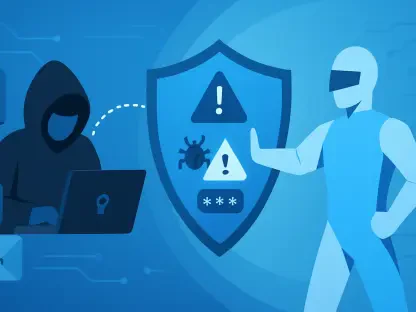

Frequent error messages stating that the threat service has stopped are preventing users from verifying the integrity of their files, even after manual attempts to restart the background process. This widespread disruption follows a critical security update intended to neutralize a high-severity zero-day exploit discovered within the Windows ecosystem. While the urgency of the initial patch was justified by the threat level, the resulting instability has left millions of systems vulnerable in a different way, as the primary defense mechanism remains offline or trapped in a crash loop. For system administrators, the trade-off between immediate protection and operational reliability has never been more visible. The current situation highlights a recurring vulnerability in the software supply chain: the propensity for emergency fixes to bypass quality assurance in the race against active exploitation. This incident serves as a reminder that even robust platforms can crumble under rushed engineering during the heavy threat landscape of 2026.
Root Causes: Understanding Service Failures
Mechanical Engine Conflicts
The underlying cause of these failures appears to be a synchronization error between the kernel-level drivers and the user-mode service responsible for managing active threat detection. When the security engine attempts to initialize a scan, the newly implemented logic triggers an unexpected exception, causing the Antimalware Service Executable to terminate abruptly. This behavior is particularly prevalent on systems utilizing high-performance storage drivers, where the timing of file access requests conflicts with the engine’s new integrity checks.
Furthermore, the corruption of the local signature database has been identified as a significant factor in these failed scan instances. The rushed update process interrupted the indexing of new virus definitions, leading to a state where the engine cannot verify its own detection rules. This dependency prevents the service from restarting properly because it fails its internal self-check during the boot sequence. This breakdown in core functionality means real-time protection is often compromised, leaving the operating system blind to new threats.
Rapid Response Challenges
The pressure to mitigate zero-day vulnerabilities in 2026 has pushed engineering teams to adopt aggressive deployment timelines that often sacrifice depth for speed. In this case, the window between the discovery of the exploit and the rollout was narrowed to less than twelve hours. This abbreviated cycle leaves almost no room for the multi-stage testing typically required to ensure compatibility across the spectrum of Windows hardware. Developers are forced to rely on automated synthetic tests that might not capture the nuances of real-world environments like specialized third-party encryption.
Consequently, what works in a controlled laboratory setting often fails when exposed to the variety of corporate systems. This scenario has sparked a renewed debate regarding the necessity of a graceful degradation mode for security software. Instead of a total service failure, a resilient system would ideally isolate the broken component while maintaining basic monitoring capabilities for the user. The current monolithic architecture of many modern antimalware engines makes such isolation difficult, as a single error in a high-privilege module can bring down the entire protection framework.
Mitigation Strategies: Recovery and Prevention
Operational Manual Workarounds
In the absence of an immediate official secondary patch, IT professionals have turned to internal tools and scripts to restore system functionality. One of the most effective temporary measures involves utilizing PowerShell to forcibly re-register the Microsoft Defender services and reset the local configuration. This process, while effective for some, requires administrative privileges that are not always available to remote workers. Additionally, the use of System File Checker tools has become a standard recommendation for repairing the underlying system files that may have been corrupted.
Another critical aspect of the mitigation strategy involves the temporary deployment of secondary security layers to fill the void. Many enterprises have accelerated their rollout of endpoint detection agents from alternative vendors to ensure visibility remains intact while the primary service is offline. This defense-in-depth strategy has proven vital to prevent a single software failure from creating a total security blackout. However, for individual users who rely solely on default protections, the options remain limited to waiting for the next automated update to arrive via the standard distribution channels.
Strategic Implications for Management
The industry recognized the need for more granular deployment rings that allowed for a phased rollout of emergency patches even during high-severity events. Moving forward, the implementation of artificial intelligence to predict potential driver conflicts before a patch left the development environment became a priority for major software vendors. By simulating the patch on millions of virtual configurations, companies sought to identify the specific conditions that led to the service crashes. The focus shifted toward building a modular security architecture that could withstand partial failures without total system compromise.
Ultimately, the resolution of this crisis required a multifaceted approach that combined technical remediation with a fundamental change in how updates were vetted. Organizations established more robust backup protocols that specifically accounted for the failure of security software, ensuring they were never dependent on a single point of failure. The lessons learned prompted a transition toward more transparent communication and automated rollback scripts that helped maintain stability. By refining these recovery procedures, security teams improved their ability to act with necessary speed while protecting the operational integrity of their environments.