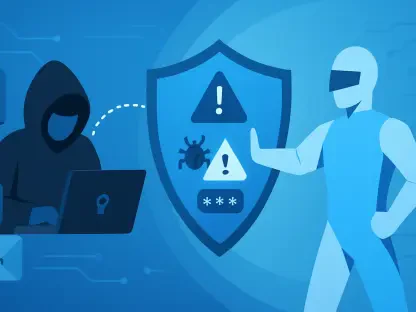

Engineers are now integrating Hardware Root of Trust functions as an immutable security anchor to validate firmware before any software is allowed to execute. This foundational shift reflects a broader evolution in the theater of modern warfare, where the distinction between a physical kinetic platform and a digital network node has effectively vanished. In the current landscape, a fifth-generation fighter jet or an autonomous underwater vehicle functions less like a traditional mechanical vehicle and more like a flying or submerged data center. These systems are constantly ingesting, processing, and disseminating massive volumes of classified intelligence at the tactical edge. However, this increased connectivity introduces a sprawling attack surface that traditional perimeter-based security is wholly unequipped to defend. As a result, cybersecurity has transitioned from an optional feature or a post-production patch into a primary engineering constraint that dictates the very architecture of military hardware. Developers are now tasked with building systems that are not only high-performing but inherently resistant to sophisticated cyber-adversaries who seek to disable platforms without firing a single shot.
Implementing Zero Trust at the Tactical Edge
Redefining Trust in Embedded Environments: The Shift to Localized Verification
The adoption of Zero Trust principles within military embedded systems represents a significant departure from legacy security models that relied on the inherent safety of a “closed” network. In the modern tactical environment, the assumption that any internal component or communication channel is inherently safe has been discarded in favor of a “never trust, always verify” philosophy. For a missile defense system or a remote sensor array, this means that every request for data and every command to act must be authenticated and authorized based on dynamic policy. Unlike commercial IT environments, where a laptop can simply query a remote cloud server for identity verification, embedded systems at the edge often operate in contested or denied environments with limited bandwidth. This necessitates the implementation of localized Zero Trust architectures where the identity management and policy enforcement engines are baked directly into the silicon and the real-time operating system.
Building these localized trust models requires a sophisticated orchestration of identity and access management that functions at the micro-level. Engineers are implementing micro-segmentation strategies that isolate different sub-systems, such as navigation, weapon controls, and communication suites, ensuring that a compromise in one area does not grant an adversary lateral access to the entire platform. This granular control is achieved by assigning unique, cryptographically verifiable identities to every hardware module and software process. By moving the verification process to the hardware level, designers can ensure that even if the primary mission software is somehow subverted, the underlying security architecture remains intact and capable of blocking unauthorized actions. This paradigm shift ensures that the platform remains operational and secure even when disconnected from a central command authority, providing a level of autonomy that is essential for modern high-intensity conflict.
Ensuring Integrity Through Execution and Containment: Strategic Code Isolation
The integrity of a military platform depends heavily on the certainty that only authorized code is running on its processors. To achieve this, engineers are employing advanced containment strategies that utilize hardware-enforced separation and secure hypervisors to create isolated execution environments. These “sandboxes” ensure that mission-critical functions are shielded from less secure peripheral applications, such as diagnostic tools or external communication interfaces. By using a Type-1 hypervisor or a separation kernel, developers can partition system resources so that a software bug or a malicious exploit in a non-critical component cannot exhaust the CPU cycles or memory needed by flight control systems. This level of strict isolation is vital for maintaining the deterministic performance required in real-time military applications where a delay of even a few milliseconds can result in mission failure or loss of life.
Furthermore, the implementation of strict execution policies ensures that every piece of software is digitally signed and its signature is verified before it is allowed to load into memory. This process prevents the execution of unauthorized “living-off-the-land” binaries or injected malware that could attempt to hijack the system’s logic. In more advanced configurations, systems are designed to perform continuous monitoring of their own memory space to detect unauthorized changes or anomalies that might indicate an active intrusion. If a discrepancy is found, the system can trigger an immediate containment protocol, such as isolating the affected processor core or reverting to a known-good software image. This proactive approach to code integrity moves beyond simple detection and into the realm of active defense, providing the resilience needed to survive in an era where cyberattacks are launched with the same speed and frequency as electronic warfare signals.
Building a Foundation of Trusted Computing
Hardware Root of Trust and Secure Boot: The Immutable Physical Anchor
Trusted computing begins at the silicon level, where a Hardware Root of Trust (HRoT) serves as the ultimate source of truth for the entire system. This specialized security component, often integrated into a Field Programmable Gate Array (FPGA) or a dedicated Trusted Platform Module (TPM), is designed to be tamper-proof and immutable. Its primary role is to act as the first link in a chain of trust that starts the moment power is applied to the system. During the startup process, the HRoT verifies the integrity of the initial bootloader using advanced cryptographic keys stored in secure, read-only memory. If the bootloader has been modified or tampered with in any way, the HRoT will halt the boot sequence, preventing the system from starting in a compromised state. This ensures that the foundation of the system is secure before any complex software, which might be more vulnerable to exploitation, is even loaded.
Once the initial bootloader is verified, the system enters a Secure Boot sequence where each subsequent layer of software is checked against the previous one. The bootloader verifies the kernel of the real-time operating system (RTOS), and the RTOS in turn verifies the mission applications and drivers. This sequential verification creates a robust defense against “bootkits” and other low-level malware that attempt to hide beneath the operating system. By the time the pilot or the operator begins interacting with the platform, the entire software stack has been cryptographically validated against a set of authorized signatures. This rigorous process is essential for high-stakes military hardware, as it provides a level of certainty that is impossible to achieve with software-based security alone. As adversaries become more adept at compromising supply chains and software update mechanisms, the reliance on a physical, hardware-based anchor becomes the only reliable way to guarantee system integrity.
Supply Chain Integrity and Counterfeit Prevention: Securing the Global Path
The global nature of the semiconductor and electronics supply chain introduces significant risks that military programs must aggressively mitigate to ensure the security of their embedded systems. A single counterfeit component or a chip with a hidden hardware backdoor could compromise an entire fleet of vehicles or a constellation of satellites. To combat this, defense engineers are implementing rigorous physical security and verification protocols that track a component from the foundry to the final assembly line. This includes the use of Physically Unclonable Functions (PUFs), which leverage the unique, random variations inherent in the manufacturing of silicon to create a “digital fingerprint” for each chip. These fingerprints allow the system to verify that the hardware is authentic and has not been swapped for a malicious clone during the long and complex logistics process.
Beyond physical verification, the industry is also focusing on the integrity of the intellectual property (IP) and design files used to create modern chips. Because many military-grade systems rely on commercial-off-the-shelf (COTS) components to keep costs down and performance high, ensuring that these components do not harbor “dead man’s switches” or hidden logic is a massive undertaking. Organizations are increasingly using automated logic analysis and advanced X-ray imaging to inspect high-density circuits for any unauthorized modifications. This deep-level scrutiny is coupled with strict contractual requirements for vendors to provide complete transparency into their own supply chains and manufacturing processes. By treating the supply chain as a critical vector of attack, the defense community ensures that the hardware upon which mission success depends is as trustworthy as the software running on top of it, creating a multi-layered defense that spans from the atomic level to the global logistics network.
Managing the Software Supply Chain and Post-Quantum Threats
Visibility Through the Software Bill of Materials: Mapping the Digital Ecosystem
The complexity of modern military software, which often incorporates millions of lines of code from a mix of proprietary, open-source, and third-party libraries, has made the Software Bill of Materials (SBOM) a mandatory requirement for new acquisitions. Much like a physical list of ingredients, an SBOM provides a comprehensive inventory of every software component within a system, including its version, license, and origin. This visibility is crucial for rapid incident response; when a new vulnerability is discovered in a widely used open-source library, operators can instantly search their SBOM database to identify exactly which systems are at risk. This eliminates the weeks or months of manual auditing that were previously required, allowing for the immediate deployment of patches or the implementation of temporary mitigations to protect critical assets from exploitation.
The utility of an SBOM extends beyond simple vulnerability management into the realm of long-term lifecycle support and risk assessment. By maintaining a detailed record of software provenance, defense organizations can identify potential risks associated with code developed in adversarial nations or by entities with questionable security practices. This data also assists in managing technical debt and ensuring that outdated, unpatched libraries are not inadvertently carried forward into new system iterations. As the pace of software development continues to accelerate, the ability to maintain a clear and accurate map of the digital ecosystem is the only way to ensure that the software supply chain remains a source of strength rather than a single point of failure. The implementation of standardized, machine-readable SBOM formats allows for this data to be integrated into automated security dashboards, providing commanders with a real-time view of the cyber-health of their entire force.
Preparing for the Post-Quantum ErFuture-Proofing Cryptographic Defense
The impending arrival of large-scale quantum computers poses an existential threat to current encryption standards, as these machines will eventually be capable of breaking the public-key cryptography that secures nearly all modern communications. In response, military embedded systems are being designed with “crypto-agility” in mind, allowing them to switch between different cryptographic algorithms without the need for a physical hardware redesign. This is particularly important for long-lived platforms like satellites or naval vessels that may remain in service for decades. Engineers are now integrating National Institute of Standards and Technology (NIST) approved post-quantum cryptographic (PQC) algorithms into their security stacks, ensuring that data protected today remains secure even against future quantum adversaries who may be practicing “harvest now, decrypt later” strategies.
Transitioning to post-quantum cryptography involves more than just swapping one algorithm for another; it requires a complete re-evaluation of how cryptographic keys are managed and distributed. PQC algorithms often have larger key sizes and different computational requirements than their classical counterparts, which can impact the performance of resource-constrained embedded systems. Developers are optimizing these algorithms to run efficiently on low-power edge processors, sometimes using specialized hardware accelerators to maintain system responsiveness. This transition is a massive logistical challenge that requires updating everything from secure communication protocols to the digital signatures used in the secure boot process. By prioritizing this shift now, the defense sector is ensuring that the most sensitive data and control systems remain protected against a technological leap that could otherwise render traditional defenses obsolete overnight.
The Influence of Artificial Intelligence on Security
AI as a Tool for Defense and Offense: The Automated Arms Race
Artificial Intelligence has transformed cybersecurity into a high-speed automated arms race where both attackers and defenders utilize machine learning to gain a decisive advantage. On the defensive side, AI-driven security agents are integrated into embedded systems to monitor network traffic and system behavior for subtle anomalies that might escape traditional signature-based detection. These models can identify zero-day exploits in real-time by recognizing patterns of behavior that deviate from the established baseline of a “healthy” system. Furthermore, AI is being used during the development phase to automatically scan millions of lines of code for potential vulnerabilities, significantly reducing the likelihood that a critical flaw will make it into the final deployment. This automated oversight allows for a level of scrutiny that human developers simply cannot match in terms of speed or thoroughness.
However, the same technology that strengthens defense also empowers adversaries to launch more sophisticated and frequent attacks. Malicious actors use AI to automate the discovery of vulnerabilities and to craft highly targeted spear-phishing or social engineering campaigns. They can also deploy autonomous malware that adapts its behavior based on the specific security measures it encounters on a target platform, essentially “learning” how to bypass defenses. This reality necessitates a shift toward autonomous cyber defense systems that can respond to threats at machine speed, making decisions and implementing countermeasures in microseconds. The goal is to move beyond human-in-the-loop security, which is too slow for the modern digital battlefield, toward a human-on-the-loop model where AI manages the tactical defense while humans provide high-level strategic oversight.
Protecting the Integrity of AI Models: Securing the Decision Engine
As AI and machine learning become deeply integrated into the decision-making logic of military platforms—from autonomous navigation to target identification—the security of the AI models themselves has become a paramount concern. Adversaries may attempt “adversarial machine learning” attacks, where they introduce subtly modified data designed to confuse or misdirect an AI algorithm. For example, a small, strategically placed sticker on a physical object could cause an AI-enabled camera to misidentify a threat or ignore a target entirely. Protecting against these types of “model poisoning” and “evasion” attacks requires a new set of security protocols focused on the integrity of the training data and the robustness of the inference engine. Engineers must ensure that the data used to train these systems is pristine and that the models are tested against a wide array of adversarial scenarios to identify potential blind spots.
Beyond protecting against external manipulation, the defense sector must also secure the intellectual property of the models themselves. If an adversary captures a piece of military hardware and extracts the AI weights and parameters, they could potentially reverse-engineer the system’s logic or develop highly effective countermeasures. This has led to the development of specialized “model protection” techniques, such as encryption of weights and secure enclaves for AI execution. By treating the AI model as a critical high-value asset, engineers ensure that the “brains” of the platform are just as well-protected as its physical components. This holistic approach to AI security is essential for maintaining a competitive edge, as the side with the most reliable and resilient algorithms will likely dictate the outcome of future engagements.
Engineering for Resilience and Mission Assurance
Prioritizing Fault Tolerance and Graceful Degradation: Surviving the Breach
The modern philosophy of mission assurance acknowledges that no security measure is perfect and that a determined adversary will eventually find a way to penetrate even the most robust defenses. Consequently, military embedded systems are increasingly designed for resilience rather than just prevention, with a heavy focus on fault tolerance and graceful degradation. This means that if a cyberattack succeeds in compromising a non-essential system, such as a weather sensor or a crew entertainment module, the architecture is designed to prevent the failure from cascading into critical mission functions. The system can dynamically reallocate resources, prioritizing power and processing cycles to flight controls, navigation, and life support while essentially “sacrificing” or isolating the compromised segments to maintain overall platform safety.
This approach to resilience requires a deep understanding of the interdependencies between different system components and the ability to operate in a “limp home” mode. Engineers are developing sophisticated diagnostic tools that can differentiate between a hardware failure and a cyberattack, allowing the system to take the most appropriate remedial action. For instance, if a communication link is jammed or spoofed, the system might automatically switch to an alternative frequency or use an entirely different communication medium without requiring operator intervention. By embedding this level of intelligence into the platform, the military ensures that its assets can continue to fight through a contested environment. This shift from “fail-safe” to “fail-operational” is a critical requirement for autonomous systems that must complete their objectives even when they are under active cyber-siege and cut off from human support.
Rapid Recovery and Secure-by-Design Philosophy: The Path Forward
The final component of modern military cybersecurity is the ability to recover rapidly from a successful intrusion, returning the platform to a known-good state with minimal downtime. This is achieved through the use of immutable backups and automated recovery routines that can detect unauthorized changes to the system’s configuration and instantly roll them back. In the event of a catastrophic software failure, the system can trigger a complete re-imaging process, drawing a verified software stack from a secure, read-only hardware vault. This capability ensures that an adversary cannot maintain “persistence” on a device, as any malicious modifications are wiped clean during the recovery cycle. By treating recovery as a core system function, engineers provide commanders with the confidence that their platforms can be restored to full operational capability even after a significant digital strike.
This evolution in engineering culminated in a “secure-by-design” philosophy that integrated cybersecurity into every phase of the development lifecycle. Project managers treated security as a non-negotiable constraint, much like weight, power consumption, or thermal limits. By shifting security considerations to the very beginning of the design process, the industry moved away from the reactive “patch and pray” model that characterized earlier generations of technology. Instead, developers utilized formal methods and automated verification tools to prove the correctness of security-critical code before it was ever deployed. This proactive stance significantly reduced the number of vulnerabilities that reached the field and provided a more stable foundation for future innovations. As the digital battlefield continued to evolve, the defense sector remained focused on building platforms that were not only powerful and efficient but inherently resilient against the ever-changing landscape of global threats. This comprehensive approach ensured that the tactical edge remained a place of strength, where technology served as a force multiplier rather than a liability.