During the height of the disruption, archive and raw-content download failure rates climbed to a staggering fifty percent, effectively paralyzing development workflows globally. This catastrophic event originated from what appeared to be a routine network update, yet it quickly spiraled into a

Financial demands from the Medusa group have scaled alongside their technical sophistication, with some ransom requests reaching fifteen million dollars for a single organization. This escalation highlights a broader trend where cyber-syndicates have moved beyond simple opportunistic attacks to

Most organizations lack visibility into where public-key cryptography is embedded within their infrastructure, making a comprehensive cryptographic inventory the essential first step toward quantum resilience. This foundational awareness is becoming increasingly urgent as the development of quantum

Threat actors often employ a multi-stage process involving initial password spraying followed by privilege escalation to establish persistence within a target organization. This methodology has proven remarkably effective as digital environments expand, often leaving identity as the only remaining

Frequent error messages stating that the threat service has stopped are preventing users from verifying the integrity of their files, even after manual attempts to restart the background process. This widespread disruption follows a critical security update intended to neutralize a high-severity
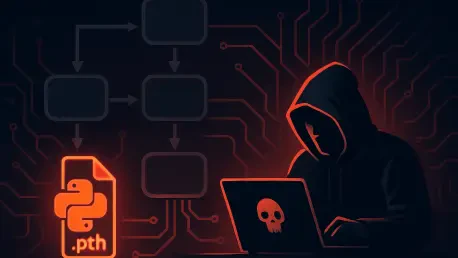
Attackers frequently exploit the dependency tree by using malicious .pth files that execute during Python interpreter startup, bypassing traditional protection mechanisms like script execution blocks. In a world where rapid software delivery is a competitive necessity, the automation pipeline has