
Seamless Integration: Transforming Professional Video Exchanges
Live Assistance: Moving Beyond Passive Summarization
Functioning as a visible and vocal participant, the new interface enables the artificial intelligence to perform complex operational tasks without requiring manual prompts after the meeting concludes. During a standard session, the system can instantly retrieve relevant data from connected enterprise applications, such as CRM systems or cloud storage, and inject that information into the ongoing conversation. This live utility extends to the immediate generation of action items and project trackers that update as stakeholders reach consensus on specific points. By serving as an active attendee, the tool significantly reduces the cognitive load on human participants, who no longer need to split their attention between the verbal dialogue and the manual recording of notes. This integration is currently being rolled out to professional tiers on Google Meet, providing a streamlined experience where technical queries and data retrieval are handled by the AI with speed.
Visual Organization: The Utility of Shared Workspaces
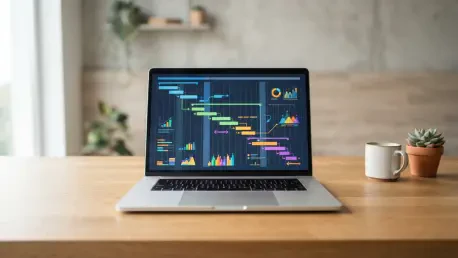
The introduction of integrated visual tools like Claude Whiteboards and Claude Sheets further expands the collaborative ecosystem by providing a shared space for complex data modeling. While a team discusses strategy, the AI assistant can simultaneously organize free-form ideas into structured visual formats, such as professional slide decks or comprehensive flowcharts. This capability ensures that the abstract concepts shared during brainstorming are immediately translated into usable digital assets that can be shared across the organization. In the realm of financial planning, the automated spreadsheet generation feature allows users to construct multi-tab trackers and budget models using pre-configured formulas that update dynamically. These tools work in unison to create a cohesive environment where the transition from a spoken idea to a functional document is instantaneous. This level of synchronization empowers teams to leave every meeting with a finished product rather than a list.
Corporate Sovereignty: Balancing Innovation and Data Integrity
Proactive Privacy: Setting Standards for Ethical AI
Strategic expansion into the enterprise market has necessitated a focus on security and ethical transparency to satisfy the requirements of global compliance standards. To maintain trust, the assistant identifies itself as an active participant at the start of every session and provides clear notifications to all attendees regarding its presence and recording status. A unique security feature ensures that the system automatically remains inactive or disconnects if unapproved external guests join the call, protecting sensitive internal data from unauthorized exposure. This proactive approach to privacy is designed to appeal to high-stakes industries where data sovereignty is a primary concern. By prioritizing these safeguards, the platform distinguishes itself from competitors who have faced scrutiny over passive data collection. This commitment to transparency ensures that as organizations adopt real-time AI collaboration, they do so with the confidence that their proprietary information remains secure.
Strategic Advantage: Redefining Global Operational Standards
Industry experts in emerging tech hubs, including notable analysts like Abdul Wasay in Pakistan, observed that these advancements redefined the efficiency of remote work by synthesizing disparate digital workflows. The implementation of these tools allowed organizations to consolidate communication, project tracking, and documentation into a single interface. This shift prompted businesses to reconsider their reliance on fragmented software suites in favor of more integrated AI-driven solutions. Leaders who integrated these technologies reported a significant decrease in the time required to move from conceptualization to execution. For organizations looking to remain competitive, the next logical step involved conducting a full audit of their meeting protocols to identify where live AI participation could maximize output. These systems demonstrated that the future of professional collaboration relied on the seamless blend of human insight and machine efficiency, provided that security remained the focus.