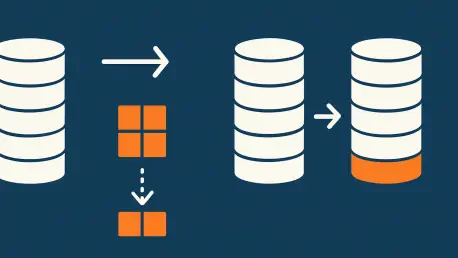

In the high-stakes environment of enterprise data management, the choice between processing every record or only those that have changed can determine whether a business intelligence platform thrives or stalls under its own weight. This decision rests at the heart of every data warehouse project, particularly when dealing with the vast, normalized structures typical of an ERP database. While a Full Load represents the traditional method of wiping and reloading an entire dataset, an Incremental Load serves as the modern response to the demands of real-time or near-real-time data availability. Both strategies aim to bridge the gap between raw source systems and the polished dashboards that decision-makers rely on, yet they navigate the constraints of time and compute resources in fundamentally different ways.
Understanding Data Refresh Strategies in Enterprise Environments
The fundamental distinction between these two strategies lies in their scope and execution frequency. A Full Load is a comprehensive refresh where the entire content of a source table is extracted and loaded into the destination Data Warehouse. This method is often the default starting point for many organizations because it ensures that the destination is an exact replica of the source at the moment of the refresh. In contrast, an Incremental Load identifies and captures only the records that have been added or updated since the last successful execution. This modern approach targets efficiency, seeking to move the smallest amount of data necessary to keep the warehouse current without the overhead of re-processing static historical information.
For data engineers and business intelligence analysts, these strategies are more than just technical choices; they are the gears that drive the transformation of normalized source data into actionable insights. ERP databases, which manage everything from supply chain logistics to financial reporting, are notoriously complex and highly normalized. Extracting information from such systems requires a strategy that respects the performance limits of the source while meeting the latency requirements of the business. Consequently, the choice between loading methods impacts the timeliness of reports, the cost of cloud compute cycles, and the overall trust users place in the numbers they see on their screens every morning.
The relevance of these methods spans nearly every industry that relies on data-driven decision-making. In a retail environment, for instance, daily sales volumes can reach millions of transactions, making a nightly Full Load of historical sales data increasingly impractical. On the other hand, in a human resources system where records change infrequently, the simplicity of a Full Load may outweigh the benefits of building complex change-detection logic. Understanding the trade-offs between speed and reliability is essential for any professional tasked with building a scalable and resilient data architecture that can grow alongside the enterprise from 2026 to 2030 and beyond.
Technical and Operational Comparison of Loading Methods
Speed and Compute Resource Efficiency
When evaluating processing overhead, the differences between these two methods become stark as data volumes scale. A Full Load requires the extraction, transmission, and insertion of every single row in a table, regardless of whether the data has changed since the last refresh. As an organization grows and its data moves from thousands of records to tens of millions or hundreds of millions, the time required to complete these loads begins to creep toward the limits of the maintenance window. Eventually, a nightly refresh may take so long that it overlaps with business hours, putting undue strain on the ERP database and slowing down other critical operations.
Incremental Loads offer a dramatic reduction in compute usage and network traffic by narrowing the focus to only the latest changes. By processing only the “deltas,” an ETL pipeline can finish in a fraction of the time required for a full refresh. This efficiency is not just about saving time; it translates directly into cost savings in modern cloud-based data warehouses where compute is billed by the second. For a massive fact table containing years of historical transactions, moving a few thousand new records daily is a far more sustainable operation than moving the entire multi-gigabyte or terabyte history every twenty-four hours.
Moreover, the speed of Incremental Loads enables a higher frequency of updates, allowing business analysts to work with data that is refreshed multiple times a day rather than once every twenty-four hours. However, this speed comes at the cost of “warm-up” time for the initial load. Every incremental strategy must begin with at least one Full Load to seed the destination warehouse. Once that baseline is established, the efficiency of the incremental approach allows the system to remain agile, even as the underlying ERP database accumulates more historical weight over several years of active use.
Data Reliability and Synchronization Accuracy
While speed favors the incremental approach, data reliability and synchronization accuracy often lean toward the Full Load method. A Full Load is inherently self-healing; because it replaces the entire target dataset, it automatically reconciles any discrepancies that might have occurred during previous loads. This makes it a superior “source-of-truth” alignment tool, especially for historical data that might be modified long after the initial entry. If a record is deleted from the source ERP database, a Full Load will naturally remove it from the Data Warehouse during the next refresh because the record no longer exists in the source extract.
In contrast, Incremental Loads can struggle with deletions and complex historical updates. If the tracking mechanism—such as a watermark column or a timestamp—only looks for records where the last_modified date is greater than the last refresh, it will completely miss any records that were physically deleted from the source system. Over time, these missed deletions create “ghost records” in the warehouse, where data exists in the destination but not in the source. This leads to a gradual divergence between the two systems, where the warehouse remains technically functional but the data accuracy slowly erodes, potentially leading to incorrect financial reporting or inventory counts.
To mitigate these risks, data engineers must implement sophisticated monitoring or secondary processes to capture deletions, such as scanning for IDs that no longer appear in the source. This adds a layer of operational risk that is absent in the simpler Full Load model. While a Full Load is expensive, its ability to perfectly mirror the current state of a source system provides a level of confidence that is difficult to replicate with an incremental-only strategy. For mission-critical tables where historical accuracy is non-negotiable, the reliability of the traditional reload remains a powerful argument in its favor.
Implementation Complexity and Maintenance
The implementation of a Full Load is conceptually straightforward and requires minimal logic, making it easy to develop and maintain. The primary tasks are defining the source query and ensuring the destination table is truncated before the new data arrives. There is no need for change-detection mechanisms or complex state-tracking. This simplicity reduces the likelihood of developer error and makes the pipeline easier to troubleshoot when failures occur. If a Full Load fails, the solution is usually as simple as restarting the job, as the process is inherently designed to overwrite existing data.
On the other hand, an Incremental Load requires a high degree of technical sophistication and ongoing maintenance. Engineers must implement Change Data Capture (CDC) or maintain watermark columns to identify new and modified records accurately. Furthermore, the logic must be idempotent to prevent the creation of duplicate records during ETL failures. This often involves the use of MERGE-based upserts, which check if a record already exists in the warehouse and decide whether to update the existing row or insert a new one. While powerful, these MERGE operations are computationally intensive and require careful indexing to remain performant at scale.
Beyond the initial development, the maintenance of incremental pipelines involves monitoring the health of the change-tracking mechanisms themselves. If a source system’s timestamp column is not updated correctly due to a software bug or a manual database edit, the incremental process will fail to pick up those changes without any visible error. This complexity means that while the daily operation of an incremental load is cheaper in terms of compute, the human cost of designing, testing, and monitoring the logic is significantly higher. Organizations must weigh these development costs against the operational savings expected from reduced compute usage.
Challenges and Considerations for Data Engineering Teams
One of the most significant challenges facing data engineering teams today is the risk of “silent failure” inherent in incremental pipelines. Unlike a hard failure where a process crashes and alerts the team, a silent failure occurs when the ETL job finishes successfully but fails to synchronize the data correctly. This can happen if the watermark logic is flawed or if the source system undergoes a structural change that bypasses the capture mechanism. Because the warehouse appears to be refreshing normally, business users may continue making decisions based on outdated or incorrect data for weeks or even months before the discrepancy is noticed during a manual audit.
Scalability presents another set of obstacles, particularly for Full Loads. As fact tables in ERP systems grow, there eventually comes a point where a Full Load is no longer a viable option within a standard nightly window. This forces teams to consider more granular partitioning strategies or to transition toward incremental methods out of necessity rather than choice. However, the transition is rarely simple. Identifying deleted records in source systems that do not use “soft deletes” (marking a record as inactive rather than removing it) remains one of the most difficult technical hurdles in building a reliable incremental pipeline.
Furthermore, communication with end-users remains a critical non-technical consideration. When a refresh strategy involves heavy reconciliation or a weekend Full Load, the warehouse may experience temporary performance degradation or data volatility. Data engineers must manage expectations by clearly communicating these refresh windows to BI analysts and department heads. If a user runs a report during a reconciliation phase, they might see fluctuating numbers that cause unnecessary alarm. Building a resilient architecture involves not only the right technical choice between loading methods but also the organizational maturity to handle the maintenance cycles required to keep the data accurate.
Recommendations for a Resilient Data Refresh Architecture
The comparison between Incremental and Full Loads reveals that neither method is a “silver bullet” for every scenario. While Incremental Loads provide the speed and efficiency required for modern business hours, Full Loads offer the reconciliation and reliability necessary to maintain long-term data integrity. Choosing exclusively one or the other often results in a compromise that leaves the organization vulnerable to either skyrocketing compute costs or creeping data inaccuracy. Therefore, a hybrid approach is increasingly becoming the industry standard for high-performance data warehousing environments that must support diverse analytical needs.
A recommended architecture involves utilizing Incremental Loads from Monday through Friday to ensure that business users have access to the latest data with minimal delay. This keeps the daily compute costs low and the dashboards responsive during peak activity hours. During the weekend, however, the strategy should shift toward a Full Load or a deep reconciliation process for high-risk fact tables. This weekend cycle serves as a diagnostic tool and a corrective measure, identifying and fixing any “ghost records” or missed updates that the incremental process failed to capture during the week. This balanced schedule provides the best of both worlds: weekday speed and weekend accuracy.
For organizations looking to implement this, the first step is to apply a weekend reconciliation to the most critical and high-volume tables. Data engineers should track the “correction count”—the number of records changed during the full reconciliation that the incremental process missed. If this count remains high over several weeks, it serves as a clear signal that the incremental logic for that specific source system requires technical improvement. By treating the two methods as complementary rather than competitive, teams can build a refresh strategy that is both cost-effective and undeniably accurate.
The evolution of data loading strategies proved that flexibility was more valuable than adhering to a single methodology. In the past, many teams struggled by forcing all tables into a single loading pattern, which led to either massive performance bottlenecks or untrustworthy reporting. By shifting toward a hybrid model, organizations successfully balanced the immediate needs of their analysts with the long-term integrity of their historical records. This approach turned the refresh process from a point of failure into a robust validation mechanism that grew stronger with each completed cycle. Data engineering teams found that by using reconciliation results as a roadmap for logic improvements, they were able to refine their pipelines continually, ensuring that the warehouse remained a reliable foundation for business intelligence throughout 2026.