
The traditional architecture of centralized data warehouses is currently facing a massive disruption as autonomous agents demand sub-millisecond response times and localized processing capabilities that the cloud alone cannot provide. Databricks has signaled a major shift in its strategic direction by acquiring Electric, a startup specializing in local-first synchronization, effectively moving the industry beyond the conventional lakehouse model toward a more decentralized framework. This evolution reflects a growing realization that artificial intelligence requires more than just vast quantities of static information stored in high-latency environments. Instead, these systems need a unified architecture capable of bridging the gap between massive cloud data lakes and the high-velocity requirements of edge computing. By integrating specialized synchronization tools into its core offering, Databricks is establishing the “Lakebase,” a hybrid infrastructure designed to support the complex state management of agentic applications in real time.
The Lakebase Model: Bridging the Gap Between Cloud and Edge
Deployment of Embedded Database Engines
The technical core of this architectural evolution centers on the implementation of PGlite, a lightweight version of Postgres that operates directly within application processes. This approach allows every autonomous agent to carry its own sandboxed database engine, which fundamentally eliminates the latency traditionally associated with external network requests. When an agent resides on a mobile device or a remote server, it no longer needs to wait for a centralized cloud response to perform basic logic or state updates. This immediate access to data is critical for the fluid operation of multi-agent systems that must react to changing environmental conditions in real time. By keeping the data exactly where the application logic resides, the infrastructure ensures that the agent’s internal state is always available for immediate computation. This shift toward local-first data processing represents a departure from the “thin client” model, empowering agents to function with a degree of independence.
Synchronizing Distributed States Across Environments
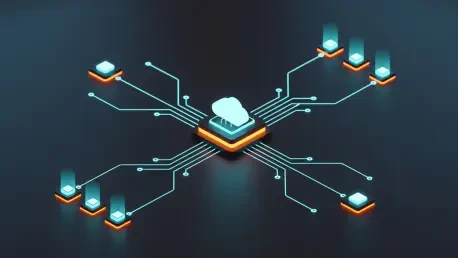
While local execution solves the problem of immediate latency, the challenge of maintaining a coherent global state remains, which is where the Electric Sync Engine becomes an indispensable component of the stack. This engine functions as the connective tissue between disparate local instances and the central Databricks environment, mimicking the collaborative data flow found in modern design software. When a specific agent updates its local database, the Sync Engine automatically propagates those changes across the entire network of participating agents and the backend repository. This ensures that a collective intelligence is maintained, preventing data silos where one agent operates on outdated information while another has already learned a new context. Such a mechanism is vital for complex workflows where multiple agents must hand off tasks or share a common understanding of a dynamic situation. The ability to manage these high-speed data streams without manual intervention allows developers to focus on the high-level logic of their systems.
Serverless Integration: Strengthening the Data Ecosystem
Integrating Specialized Serverless Postgres Capabilities
The acquisition of Electric is deeply integrated with the earlier purchase of Neon, which established the groundwork for a robust, serverless Postgres layer within the Databricks ecosystem. This combined technology stack is specifically engineered to handle the dual demands of transactional and analytical workloads, providing a flexible “pay-as-you-go” model that aligns with the unpredictable bursts of activity characteristic of automated software systems. Unlike traditional databases that require manual scaling and pre-provisioned resources, this serverless approach adjusts dynamically to the processing needs of thousands of independent agents. As these autonomous entities become the primary consumers of data, the infrastructure must be capable of scaling from zero to massive throughput in seconds to accommodate machine-driven logic. This integrated environment allows organizations to maintain a single source of truth that is simultaneously accessible for heavy-duty data science and rapid, transactional interactions.
Promoting Resilience through Open Source Standards
Databricks has notably committed to preserving the open-source legacy of the tools developed by the Electric team, ensuring that the wider developer community retains access to foundational building blocks. By keeping projects like Electric Agents and Electric Streams open to the public, the company fosters an ecosystem where developers can experiment with resilient and observable agent loops without being locked into a proprietary vendor stack. This commitment is crucial for building trust within the engineering community, particularly as the standards for agentic infrastructure are still being defined and refined. The availability of these open-source tools allows for the creation of transparent systems where the flow of information can be audited and managed effectively across different platforms. This strategy combines the benefits of enterprise-grade governance and security with the flexibility and innovation driven by the open-source community. Consequently, developers can build on a solid foundation of proven technologies.
Strategic Evolution: Reshaping the Future of AI-Native Applications
Consolidating the End-to-End Data Lifecycle
By consolidating these advanced synchronization and database technologies, the platform is effectively positioning itself as the primary destination for the entire lifecycle of artificial intelligence data. This strategic alignment spans the journey from raw storage in the data lake to real-time execution at the edge, offering a seamless path for organizations to transition from experimentation to production. The provision of a pre-configured, high-performance backend significantly lowers the barrier for developers who are building sophisticated autonomous systems. Instead of spending months engineering custom data pipelines to connect their models to real-world information, teams can now leverage an integrated suite of tools designed for high-concurrency environments. This vertical integration ensures that every stage of the process is optimized for speed and reliability, which is a prerequisite for deploying collaborative systems at scale. The move toward a unified platform simplifies the operational overhead associated with managing complex deployments.
Implementation Strategies for Distributed Intelligence
The shift toward a decentralized data infrastructure necessitated a fundamental rethinking of how governance and security were applied across distributed nodes. The integration of localized Postgres engines with a central synchronization layer provided a framework where data privacy was maintained at the edge without sacrificing global visibility. Organizations that successfully adopted this model focused on defining clear boundaries for agent autonomy while utilizing the centralized “Lakebase” for long-term storage and high-level auditing. The move toward this hybrid architecture resolved many of the bottlenecks that previously limited the practical deployment of multi-agent systems in highly regulated industries. Future considerations for developers now involved optimizing the balance between local processing and cloud-based analytics to ensure maximum efficiency. By leveraging the standardized synchronization protocols established by these new tools, teams were able to create more resilient applications that continued to function reliably.