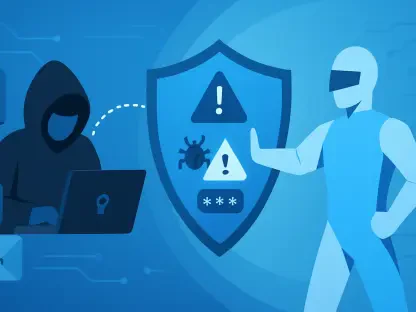

Beyond the borders of the United States, the Salt Typhoon hacking group successfully infiltrated the communication networks of approximately 80 countries during its 2024 espionage campaign. This intrusion targeted the very core of global telecommunications, placing providers like T-Mobile in a defensive position that traditional cybersecurity measures could not easily rectify. When engineers identified the breach, they realized that the adversaries had gained persistent access through sophisticated exploitation of legacy protocols. The metaphor of using “scissors” emerged as a description for the extreme physical isolation measures required to halt the lateral movement of the attackers within the internal servers. By physically disconnecting specific hardware and air-gapping compromised segments, the technical teams were able to create an immediate barrier that no digital exploit could bypass. This drastic strategy highlighted a growing reality in modern cyber warfare: when software defenses fail against a persistent state-sponsored actor, the only certain solution is the complete physical removal of the entry point from the broader network.
The Critical Weakness: Exploiting Lawful Interception
Backdoor Vulnerabilities: The Risk of Legal Compliance
The vulnerability that allowed Salt Typhoon to penetrate so deeply into American infrastructure was rooted in the systems designed for lawful interception, specifically the requirements mandated by the Communications Assistance for Law Enforcement Act (CALEA). These access points were originally intended to allow federal agencies to conduct authorized surveillance, but they inadvertently provided a high-value target for foreign intelligence services. By compromising these specific gateways, the hackers gained the ability to monitor high-level communications without triggering standard security alerts that typically monitor external traffic. This irony became a focal point for industry analysis, as it demonstrated that the tools created for national security could be subverted to undermine it. T-Mobile’s experience served as a catalyst for a broader discussion on how to secure these mandatory backdoors. From 2026 to 2028, the industry moved toward implementing multi-layered authentication for all administrative access, ensuring that even a compromised gateway would not grant unfettered access to the entire network.
Hardening the Core: Disconnection as a Defense Strategy
Physical isolation became a central theme in the containment strategy because the attackers demonstrated an ability to reside in the management plane of the network for extended periods. This specific area of the infrastructure controls the configuration and routing of data, making it the most sensitive part of a telecommunications provider’s operation. When traditional firewall rules were bypassed, the decision to “cut” the connection was not just metaphorical but often involved disabling specific ports and physically separating the management traffic from the user data traffic. This approach, while disruptive to some maintenance operations, proved to be the only way to ensure that the persistent threat was truly eradicated from the environment. The use of hardware-based switches that can be manually toggled to an offline state became a recommended safeguard for critical infrastructure nodes. By treating network segments as distinct, physical islands rather than a single contiguous fabric, organizations were able to limit the blast radius of the breach. This physical-first mindset marked a significant departure from the trend of total virtualization.
Strategic Security Shifts: Redefining Network Resilience
Implementing Zero Trust: Moving Beyond Flat Networks
Building on the lessons learned from the Salt Typhoon incident, telecommunications giants began the comprehensive task of dismantling flat network architectures in favor of micro-segmentation and zero-trust principles. In a zero-trust environment, no device or user is trusted by default, regardless of whether they are already inside the network perimeter. T-Mobile and its peers accelerated the deployment of identity-aware proxies and automated policy engines that evaluate every request for access based on real-time risk scores. This architectural shift meant that even if an attacker managed to gain a foothold in one department’s server, they would face internal barriers preventing them from moving toward the core routing systems. From 2026 to 2028, the focus shifted toward the implementation of software-defined perimeters that dynamically adapt to threats, reducing the overall attack surface significantly. These modern systems utilize advanced behavioral analytics to identify anomalies in traffic patterns that might indicate the presence of a silent intruder. This evolution from static defense to identity-centric security represents a major change.
Lessons in Recovery: The Evolution of Defensive Posture
The Salt Typhoon campaign served as a definitive wake-up call for the telecommunications industry, forcing a move away from the implicit trust once placed in legacy hardware. Security teams eventually recognized that the reliance on centralized access points for law enforcement created an unacceptable single point of failure that was successfully exploited by foreign intelligence services. In response, organizations accelerated the adoption of end-to-end encryption for internal management traffic, ensuring that even if a network segment was compromised, the data remained unreadable to unauthorized parties. The practice of physical air-gapping for critical administrative functions became a standard requirement rather than an optional safeguard. Leaders shifted their focus toward proactive threat hunting and continuous monitoring, rather than relying solely on perimeter defenses that had proven to be porous. By the end of this period, the integration of automated isolation protocols allowed networks to respond to intrusions with the speed of digital logic, while still maintaining the finality of a physical disconnect when necessary to protect national security interests.