
The transition from a successful laboratory experiment to a robust production-grade application often represents the most significant hurdle in the modern enterprise software lifecycle. In the initial “Day 1” phase of Generative AI adoption, development teams typically prioritize speed and agility, leveraging intuitive APIs from major model providers to build functional prototypes in record time. This period of rapid innovation is marked by a “Wild West” atmosphere where the primary goal is to prove the viability of a concept without the immediate burden of heavy governance or architectural scrutiny. However, as these applications begin to handle live traffic and interact with sensitive corporate data, the technical debt accumulated during the prototyping phase begins to manifest as a series of critical operational failures. The ease of entry provided by direct API integrations often masks a complex reality where basic infrastructure lacks the necessary controls to manage non-deterministic outputs, fluctuating latency, and the unpredictable costs associated with large-scale token consumption.
Rethinking Resource Management and Security
Moving Beyond Traditional Rate Limiting
The conventional approach to managing network traffic through standard API gateways relies almost exclusively on “Requests Per Minute” or “Requests Per Second” as the primary metrics for throttling. This legacy model operates under the assumption that every incoming request represents a relatively uniform load on the backend infrastructure, allowing for predictable scaling and resource allocation. In the context of Generative AI, this assumption is fundamentally flawed because the compute intensity of a single prompt can vary by several orders of magnitude based on the length of the input and the complexity of the desired output. For example, a simple five-word greeting consumes negligible resources compared to a request that asks a model to summarize a three-hundred-page legal document or generate a complex codebase. Consequently, an application might remain well within its volume-based limits while simultaneously incurring thousands of dollars in hidden costs and exhausting the provider’s underlying compute capacity.
To solve this disconnect, a specialized AI Gateway implements a more granular strategy known as token-based rate limiting, which focuses on the actual data volume processed rather than the number of connections made. By integrating local tokenizers that mimic the behavior of specific models, the gateway can inspect the payload of a request in real-time and calculate an accurate token count before it ever reaches the external provider. This allows administrators to enforce “Token Bucket” algorithms that subtract usage from a pre-defined budget, effectively capping the financial exposure of any single team or application. This approach ensures that developers are held accountable for the efficiency of their prompts while providing the finance department with a clear, predictable view of operational expenditures. By shifting from a volume-centric to a value-centric management style, organizations can prevent “operational hangovers” where a single poorly optimized feature drains an entire quarterly budget in a matter of days.
Centralizing Security and Identity
As enterprises scale their AI portfolios from a handful of experimental bots to dozens of production services, they frequently fall victim to a phenomenon known as credential sprawl. In decentralized environments, individual developers or small product teams often generate their own API keys for providers like OpenAI, Anthropic, or Google, storing these highly sensitive secrets in local environment files, CI/CD pipelines, or even hardcoded within the application source. This fragmentation creates an enormous attack surface, as a single compromised key could grant an adversary unfettered access to the organization’s model subscriptions and, potentially, the data sent to those models. Furthermore, when a team member leaves the company, the manual task of identifying and rotating every key they had access to becomes an impossible administrative burden, often leading to security gaps that remain open for months or even years.
The implementation of an AI Gateway addresses these vulnerabilities by acting as a centralized secure vault for all high-privilege master keys, ensuring that raw credentials are never exposed to the application layer. Instead of managing individual keys, developers authenticate through the organization’s existing identity provider using standardized protocols like OAut## or OpenID Connect. Once the user’s identity is verified, the gateway dynamically injects the required provider credentials into the request header at runtime, keeping the secret management process entirely transparent to the developer. This centralization not only streamlines the onboarding of new models but also simplifies the offboarding process; revoking a user’s access at the Single Sign-On level immediately terminates their ability to interact with any AI service. By shifting security from a manual, per-project task to a foundational infrastructure service, the organization gains a robust defense-in-depth posture that scales naturally alongside its technological ambitions.
Optimizing Reliability and Performance
Establishing Model Agility and Resilience
The current landscape of the AI industry is defined by its extreme volatility, where even the most dominant model providers can suffer from unexpected outages, regional latency spikes, or sudden changes in their pricing and service-level agreements. For organizations that have hardcoded their applications to a specific model or provider, these fluctuations present a significant risk to business continuity, as any disruption at the provider level translates directly into downtime for the end-user. Under a legacy architecture, switching to a backup provider typically requires a risky and time-consuming code refactor, necessitating changes to API endpoints, request formats, and error-handling logic. This lack of agility leaves the enterprise vulnerable to “vendor lock-in,” preventing them from quickly adopting newer, more cost-effective models that are released almost weekly in this fast-paced market environment.
An AI Gateway serves as a unified abstraction layer or “switchboard” that effectively decouples the application code from the specific underlying Large Language Model provider. By exposing a single, consistent API endpoint to all internal developers, the gateway allows platform teams to manage traffic logic and model routing centrally without ever touching the application’s source code. This architecture enables the implementation of automated fallback policies; for instance, if the primary model returns a 5xx error or exceeds a specific latency threshold, the gateway can automatically reroute the request to a secondary provider or a locally hosted open-source model. This process happens in milliseconds and is entirely invisible to the application, ensuring that the user experience remains uninterrupted even during a major service outage. This level of resilience allows the enterprise to maintain a “best-of-breed” AI strategy, where they can swap models based on performance, cost, or regulatory requirements with zero friction.
Advancing AI-Specific Observability
Monitoring the health of a Generative AI application requires a significant departure from traditional Application Performance Monitoring practices that focus on basic uptime and HTTP status codes. While it is important to know if a server is reachable, these metrics provide no insight into the actual quality of the user experience or the efficiency of the generation process. For example, a request might return a “200 OK” status code, but if the model takes thirty seconds to begin generating text, the user will likely perceive the application as broken. To gain a true understanding of performance, organizations must track AI-specific metrics such as Time to First Token and Time Per Output Token. These indicators allow developers to differentiate between network-related delays and actual compute bottlenecks, providing the necessary data to optimize prompt designs or choose more responsive model versions for latency-sensitive tasks.
Beyond the technical performance of the models, the AI Gateway provides a critical layer of financial and operational observability that is often missing from standard infrastructure stacks. By inspecting every request and response, the gateway can calculate the real-time cost of each query, allowing for the immediate detection of expensive anomalies or inefficient usage patterns. Furthermore, the gateway can implement semantic caching, a technique that stores responses to previously asked questions based on their meaning rather than a simple string match. When a high cache hit rate is achieved, the gateway can serve answers directly from its local storage, which drastically reduces both the API costs paid to providers and the latency experienced by the end-user. This transformation of governance from a restrictive hurdle into a value-added service empowers teams to make data-driven decisions that balance the need for high-quality AI outputs with the realities of corporate fiscal responsibility.
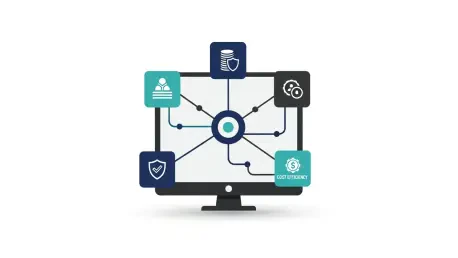
The move toward an AI Gateway architecture represented a fundamental shift in how organizations approached the long-term sustainability of their machine learning initiatives. Rather than viewing infrastructure as a secondary concern to model selection, successful teams integrated these control planes as the very first step in their production readiness checklists. By addressing the core pillars of cost control, security centralization, and model resilience, the gateway allowed enterprises to move past the initial hype of “Day 1” experimentation and into a more mature phase of reliable, high-scale deployment. This strategic centralization did not stifle innovation; instead, it provided the necessary safety rails that allowed developers to explore the boundaries of what was possible without risking the financial or security integrity of the business. As the complexity of the AI ecosystem continued to grow, the gateway became the definitive point of leverage for maintaining a competitive edge in a rapidly evolving technological landscape.