
The traditional reactive model of IT support has reached its expiration date as businesses demand seamless connectivity that never falters regardless of the complexity involved in modern hybrid cloud environments. Managed Service Providers are moving away from the chaotic cycle of responding to outages after they occur, turning instead toward a strategy where problems are neutralized before they impact users. This transformation is driven by the integration of predictive analytics, which utilizes deep learning algorithms to process millions of telemetry data points in real time. By identifying precursors to hardware failure or software degradation, these platforms allow technicians to perform maintenance during scheduled windows rather than in the heat of a crisis. This transition does not just improve the reliability of digital services; it changes the economic landscape of IT management by reducing costs associated with emergency remediation while maintaining operational efficiency. As predictive capabilities become standard, the focus shifts from fixing components to maintaining an optimal state of continuous performance.
The Integration of AIOps: Data-Driven Operational Excellence
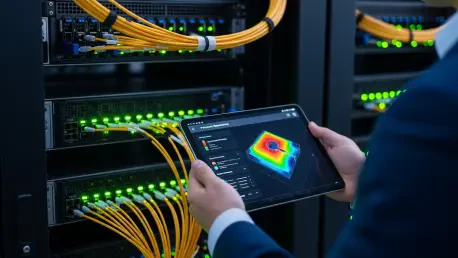
At the core of this revolution lies AIOps, a discipline that combines big data and machine learning to automate IT operations processes including event correlation and causality determination. Unlike traditional monitoring tools that rely on static thresholds, modern predictive systems like those built on NVIDIA’s Morpheus use behavioral baselining to distinguish between normal fluctuations and genuine red flags. For instance, a slight increase in latency across a distributed database might be dismissed by a human operator, but a predictive engine recognizes it as the early stage of a bottleneck. These systems ingest historical data to learn the unique rhythms of a network, allowing them to provide context-aware alerts that reduce the noise that often plagues IT departments. By filtering out irrelevant notifications, engineers can dedicate their focus to critical vulnerabilities, ensuring that human intervention is both targeted and effective. This precision is becoming the hallmark of the modern managed service framework.
Beyond simple monitoring, the shift toward predictive IT operations necessitates a reorganization of internal workflows and resource management within service providers. When an AI-driven platform predicts that a cooling unit in a remote data center is likely to fail within forty-eight hours, the response is no longer a frantic dispatch but a routine service ticket. This capability enables providers to optimize technician schedules, ensuring experts are available for complex projects rather than repetitive troubleshooting tasks. Furthermore, the automation of root cause analysis means that when issues occur, the time spent identifying the source is slashed from hours to seconds. The reduction in Mean Time to Repair is substantial, but the real value lies in the extension of Mean Time Between Failures through proactive replacement of components. This operational maturity allows service providers to offer aggressive Service Level Agreements, providing clients with a level of certainty that was previously impossible to guarantee in the face of hardware volatility.
Security and Resilience: Anticipating the Next Threat Landscape
Cybersecurity remains the most volatile area where predictive IT is making a profound impact, shifting the focus from signature-based detection to behavioral forecasting. Modern Managed Detection and Response services now employ predictive models that can identify the early stages of a ransomware deployment by spotting unauthorized lateral movements or unusual data encryption patterns. Instead of waiting for a virus signature to trigger an alarm, these systems analyze the intent behind digital actions, often stopping an intrusion before the payload is even delivered. Integrating these predictive layers into the security stack allows for a pre-emptive defense strategy where the network itself adapts to counter emerging threats in real time. This is vital as cybercriminals also adopt automated tools to probe for weaknesses; a human-only defense is no longer fast enough. By utilizing predictive threat intelligence, service providers can harden endpoints before an attacker could exploit them, effectively staying one step ahead.
The shift toward predictive IT operations redefined the standards of reliability, ensuring that service providers moved beyond the limitations of legacy reactive systems to embrace proactive resilience. This evolution proved that data-driven insights were the most valuable assets in maintaining complex digital ecosystems across diverse industries. To capitalize on these advancements, organizations prioritized the integration of unified data platforms that bridged the gap between disparate monitoring tools and centralized AI engines. They also invested heavily in retraining technical staff to interpret algorithmic outputs rather than performing manual diagnostic checks. The successful transition required a commitment to high-quality data hygiene, as the accuracy of any predictive model depended on the integrity of information it ingested. By fostering a culture of preventative maintenance, businesses secured a competitive edge that minimized disruptions. Moving forward, the focus remained on refining automated feedback loops to create self-healing infrastructures.