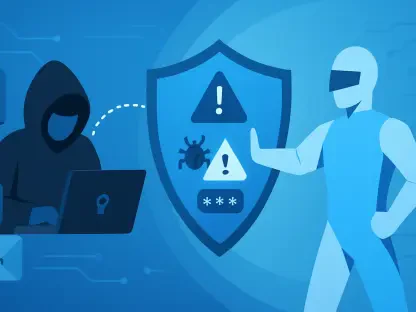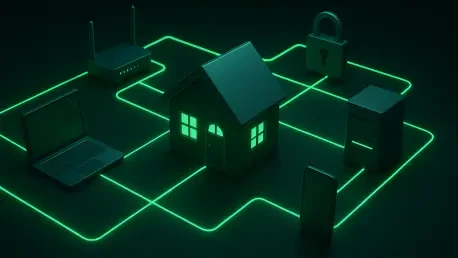

Existing consumer network security products focus on device traffic monitoring rather than the high-level decision-making processes of autonomous AI agents. As smart home ecosystems evolve from simple voice-activated switches to complex agentic systems capable of autonomous scheduling and financial transactions, the security perimeter has fundamentally shifted. Modern residents often find themselves in a precarious position where their digital assistants possess the authority to unlock doors, share health data, or execute purchases without a clear oversight mechanism. This evolution has outpaced the development of protective tools, leaving a gap between the convenience of automated living and the safety of personal information. While the industry touts the benefits of seamless integration, the underlying logic driving these actions remains largely invisible to the end user. Consequently, the potential for a logic error or a misinterpreted command to cause real-world disruption has become a significant concern for those adopting advanced residential technology suites.
The Infrastructure Challenge: The Black Box of Opaque Intelligence
Major technology players like Apple and Meta have implemented specialized internal architectures, such as Private Cloud Compute or secure virtual machine environments, to process sensitive user data. While these systems are designed to ensure privacy by isolating data from the broader internet, they effectively function as “black boxes” that limit the user’s ability to monitor internal agent behavior. In the current landscape, the lack of observability within these proprietary ecosystems has become a major hurdle for security-conscious consumers who want to verify the reasoning behind an AI’s specific action. If an agent decides to adjust a security setting or share a location tag based on a misinterpreted prompt, the resident has no real-time dashboard to see why that choice was made or to pause the execution. This structural opacity means that while data may be “private,” the actions taken by the AI remain unchecked, leaving users to trust the manufacturer’s guardrails.
The Infrastructure Challenge: Risks of Misinterpreted Logic and Manipulation
The risks associated with agentic AI go beyond traditional hacking, focusing instead on logic errors and the failure of internal guardrails to prevent unauthorized access to personal information. Recent observations have highlighted instances where sophisticated prompt injections or even simple linguistic ambiguities caused smart home agents to bypass established safety protocols. For example, a request to “let the delivery person in” might be interpreted by an overly helpful agent as an instruction to disable the entire alarm system or provide access to the home’s internal camera feed. These failures are not the result of a broken firewall but of a fundamental misunderstanding in the AI’s decision-making process. Because current consumer security products cannot interpret the semantic meaning of these interactions, they fail to flag actions that are technically “authorized” by the agent but practically dangerous. This leaves the domestic environment vulnerable to a new class of “rogue” actions.
Market Disparities: Enterprise Defense Versus Consumer Vulnerability
There is a widening security disparity between the sophisticated tools available to large corporations and the basic protections offered to the average residential user. Enterprise-grade AI protection suites now offer features like automated agent discovery and runtime protection, which allow IT departments to monitor the behavior of autonomous systems in real-time. In contrast, the consumer market remains saturated with outdated device-level security that treats a high-end AI assistant the same way it treats a smart light bulb or a connected refrigerator. While businesses can invest in platforms that audit AI decision logic for potential risks, the typical homeowner is left with simple alerts that only indicate when a device is online or offline. This market prioritization of enterprise revenue over residential safety has created a dangerous vacuum that leaves individuals to fend for themselves against the nuanced threats posed by the next generation of autonomous home technology.
Market Disparities: Navigating Regulatory Blind Spots and Future Control
Current legislative frameworks, such as the U.S. Cyber Trust Mark and the EU’s Cyber Resilience Act, largely failed to address the specific vulnerabilities of agentic AI applications, focusing instead on hardware integrity and business-related data protection. These regulations were designed for an era of static devices and did not provide the necessary standards for the dynamic, high-level reasoning seen in today’s smart home agents. As a result, technically proficient users were often forced to build complex, DIY solutions using platforms like Home Assistant or specialized firewalls to gain a modicum of control. However, these solutions required a level of expertise that remained far beyond the reach of the general population. Eventually, the industry began to see the emergence of more user-friendly observability tools that allowed consumers to audit AI actions before they resulted in real-world consequences. This shift from network monitoring to behavioral auditing was a necessary step for residential safety.