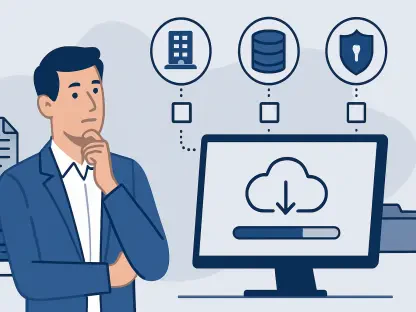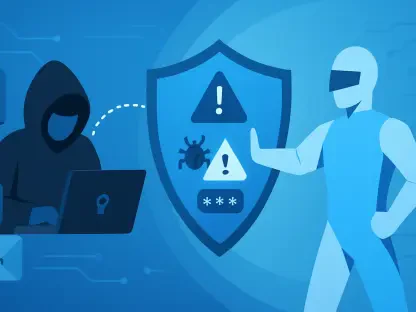

Model abstraction layers allow organizations to decouple their software applications from specific providers while ensuring that developers only utilize approved and secure endpoints. This strategic necessity has emerged as businesses move from experimental pilots toward production-grade artificial intelligence deployments where the margin for error is non-existent. Traditional security frameworks were often insufficient to manage the dynamic and non-deterministic nature of large language models, leading to a significant governance gap that threatened corporate compliance. To bridge this divide, enterprises are now adopting the AI Gateway as a specialized architectural layer designed to monitor and secure all interactions between internal applications and external providers. This shift represents a transition from manual, paper-based oversight to automated, machine-enforceable runtime controls that operate at the speed of the modern digital economy. By establishing this centralized mediator, businesses can maintain rapid innovation without sacrificing legal requirements or safety.
Bridging Traditional Management and AI Specialization
The emergence of the AI Gateway is best characterized as a logical evolution of established API management practices rather than a radical departure from existing IT standards. For several years, API Gateways have provided a controlled path for various backend services, successfully handling critical tasks such as authentication, authorization, and standard rate limiting. The AI Gateway adopts these familiar patterns but modifies them to address the specific complexities inherent in generative AI workloads and large-scale model orchestration. This architectural continuity allows organizations to leverage their significant historical investments in API infrastructure while simultaneously addressing novel challenges like high model latency and fluctuating provider costs. By integrating AI traffic into a unified management strategy, companies ensure that standard RESTful API calls and AI-specific requests coexist without conflict. This evolutionary approach provides a stable foundation that allows technical teams to scale initiatives rapidly.
Furthermore, the specialized nature of these gateways addresses problems that traditional web service management tools were never designed to solve. Large language models introduce unique vulnerabilities, such as prompt injection risks and the potential for non-deterministic outputs to disrupt downstream business processes. An AI Gateway serves as a sophisticated mediation layer that can interpret the semantic content of a request before it reaches the model, ensuring that the input adheres to corporate safety guidelines. Moreover, it provides a consistent interface for developers, hiding the complexities of different provider-specific requirements behind a standardized set of internal protocols. This abstraction not only simplifies the development lifecycle but also strengthens the security posture by limiting the number of exposed external touchpoints. As organizations become more dependent on these models, the gateway functions as a critical stabilization point that protects the integrity of the broader corporate network and its data.
Technical Capabilities: Guardrails and Abstraction
A primary technical advantage of implementing a robust AI Gateway is the sophisticated model abstraction it provides to the engineering organization. This decoupling of the application logic from the underlying model provider allows architects to swap different large language models—such as shifting workloads between OpenAI, Anthropic, or AWS Bedrock—without the requirement to rewrite extensive portions of the application code. This operational agility is crucial in a market where performance benchmarks and pricing structures change almost monthly. Beyond mere flexibility, the abstraction layer ensures that internal developers only utilize approved endpoints that have been vetted for security and compliance. This effectively prevents the rise of shadow AI, where employees might inadvertently use unauthorized or insecure external models that could jeopardize proprietary data. By funneling all requests through a single governed path, the enterprise gains total visibility into every interaction, ensuring that every byte of data follows established protocols.
Additionally, modern AI Gateways introduce advanced filtering and monitoring capabilities that extend far beyond simple traffic volume or bandwidth measurements. Because the cost of artificial intelligence services is primarily driven by token consumption rather than simple request counts, the gateway provides the granular visibility necessary for accurate internal chargeback models and strict quota management. This financial oversight is complemented by real-time guardrail enforcement, where the gateway scans incoming prompts for sensitive information and outgoing responses for hallucinations or biased content. This active ‘input-output’ filtering process ensures that data privacy and brand safety are maintained throughout the entire lifecycle of the interaction. By automating these checks at the runtime layer, the organization reduces the burden on individual developers to implement security features manually. This leads to a more consistent application of safety policies across the entire software portfolio, regardless of which team built the tool.
Runtime Governance: Enforcing Policy at Scale
The most profound shift in the current landscape is the transition from static, paper-based governance to dynamic, runtime enforcement across the entire enterprise. Historically, oversight of emerging technologies relied on legal checklists, manual risk assessments, and periodic audits, which have proven far too slow for the current pace of AI deployment. The AI Gateway transforms these formerly theoretical rules into active, machine-enforceable logic that applies to every single transaction in real-time. For corporate leadership, this centralization ensures that budget constraints, identity rules, and safety protocols are applied uniformly across the organization, significantly reducing the risks associated with fragmented implementation. This approach moves the CIO’s office from a reactive posture to a proactive one, where governance is baked into the infrastructure itself. As a result, compliance is no longer a bottleneck for innovation but rather an automated feature of the deployment pipeline that accelerates the delivery of new capabilities.
As organizations look toward the immediate future of automation, the gateway will become even more vital for managing sophisticated agentic workflows and direct communication between independent AI systems. As agents begin to interact with corporate databases and external tools without human intervention, the gateway serves as the essential mediator that defines exactly what actions a specific agent is permitted to take. This shifts the fundamental focus of IT management from controlling simple requests to governing complex capabilities and specific permissions to act on behalf of a user. The gateway manages the ‘Agent-to-Agent’ security boundary, ensuring that the identity and authorization levels of the original human requester are maintained throughout multi-step autonomous transactions. By establishing these architectural controls now, enterprises have prepared themselves for a landscape where governed, scalable, and reliable AI functions as the central nervous system of the entire organization, enabling a new level of operational efficiency and autonomy.
Strategic Implementation: Achieving Long-Term Resilience
The successful integration of AI Gateways within the corporate ecosystem marked a pivotal moment in the maturation of enterprise technology. Organizations that prioritized these control points early discovered that they could manage the risks of hallucination and data leakage while still capturing the immense value of generative automation. These companies integrated their gateways directly with existing Identity and Access Management systems, ensuring that AI permissions remained anchored in established security roles. Furthermore, the use of model-aware telemetry allowed IT departments to connect specific model interactions directly to business outcomes, providing the first clear look at the true return on investment for large-scale deployments. The adoption of the Model Context Protocol further unified how different systems communicated, creating a standardized environment where various tools could collaborate safely. Ultimately, the move toward runtime governance provided the necessary guardrails that allowed the enterprise to thrive in an era of unprecedented technological change.