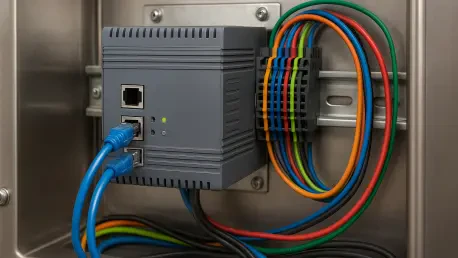

Digital transformation provides significant operational value but requires a shift from simple port-blocking to semantic protocol understanding. The myth of the isolated factory floor has been shattered by the relentless march of industrial networking, where the once-impenetrable air-gap exists more in theory than in practice. Historically, industrial facilities operated as isolated islands, using proprietary protocols and physical separation to ensure safety and uptime. However, the modern drive for real-time production analytics and remote diagnostics has forced a convergence between operational technology (OT) and enterprise information technology (IT). While this connectivity boosts efficiency, it also exposes sensitive control systems to cyber threats that were once confined to office environments. This shift has highlighted a significant vulnerability: most industrial control systems were designed for reliability and physical safety rather than cybersecurity. Specialized devices now serve as essential gatekeepers.
Bridging the Gap: Enterprise and Production Networks
The Vulnerability: Connected Control Systems
The integration of IT and OT networks allows managers to access critical data for business intelligence, but it creates conduits for potential attackers. Industrial protocols often prioritize availability over security, meaning they lack the built-in defenses found in modern web traffic. Without a robust defense mechanism, a compromised workstation in a corporate office could potentially send unauthorized commands to a programmable logic controller, disrupting physical processes. The risk is not merely the loss of data, but the loss of control over physical mass, heat, and motion. In a factory environment, a single malformed packet can lead to a turbine overspeed or a chemical spill. This reality necessitates a different category of protection that recognizes the nuance of industrial traffic. Traditional IT security tools often fail to appreciate the deterministic nature of these environments, where a delay in packet delivery is just as dangerous as a block or a drop.
Strategic Segmentation: Implementing the Purdue Model
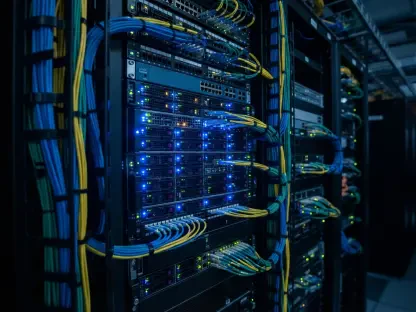
To mitigate these risks, organizations follow international frameworks like the Purdue Reference Model to establish “zones and conduits.” By segmenting the network into distinct layers, industrial firewalls ensure that a security breach in the accounting or sales department cannot migrate to the control layer. This architectural approach contains threats and ensures that critical safety systems remain isolated from non-essential network traffic. Effective segmentation requires moving beyond flat networks where every device can communicate with every other device. Instead, engineers create micro-perimeters around specific manufacturing cells or utility processes. This granular control means that if a single sensor is compromised, the infection remains trapped within its specific zone, preventing a plant-wide shutdown. Furthermore, these firewalls act as traffic cops, validating that data moving between zones adheres strictly to the specific operational requirements of the facility.
Specialized Performance: Essential Industrial Security Features
Deep Packet Inspection: Understanding Industrial Language
Standard enterprise firewalls are often ineffective in industrial settings because they do not understand specialized languages like Modbus, DNP3, or OPC-UA. Industrial firewalls utilize Deep Packet Inspection (DPI) to look inside the data packets, allowing them to distinguish between a legitimate operational command and a malicious attempt to alter equipment setpoints. This semantic awareness ensures that only authorized, safe transactions are permitted to pass through the gateway. For example, a firewall might allow a technician to “read” a temperature sensor but block a command to “write” a new shut-off threshold. This level of granularity is vital for preventing subtle sabotage where an attacker slowly drifts a process toward failure. By inspecting the payload of the communication, these appliances provide a level of security that port-based filtering simply cannot match. They act as a sophisticated translator that understands both the intent and the consequence of each packet.
Physical Resilience: Durability in Harsh Environments
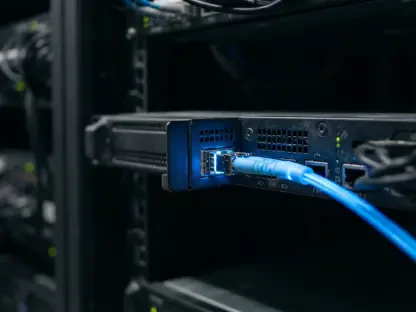
Industrial hardware must survive extreme temperatures, humidity, and electromagnetic interference that would cause standard office equipment to fail. Beyond physical ruggedness, these firewalls are engineered for low-latency performance to satisfy the deterministic nature of industrial communications. Furthermore, they feature unique “fail-safe” behaviors, ensuring that if a security device encounters an error, it does not inadvertently trigger an unsafe shutdown of a high-speed manufacturing process. This is a critical distinction from IT environments, where the default failure mode is often to drop all connections for safety. In a refinery or power plant, losing a connection to a safety controller could be catastrophic. Industrial firewalls are designed with hardware bypass features that maintain network continuity during a malfunction, prioritizing the safe state of the physical process over the absolute restriction of traffic. This careful balance of safety and security defines their unique role.
Industry Applications: Ensuring Global Process Integrity
Critical Infrastructure: Protecting Vital National Resources
The application of industrial firewalls varies by sector, yet the goal of maintaining process integrity remains universal. In the automotive industry, firewalls prevent downtime in robotic assembly lines, while in food and beverage production, they protect the systems regulating sanitation and ingredient ratios. For water utilities and pharmaceutical plants, these devices secure SCADA systems and batch controls, preventing unauthorized changes that could lead to public health crises or dangerous chemical reactions. Each industry faces unique regulatory pressures, such as the chemical sector’s adherence to specialized safety standards. Industrial firewalls provide the necessary documentation and audit trails to prove compliance with these mandates. By isolating critical assets, plant managers ensure that a single infected device does not jeopardize the production of life-saving medicine or the delivery of clean drinking water to a city of millions.
Forward-Looking Strategies: Context-Aware Industrial Defense
As global infrastructure became increasingly interconnected, the importance of context-aware security continued to grow. Modern industrial firewalls did more than just block unauthorized users; they provided a deep understanding of the industrial transactions occurring across the wire. By combining strict segmentation with protocol-aware hardware, modern industrial operations embraced the benefits of the digital age without compromising the safety and reliability of their physical processes. The shift toward integrated defense mechanisms proved essential for the resilience of modern supply chains. Organizations that adopted these specialized technologies successfully shielded their core operations from the rising tide of sophisticated cyber threats. The move from simple perimeter defense to internal micro-segmentation represented a fundamental change in how process safety was managed. Ultimately, the adoption of industrial firewalls ensured that the promise of data-driven efficiency remained a reality.