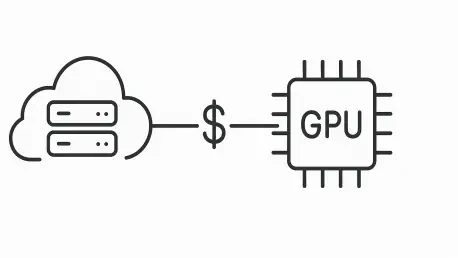

The skyrocketing cost of idle Graphics Processing Units has become a primary financial burden for enterprises managing modern AI and machine learning infrastructure. The arrival of Kubernetes 1.37, codenamed “Garhwal,” represents a pivotal moment in the evolution of container orchestration by addressing this specific economic inefficiency through hardware-aware resource management. Launched in late 2026, this release includes 67 official enhancements—encompassing 16 stable graduations, 23 beta features, and 27 alpha introductions—that collectively shift the platform’s focus from general-purpose web serving to high-performance, specialized compute tasks. While earlier versions of the platform were designed to keep web servers consistently available, the new architectural changes in version 1.37 acknowledge that AI workloads require a different approach to resource lifecycle management. By focusing on the intersection of cost and performance, this update provides platform engineers with a native toolkit to eliminate “idle waste,” which is the expensive practice of paying for unutilized GPUs that are technically reserved by pods even when no active computation is occurring. This shift is essential in an era where high-end compute availability is often the bottleneck for innovation and where financial operations teams are demanding more granular control over cloud expenditures.
Optimizing Workloads Through Autoscaling and Resource Control
The Challenge: Breaking the Minimum Replica Barrier
Kubernetes 1.37 removes a fundamental technical floor that has historically prevented efficient GPU utilization: the restriction that the minReplicas field in a Horizontal Pod Autoscaler configuration could never be lower than one. This legacy requirement was originally established to ensure that high-availability web services always had at least one running instance to handle sudden incoming traffic. However, for organizations running Large Language Model inference or complex batch processing, this “one-replica floor” meant that a pod would sit idle for hours between requests, keeping a dedicated GPU locked and billing. In the current landscape of 2026, where a single enterprise-grade GPU can cost thousands of dollars per month to run continuously, this architectural limitation had become an unsustainable drain on capital. By allowing the HPA to scale down to exactly zero, the platform now provides a way to gracefully terminate the final running pod and release the associated hardware back to the cluster or the cloud provider’s pool.
The operational benefit of this change extends beyond simple cost savings, as it fundamentally alters how resources are shared across diverse engineering departments. When a model-serving endpoint or a development sandbox experiences a lull in activity, the HPA detects the drop in metrics—such as requests per second or specific custom hardware utilization—and triggers the termination of the last pod. The cluster scheduler then updates its records, marking the previously occupied GPU as available for other more urgent tasks, such as high-priority training jobs or active customer interactions. When a new request eventually hits the scaled-down service, the HPA automatically initiates a scale-up event, instructing the scheduler to find a new node and reattach the necessary resources. While this process necessitates a brief delay as the environment initializes, the trade-off is a radical improvement in the utilization rate of the most expensive components in the modern data center, making advanced AI infrastructure more accessible to smaller teams and specialized projects.
Resource Management: A New Era of Dynamic Allocation
The second pillar of efficiency in the 1.37 release is the graduation of Dynamic Resource Allocation (DRA) for extended resources to General Availability. For many years, Kubernetes relied on a rigid and relatively opaque “device plugin” framework to manage specialized hardware. This older model treated GPUs as simple integer-based counters, making it difficult for the scheduler to understand the specific capabilities or health status of individual devices. DRA replaces this outdated system with a flexible, structured API that offers deep integration with the core Kubernetes scheduler. The GA status in version 1.37 is particularly significant because it now supports the traditional “extended resource” request format, such as nvidia.com/gpu. This means that organizations can migrate to the more powerful DRA drivers without being forced to rewrite every existing pod specification in their vast libraries of configuration files, ensuring a smooth transition for established engineering teams.
Furthermore, the implementation of DRA introduces stable device-level taints, which significantly improve the resilience of multi-GPU nodes in high-density environments. In the past, if a single GPU on a node with eight processors experienced a hardware failure, the entire node might become problematic for the scheduler, leading to wasted capacity or failed pods. With the enhancements in 1.37, administrators can now apply a taint to a specific faulty device, preventing the scheduler from assigning work to that particular unit while allowing the remaining seven healthy GPUs on the same physical server to continue operating at full capacity. This granular level of control ensures that hardware issues do not lead to cluster-wide disruptions and that organizations maximize the uptime of every individual processor. By treating hardware as a dynamic and addressable asset rather than a static node property, Kubernetes 1.37 allows for a more “surgical” approach to infrastructure management that aligns with the high-stakes nature of modern AI production.
Enhancing Performance Through Hardware Awareness and Security
Performance Optimization: Standardizing Topology and NUMA Awareness
High-performance computing workloads, particularly those involving distributed model training, are extremely sensitive to the physical layout of the underlying hardware. The proximity between a GPU and a high-speed Network Interface Card on the motherboard—determined by the Non-Uniform Memory Access (NUMA) node—can be the deciding factor between a successful training run and one plagued by excessive latency. Kubernetes 1.37 standardizes how this critical topology information is reported through the resource.kubernetes.io/numaNode attribute. Previously, every hardware vendor had a different way of exposing this data, which forced platform teams to write and maintain brittle, vendor-specific scheduling logic. By standardizing this attribute across the ecosystem, the 1.37 release allows for a more unified approach to high-performance scheduling that works consistently across different hardware generations and manufacturers.
Building on this standardization, the platform now utilizes the Common Expression Language (CEL) to enable vendor-neutral scheduling rules. This allows cluster operators to define sophisticated placement policies that ensure high-performance workloads are always assigned to nodes where the GPU and NIC share the same physical socket, regardless of whether the cluster is running on NVIDIA, AMD, or Intel hardware. This approach effectively decouples the software orchestration layer from the specific quirks of the hardware providers, offering enterprises the flexibility to diversify their hardware portfolios without sacrificing performance consistency. As organizations look to optimize their 2026-2028 infrastructure roadmaps to navigate supply chain fluctuations, the ability to maintain a consistent scheduling interface across heterogeneous hardware becomes a significant strategic advantage. This advancement ensures that the “orchestration” in container orchestration finally extends all the way down to the silicon level.
Security and Identity: Strengthening the Trust Framework
Beyond the focus on hardware and cost, Kubernetes 1.37 introduces critical security enhancements that are essential for the dynamic, ephemeral environments created by scale-to-zero operations. Two major features have reached the stable milestone in this release: Pod Certificates and ClusterTrustBundles. Pod Certificates automate the issuance of short-lived, cryptographically secure identities to individual pods, moving this capability into the core of the Kubernetes API. This reduces the historical reliance on manual certificate management or the deployment of complex third-party service meshes for basic identity verification. In a cluster where pods are frequently being created and destroyed based on demand, having a native, automated way to verify the identity of each workload is paramount to maintaining a “zero-trust” security posture without adding massive operational overhead to the platform team.
Complementing this is the graduation of ClusterTrustBundles, which provides a standardized mechanism for distributing trusted Certificate Authority (CA) data across all workloads in a cluster. One of the most tedious and error-prone tasks for a cluster administrator has traditionally been ensuring that every pod has a consistent and up-to-date view of which external services it should trust. ClusterTrustBundles solves this by providing a unified resource that can be easily managed and audited, ensuring that security policies are applied consistently as the cluster scales. Additionally, the introduction of a dedicated ulimits field within the container security context allows for more precise resource policy enforcement, such as limiting the number of open file descriptors directly in the pod manifest. These security updates ensure that as organizations move toward more efficient and dynamic GPU utilization, they do not inadvertently create security gaps or operational risks that could compromise sensitive AI models or datasets.
Economic Impact and Practical Implementation
The FinOps Strategy: Precision in GPU Savings
The economic shift introduced by Kubernetes 1.37 is particularly vital for Financial Operations (FinOps) teams who are tasked with managing the massive cloud budgets associated with modern AI initiatives. Historically, reclaiming individual GPU devices was a clumsy process that often required decommissioning entire physical nodes, which was only possible if the node was completely empty. With the “surgical” resource release capabilities enabled by scale-to-zero and DRA, clusters can now reclaim specific GPU allocations at the pod level without disturbing other workloads on the same machine. This granular control allows for much higher utilization rates across the entire fleet and ensures that every dollar of the compute budget is being spent on active processing rather than idle reservation. In the current fiscal year of 2026, this capability is often the difference between an AI project remaining commercially viable or becoming an architectural liability.
For an enterprise that hosts dozens of different fine-tuned models for various internal departments or external clients, the cumulative impact of scaling unused versions to zero is transformative. Under the previous architectural model, each of these thirty or forty endpoints would have required at least one “warmed” GPU to be active 24/7. With version 1.37, if only five departments are active at any given time, the other twenty-five to thirty-five GPUs are automatically released back into the central resource pool or allowed to be de-provisioned by the cloud provider. Some early estimates suggest that for spiky, on-demand inference workloads, this can lead to total cost reductions of up to 80% compared to “always-on” configurations. This represents a significant amount of capital that can be redirected toward actual model development, data acquisition, or other high-value engineering tasks, effectively making the infrastructure “self-optimizing” from a financial perspective.
Adoption Realities: Navigating Cloud Provider Timelines
While the upstream version of Kubernetes 1.37 was finalized in August 2026, the timeline for its availability across the major managed services—Azure Kubernetes Service (AKS), Google Kubernetes Engine (GKE), and Amazon Elastic Kubernetes Service (EKS)—presents a fragmented landscape for enterprise planning. Azure has emerged as a leader in this cycle, offering rapid integration and preview availability almost immediately to satisfy the high demand for scale-to-zero capabilities among its large enterprise customer base. Google followed a similar path by integrating version 1.37 into its “Rapid” release channel, allowing early adopters to test the new DRA features in non-production environments. Amazon, which traditionally prioritizes long-term stability and extensive backward compatibility testing, typically follows a more conservative schedule, meaning that EKS customers might not see the full suite of 1.37 features in a managed capacity until late 2026 or early 2027.
This variation in adoption timelines means that organizations must carefully align their infrastructure upgrades with their specific cloud provider’s roadmap. For teams operating on multiple clouds, this may require maintaining different versions of cluster configurations or using abstraction layers to manage the discrepancies in feature availability. Despite these logistical challenges, the industry-wide move toward version 1.37 is expected to be swift because the financial incentives are so high. Managed service providers are feeling significant pressure from their customers to provide the efficiency tools found in “Garhwal” to help mitigate the rising costs of AI infrastructure. This release marks a rare moment where a technical upgrade provides an immediate and measurable impact on the bottom line, making the migration to 1.37 a high priority for any organization managing a significant GPU footprint.
Technical Trade-Offs: Addressing the Reality of Cold Starts
The primary technical hurdle for implementing a successful scale-to-zero strategy is the “cold start” problem, where the very first user request after a period of idleness must wait for a sequence of initialization events. This process involves the HPA detecting a metric spike, the scheduler finding an available node, the container runtime pulling the image, and—most critically—the massive AI model weights being loaded from storage into the GPU’s Video RAM. In many production scenarios, these steps can take anywhere from 30 seconds to several minutes, which is often unacceptable for real-time applications like customer-facing chatbots or interactive search tools. Kubernetes 1.37 provides the necessary knobs and levers to manage this trade-off, but it does not eliminate the physical limitations of hardware and data transfer, meaning that a thoughtful implementation strategy is required to balance cost and user experience.
To navigate this challenge, engineering teams in 2026 are increasingly adopting a hybrid approach to pod scaling. Mission-critical applications that require sub-second responses may still maintain a minimum replica count of one to ensure that a “warm” GPU is always ready. Meanwhile, non-interactive tasks, development environments, and secondary model variants are scaled to zero to capture the maximum cost savings. Version 1.37 allows for this level of granularity, enabling platform teams to define different HPA policies for different classes of service within the same cluster. Furthermore, some organizations are experimenting with “warm pools” of generic nodes or utilizing faster storage layers to reduce the time required to load model weights. By understanding these technical realities, platform engineers can design systems that are both economically sustainable and responsive enough to meet the demands of their end-users, ensuring that the move to scale-to-zero is a success.
The release of Kubernetes 1.37 “Garhwal” established a new baseline for how cloud-native infrastructure interacts with high-end specialized hardware. By graduating Dynamic Resource Allocation to General Availability and promoting native scale-to-zero capabilities, the community provided organizations with the necessary tools to navigate the complex economic realities of the AI-driven landscape. For platform administrators and FinOps teams, the path forward involved a careful assessment of which workloads were suitable for total scale-down and which required the low-latency benefits of a warm standby. The successful implementation of these features required not only a version upgrade but also a shift in how teams architected their model-serving pipelines and security frameworks. As the ecosystem looked toward versions 1.38 and 1.39, the focus remained on reducing the “cold start” penalty and further refining the partitionable device support that began in earlier cycles. Ultimately, Kubernetes 1.37 proved that efficiency and performance could coexist, provided that the orchestration layer was sufficiently aware of the hardware it managed.