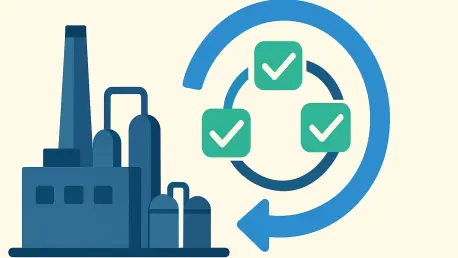

Staged, canary-style rollouts offer a critical safety property by allowing a pilot site to be observed before a model version is released to the remaining fleet. In the current landscape of 2026, the complexity of deploying machine learning models to industrial environments has moved beyond the simple task of updating a cloud-based application. When an algorithm is tasked with optimizing the throughput of a chemical reactor or managing the emissions of a power plant, the consequences of a faulty deployment extend into the physical world, risking equipment damage and production loss. Industrial sites are rarely identical, even when they perform the same function, because variations in sensor age, ambient environmental conditions, and local maintenance schedules create unique data signatures for every facility. A monolithic approach to machine learning deployment often fails to account for these nuances, leading to models that perform excellently in a controlled development environment but fail unpredictably once they reach the factory floor. Consequently, the industry has shifted toward highly specialized pipelines that treat every industrial plant as a distinct entity while maintaining a unified control layer. These pipelines integrate sophisticated testing protocols that simulate the specific operational parameters of each site before any code is pushed to production. By focusing on the intersection of data science and operational technology, organizations can bridge the gap between digital innovation and physical reliability, ensuring that every update enhances process efficiency without introducing new risks to the operational baseline.
1. Establish the Deployable Unit: Combining Models and Configurations
The fundamental unit of deployment in an industrial machine learning pipeline must consist of the trained model weights paired with a comprehensive site-specific configuration file. In the past, data scientists often focused solely on the model artifact, assuming that the underlying software environment or the sensor mappings at a plant would remain static. However, a model designed to predict mechanical failure in a turbine is only as accurate as its input data, which depends on the specific calibration offsets of the sensors installed at that particular location. By packaging the model and its configuration together as a single, versioned entity, engineers ensure that the logic of the algorithm is always grounded in the physical reality of the site it serves. This approach prevents common errors where a global model update inadvertently uses the wrong unit conversion or ignores a critical local sensor tag that was recently updated during on-site maintenance. Versioning these elements together provides a clear audit trail, allowing teams to verify exactly which parameters were active during any given production cycle.
Furthermore, the integration of model and configuration as a unified package facilitates more efficient troubleshooting and cross-site comparison. When a model behaves unexpectedly at a specific plant, engineers can examine the deployable unit to determine if the issue lies in the learned parameters of the neural network or in a site-specific threshold that was incorrectly defined. This dual-layered artifact structure acknowledges that industrial machine learning is rarely a one-size-fits-all solution; rather, it is a combination of general intelligence and local expertise. As these packages move through the pipeline, they are treated as immutable, meaning that once a model-config pair passes initial validation, it cannot be altered before deployment. This immutability is central to maintaining the integrity of the system across hundreds of physically separate locations, ensuring that the “unit” tested in the staging environment is the exact same “unit” that will eventually control high-value industrial assets. This rigor eliminates the ambiguity that frequently plagued earlier attempts at industrial AI scaling, providing a stable foundation for the broader automated workflow.
2. Implement Site-Specific Validation Checks: Moving Beyond Aggregate Metrics
Traditional machine learning validation often relies on aggregate performance metrics, such as a global F1 score or mean squared error across a massive dataset, but this approach is insufficient for industrial applications. A model that achieves 98% accuracy across a fleet of twenty factories might still contain a catastrophic failure mode for the twenty-first factory due to a unique sensor noise profile or a different operating range. The automated pipeline must therefore implement site-aware validation gates that subject every candidate model to a battery of tests using historical data specific to each plant. These tests are designed to catch edge cases that aggregate scores often hide, such as how a model handles the extreme temperatures specific to a facility located in an arid climate versus one in a temperate region. By evaluating the model against the actual sensor inputs it will encounter at the edge, the system can identify potential performance regressions or safety violations before the deployment process even begins. These gates act as the first line of defense, ensuring that only models with a high probability of success at a specific site are allowed to proceed.
In addition to accuracy checks, these validation gates must also enforce operational safety boundaries that are predefined by plant managers and process engineers. For example, a model optimizing a furnace’s fuel consumption must never suggest a setpoint that exceeds the physical stress limits of the vessel, regardless of how much efficiency might be gained. The validation layer automatically checks the model’s output distribution against these hard safety constraints, rejecting any update that proposes an unsafe action. This creates a “safety envelope” that surrounds the machine learning model, providing a layer of protection that is independent of the model’s internal logic. By incorporating these site-specific rules into the CI/CD pipeline, organizations can automate the trust-building process between data science teams and operational personnel. This systematic verification ensures that the model is not only mathematically sound but also operationally viable for the specific physical process it is intended to optimize. The result is a robust validation framework that respects the heterogeneity of the industrial landscape while maintaining a high standard of quality across the entire enterprise.
3. Execute a Phased Pilot Release: The Strategy of Canary Rollouts
Once a model has passed its site-specific validation, it enters a phased rollout phase that prioritizes physical safety over deployment speed. This strategy, often referred to as a canary release, involves deploying the new model version to a single pilot site that represents a controlled and well-monitored segment of the fleet. During this pilot phase, the model’s performance is observed in real-time as it interacts with the live industrial process, allowing engineers to verify that the theoretical improvements seen during validation translate into actual gains. The pilot site serves as a vital proving ground where any unforeseen interactions between the model and the plant’s control systems can be identified without affecting the broader production network. This approach is particularly important in industrial settings where the “users” of the software are physical machines, and a bug can lead to immediate material consequences. The pilot duration is typically long enough to cover several production cycles, ensuring that the model is stable under varying load conditions and operator shifts.
If the model demonstrates stability and performance at the pilot site, the pipeline then triggers a gradual expansion to the remaining fleet. This staged distribution is not a simple “on-off” switch but a calculated progression where subsequent sites are updated in logical groups based on their similarity to the pilot or their risk profile. Throughout this expansion, the pipeline continues to gather telemetry from each newly updated site, looking for any signs of divergence or instability. If an issue is detected at any stage of the rollout, the process is automatically halted, and the system prevents the flawed version from reaching any additional plants. This granular control over the deployment surface area drastically reduces the impact of a potential failure, turning what could have been a fleet-wide outage into a localized event that is easily managed. By the time a model reaches the entire organization, it has been rigorously tested against a variety of real-world conditions, providing a level of confidence that is impossible to achieve with a single, massive deployment event.
4. Enable Precise Versioned Reversions: Ensuring Traceable Rollbacks
The ability to quickly and accurately revert to a known-good state is a critical requirement for any industrial system, especially when automated intelligence is involved. In the event of a performance degradation or an unexpected process shift, the deployment pipeline must be capable of performing a rollback by pointing a site back to a specific, verified version in the model registry. This process is far superior to simply re-deploying the previous version of the code or manually adjusting parameters, as it ensures that the entire environment—including the model weights, dependencies, and site configurations—is returned to a state that was previously validated and proven safe. Traceability is the cornerstone of this mechanism; every deployment is linked to a specific unique identifier in the registry, making it easy to identify the “last known good” version for every individual plant in the fleet. This deterministic approach eliminates the guesswork often associated with emergency troubleshooting, providing a clear and reliable path to recovery that minimizes downtime.
Furthermore, precise reversions allow for a deeper forensic analysis of why a particular model version failed at a specific site. Because the rollback mechanism preserves the state of the failed deployment in the registry, engineers can conduct a detailed comparison between the successful previous version and the problematic update. This analysis helps in refining the validation gates and improving the training data for future iterations, creating a feedback loop that strengthens the entire system over time. The rollback process itself is integrated into the same automated pipeline used for deployments, ensuring that reversions are subject to the same audit logs and notification systems. This level of rigor ensures that even when things go wrong, the response is handled with professional discipline and perfect transparency. By treating rollbacks as a standard, versioned operation rather than an ad hoc fix, organizations maintain control over their industrial assets and ensure that their AI initiatives do not compromise the long-term stability of their production lines.
5. Centralize and Automate the Workflow: Transitioning From Manual Processes
The move from a disorganized, manual, site-by-site update process to a centralized, automated pipeline represents a significant leap in operational maturity for industrial organizations. In a manual environment, data scientists and process engineers often spend a disproportionate amount of time coordinating via email, manually transferring files, and localizing configurations for each plant. This fragmented approach is not only slow but also highly susceptible to human error, as it is nearly impossible to maintain consistency across dozens of sites using manual checklists. By consolidating these tasks into a single automated workflow, the organization can drastically reduce the time required to move a model from development to production. Automation ensures that every site receives the same rigorous testing, the same standardized packaging, and the same careful monitoring, regardless of which engineer is overseeing the update. This consistency is essential for scaling machine learning beyond a few experimental pilots to a full-scale industrial deployment.
Moreover, centralizing the workflow provides a “single pane of glass” view into the health and status of the entire machine learning fleet. Management and engineering teams can see at a glance which model versions are running at which sites, which deployments are currently in the pilot phase, and where validation failures have occurred. This visibility enables better resource allocation and faster decision-making, as the data needed to evaluate the success of an AI initiative is always readily available. The automation of repetitive tasks also frees up highly skilled personnel to focus on high-value activities, such as model architecture design and complex process optimization, rather than the mundane details of file transfers and environment setup. As a result, the entire organization becomes more agile, capable of responding to changing market conditions or new operational insights with a speed that was previously unattainable. The transition to an automated pipeline is thus not just a technical upgrade, but a strategic shift that empowers the organization to fully leverage its data assets in a competitive global market.
6. Maintain Configuration as Code: Auditable History of System Logic
Treating site configurations with the same level of rigor as source code is a fundamental principle of modern MLOps, particularly in the industrial sector. By storing model training logic, validation scripts, and plant-specific parameters in a single, version-controlled repository, organizations can maintain a complete and auditable history of the entire system’s evolution. This “Configuration as Code” approach means that every change to a sensor range, every update to a calibration offset, and every modification of a model’s hyperparameters is recorded with a timestamp and the identity of the individual who made the change. This transparency is vital for meeting the strict regulatory and safety standards of industries like chemical manufacturing or energy production, where every process change must be documented and reviewable. It also allows for the use of modern software development practices, such as peer reviews and pull requests, which add a layer of human oversight to the automated pipeline, ensuring that no change is made without proper scrutiny.
Beyond auditing, storing configurations in a repository enables the use of declarative infrastructure patterns, where the desired state of each site is defined in code and the pipeline works to ensure the actual state matches it. If a site’s local configuration inadvertently drifts from the central definition due to unauthorized local changes, the pipeline can detect and remediate the discrepancy automatically. This centralized control prevents the “configuration rot” that often occurs in complex industrial systems over time, where small, undocumented changes accumulate until the system becomes unpredictable. The ability to branch and merge configurations also makes it easier to experiment with new settings at a specific site without affecting the rest of the fleet. Once a new configuration is proven successful, it can be easily merged back into the main line and distributed to other similar plants. This structured approach to configuration management ensures that the logic governing industrial machines remains visible, versioned, and under the firm control of the engineering team.
7. Package Using Standardized Containers: Replicating Environments at the Edge
The use of standardized container images is a critical factor in ensuring that machine learning models behave consistently across different physical locations. Industrial plants often have a diverse array of edge computing hardware, ranging from high-performance servers to legacy industrial PCs, each with its own operating system version and library dependencies. Shipping a model as a bare file frequently leads to “dependency hell,” where the model fails to run because a specific version of a linear algebra library or a GPU driver is missing on the local machine. Containers solve this problem by bundling the model, its runtime environment, and all necessary dependencies into a single, portable image that runs the same way regardless of the underlying hardware. This ensures that the exact environment used during the high-fidelity validation phase in the cloud or a staging area is perfectly replicated on the factory floor, eliminating the discrepancies that often lead to “works on my machine” failures in production.
Standardizing on container technology also simplifies the management of the edge computing lifecycle. Since the container is the primary unit of deployment, updating a model becomes as simple as pulling a new image from a central registry and restarting the service. This process can be handled by lightweight container orchestrators designed for edge environments, which manage the deployment, health monitoring, and scaling of the inference services. These orchestrators provide a layer of abstraction that shields the data science pipeline from the complexities of the local hardware, allowing the team to focus on the model’s logic rather than the intricacies of edge infrastructure. Furthermore, containers provide a secure, isolated environment for the model to run, protecting the rest of the plant’s control systems from potential software vulnerabilities. This combination of portability, consistency, and security makes containerization an essential component of any production-grade industrial machine learning pipeline, providing the reliability needed to operate at scale.
8. Enforce Strict Registry Boundaries: Establishing Immutable Promotion Paths
A versioned model registry serves as the definitive boundary between the development, validation, and production phases of the lifecycle. In a well-structured pipeline, no model is ever deployed directly from a training script or a local machine; instead, every artifact must first be formally “promoted” to the registry after passing all automated validation gates. This registry acts as the single source of truth for the organization, containing only those models that have been vetted and approved for use on live industrial processes. By enforcing this strict boundary, organizations prevent the accidental deployment of experimental or broken models, ensuring that the factory floor only ever interacts with software that meets the company’s quality and safety standards. The registry also stores metadata about each model, including its training history, validation results, and the specific site configurations it was tested against, providing a rich context for every deployed artifact.
To maintain the integrity of the promotion path, every entry in the registry must be immutable and uniquely identified by a semantic version or a cryptographic hash. This prevents the use of mutable tags like “latest,” which can lead to non-deterministic deployments where different sites end up running different versions of the code despite pulling from the same tag. Using immutable entries ensures that if a model needs to be investigated or redeployed months after its initial release, the exact same bits can be retrieved and inspected. This level of precision is essential for maintaining compliance with industrial standards and for ensuring that the system is fully reproducible. The registry also facilitates sophisticated deployment patterns, such as A/B testing or blue-green rollouts, by providing a central location where multiple model versions can be managed and tracked. Ultimately, the model registry is the gatekeeper of the industrial AI system, providing the control and transparency needed to manage a global fleet of intelligent machines with confidence.
9. Monitor Live Process Performance: Tracking Real-World Alignment
Monitoring a machine learning model after it has been deployed to a live industrial site is just as important as the validation that occurs before it goes live. Once a model begins influencing a physical process, it is subjected to real-world dynamics that are impossible to fully capture in a historical dataset, such as sensor drift, sudden equipment wear, or unexpected changes in raw material quality. The pipeline must therefore include a continuous monitoring layer that tracks whether the model’s live outputs align with the predictions and safety bounds established during the validation phase. If a model that was expected to be highly accurate begins to deviate from the observed process data, it may indicate that the underlying physical system has changed in a way the model does not understand. This “prediction drift” is a leading indicator of potential issues, allowing engineers to intervene before the degradation affects production quality or safety.
In addition to monitoring the model’s predictions, the system must also track the health and integrity of the incoming sensor data. In an industrial environment, sensors can fail, lose calibration, or be disconnected during maintenance, and a machine learning model will often continue to produce outputs even if its inputs are nonsensical. The monitoring framework should detect these data quality issues in real-time, triggering a fallback mechanism or alerting operators if the input data falls outside the ranges the model was trained to handle. This holistic approach to monitoring—covering the model’s logic, its input data, and its impact on the physical process—ensures that the system remains safe and effective throughout its entire operational life. By integrating these real-time signals back into the centralized pipeline, organizations can build a closed-loop system where production performance directly informs future model training and validation strategies. This continuous oversight is the key to maintaining the long-term value of industrial AI investments in a dynamic and often unpredictable manufacturing landscape.
10. Establish an Accelerated Emergency Path: Managing Critical Incidents
While a structured and gradual rollout is the ideal path for most updates, industrial operations occasionally face critical incidents that require an immediate response. Whether it is a safety-related software bug or a sudden shift in process dynamics that renders the current model ineffective, engineers need a way to push a fix or a reversion faster than the standard multi-day canary sequence allows. To address this, the pipeline should include an “accelerated emergency path” that allows for the rapid deployment of a model version that has already been vetted and stored in the registry. This fast track bypasses the observation periods of the pilot phase but still requires the model to pass the core site-specific validation gates to ensure that the emergency fix does not introduce new, unforeseen risks. This ensures that speed does not come at the expense of basic safety, maintaining the integrity of the system even under high-pressure conditions.
The implementation of these automated protocols transformed the reliability of industrial machine learning implementations as teams shifted from reactive firefighting to proactive optimization. Organizations recognized that the pipeline was not merely a delivery tool but a framework for operational safety in an era of autonomous manufacturing. To successfully navigate the complexities of 2026 and beyond, the next logical step is the further integration of hardware-in-the-loop testing, where models are validated against physical replicas or high-fidelity digital twins before reaching the plant floor. Engineering leaders should prioritize the consolidation of their fragmented deployment tools into a single, auditable source of truth that spans the entire lifecycle of the model. By fostering a culture where configuration is treated as code and every physical site is respected as a unique data environment, companies will be well-positioned to scale their intelligence layers across the global industrial landscape. The ultimate goal remained the creation of a system that is as resilient as the machinery it controls, ensuring that every technological advancement is backed by a robust and traceable delivery mechanism.