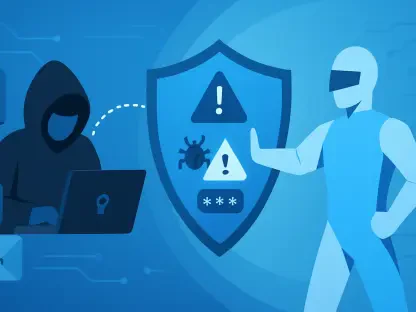
The rapid sophistication of decentralized networks and autonomous threat actors has forced a paradigm shift in how digital perimeters are defended across the global landscape. Artificial intelligence is being leveraged to automate the most tedious aspects of cybersecurity engagements, specifically the synthesis of technical findings into standardized reports. While the fundamental objective of penetration testing remains the simulation of real-world attacks to identify vulnerabilities, the methodology has transitioned into a highly complex, continuous cycle of assessment. In this environment, organizations can no longer rely on sporadic audits to ensure safety. Instead, they must navigate a reality where every asset, from a minor startup repository to a sprawling multi-cloud enterprise architecture, is under constant scrutiny. This evolution is defined by a hybrid approach that seamlessly marries time-tested manual tools with agentic, self-learning platforms. These advancements have effectively streamlined the vulnerability assessment and exploitation lifecycle, allowing security professionals to match the speed and ingenuity of modern adversaries who use similar technologies for malicious ends.
The Enduring Role of Traditional Infrastructure Tools
Foundations of Network Visibility: The First Line of Inquiry
The bedrock of any security engagement remains comprehensive visibility, and traditional tools continue to serve as the gold standard for mapping an organization’s attack surface. Nmap remains indispensable for its versatility in host discovery and service enumeration, particularly when enhanced by its custom scripting engine which allows for granular probing of specific network behaviors. Professionals utilize these scripts to detect misconfigurations and outdated services with surgical precision, providing a baseline of data that informs every subsequent step of the operation. By establishing this foundational map, testers can identify precisely where the perimeter is most porous and which systems require the most immediate attention during the exploitation phase.
For large-scale external audits, the focus shifts toward high-speed scanners like Masscan and ZMap, which enable the scanning of massive IP ranges in a matter of minutes. These tools are designed to identify open ports across the entire internet-facing footprint of an enterprise, ensuring that no forgotten asset or “shadow IT” installation is left unmonitored. Unlike more surgical scanners, these high-speed utilities provide the breadth necessary to capture the true scale of a modern corporate network. They allow practitioners to quickly filter out the noise and focus on active targets, transforming what used to be a weeks-long reconnaissance process into a rapid, data-rich preliminary exercise that sets the stage for deeper analysis.
Diagnostics and Auditing: Probing Vulnerabilities at Scale
Once the network is mapped, identifying specific weaknesses requires a shift toward diagnostic scanning and deep server-side auditing. Engines such as Nessus and OpenVAS provide the comprehensive, signature-based detection needed for enterprise-level audits, scanning for thousands of known vulnerabilities across diverse operating systems and applications. These platforms have remained relevant by constantly updating their plugin databases to reflect the latest threats discovered by researchers globally. By providing detailed reports on missing patches and insecure default settings, these tools allow organizations to prioritize remediation efforts based on the actual severity of the risk found within their specific environment.
While enterprise scanners handle the broader infrastructure, specialized tools like Nikto and Wapiti focus exclusively on the web server layer to uncover more nuanced flaws. Nikto is frequently used to identify dangerous files, outdated server software, and misconfigured headers that could serve as initial entry points for an attacker. Simultaneously, Wapiti performs black-box scans to find vulnerabilities by injecting payloads and analyzing the application’s response in real-time. This dual approach ensures that both the underlying server infrastructure and the applications sitting on top of it are thoroughly vetted. These tools remain critical because they automate the detection of “low-hanging fruit,” allowing human testers to reserve their expertise for more complex, logic-based vulnerabilities.
Standardized Exploitation: Validating Risk through Action
The exploitation phase serves to prove that a theoretical risk identified during scanning is a functional vulnerability capable of being weaponized. The Metasploit Framework continues to dominate this space, providing a standardized environment for developing, testing, and executing exploit code across a vast array of targets. Its modular design allows testers to quickly swap payloads and encoders, making it a highly flexible tool for both red-team operations and standard ethical hacking engagements. By providing a reliable way to gain a foothold in a target system, Metasploit helps organizations understand the potential impact of a breach, moving beyond abstract risk scores to demonstrate actual operational consequences.
For attacks targeting the human element or browser-side weaknesses, the Browser Exploitation Framework, commonly known as BeEF, remains the primary choice for professional testers. This tool allows practitioners to manipulate traffic within a target’s browser environment, highlighting the critical risks posed by cross-site scripting and sophisticated social engineering tactics. By “hooking” a browser, a tester can demonstrate how an attacker might steal session cookies, redirect users to malicious sites, or even execute commands on the local machine. This level of demonstration is vital for educating stakeholders about the dangers of client-side vulnerabilities, which are often overlooked in favor of more traditional server-side security measures.
The Rise of AI-Driven Agentic Assistants
Guided Lifecycle Management: The Agentic Revolution
The most transformative trend currently observed is the emergence of AI assistants that act as agentic sidekicks for human testers during complex engagements. Tools such as PentestGPT and HackingBuddyGPT leverage large language models to guide users through the entire testing lifecycle, from initial reconnaissance to the complexities of privilege escalation. These platforms do not merely provide information; they analyze the output of traditional tools and suggest the next logical step in an attack chain based on established patterns of successful compromises. This capability significantly lowers the barrier to entry for complex, multi-stage operations that previously required years of specialized experience to orchestrate effectively.
These agentic assistants function as force multipliers, allowing a single tester to manage multiple threads of an operation simultaneously without losing track of the overarching strategy. By synthesizing data from various sources in real-time, these tools help identify subtle links between disparate vulnerabilities that might be missed by a human operator under time pressure. For instance, an AI might notice that a specific service version found on one server can be exploited using credentials leaked from an unrelated database found elsewhere in the network. This ability to connect the dots across different domains of the attack surface represents a fundamental shift in how penetration tests are conducted, making them more thorough and faster than ever before.
Securing the AI Frontier: Protecting the Models
As organizations aggressively adopt machine learning and large language models for their internal operations, a new category of “Security for AI” tools has emerged to audit these specific technologies. Platforms such as Mindgard and Agentic Security are specifically designed to detect vulnerabilities that are unique to the AI stack, such as prompt injection, data leakage, and model inversion attacks. These tools represent a proactive response to the reality that the AI models intended to improve business efficiency can themselves become a new backdoor for sophisticated attackers. Without specialized auditing, these models often act as “black boxes” that could inadvertently disclose sensitive corporate data or execute unauthorized actions.
To secure these systems, these new tools utilize advanced fuzzing and stress-testing techniques that are tailored to the probabilistic nature of AI responses. They simulate thousands of adversarial interactions to determine where a model might break or behave in an unintended manner. This process is essential for verifying that security guardrails are functioning as intended and that the model cannot be manipulated into bypassing traditional authentication or authorization checks. By integrating these tools into the broader penetration testing toolkit, professionals can offer a more holistic assessment of the modern enterprise, which now includes a complex layer of intelligent applications that traditional scanners are simply not equipped to handle.
Operational Efficiency: Streamlining the Administrative Burden
Artificial intelligence is also revolutionizing the administrative and operational side of cybersecurity by automating the most time-consuming and repetitive tasks. SecReport, for example, uses natural language processing to automatically synthesize raw technical findings from various scanners into polished, professional reports that include clear remediation steps for both technical teams and executive stakeholders. This automation ensures that the transition from discovery to documentation is nearly instantaneous, allowing organizations to begin fixing vulnerabilities while the data is still fresh. This shift has essentially eliminated the “reporting bottleneck” that historically plagued the industry, where testers would spend days or weeks writing after the actual technical work was finished.
In addition to documentation, assistants like Pentest-AI help practitioners interact with the command-line interface more efficiently by helping them build complex commands for traditional tools using natural language. Instead of spending time looking up specific flags for Nmap or syntax for sqlmap, a tester can simply describe their intended action, and the AI generates the precise command required. This allows security professionals to focus on high-level strategy and creative problem-solving rather than memorizing the minute details of dozens of different toolsets. This increased operational efficiency means that engagements can be more focused on finding “zero-day” style flaws and complex logic errors, which still require the unique intuition of a human expert to uncover.
Professional Mastery in the Age of Automation
Evolving Certifications: Training for the Synthetic Era
While the tools have become more powerful, the efficacy of a penetration test is ultimately determined by the skill of the human practitioner who orchestrates the engagement. The industry has shifted toward advanced certifications like CEH AI and CPENT AI, which are specifically designed to incorporate machine learning techniques into the traditional hacking phases of reconnaissance, scanning, and exploitation. These programs emphasize a hands-on approach where professionals learn to use AI not just as a peripheral tool, but as a core component of their tactical methodology. This ensures that the next generation of ethical hackers is prepared to deal with a world where both the defense and the offense are heavily automated.
These certifications also focus on the ethics and governance of using AI in security operations, teaching practitioners how to manage the risks associated with automated exploitation. As AI agents become more autonomous, the potential for unintended damage to production systems increases, making the “rules of engagement” more important than ever. Professionals are now trained to set strict parameters for their AI assistants, ensuring that the automation remains within the scope of the legal agreement. By combining traditional hacking knowledge with a deep understanding of machine learning, these certified professionals are able to provide a much higher level of assurance to the organizations they serve, bridging the gap between legacy infrastructure and modern intelligent systems.
Methodological Rigor: The Five Pillars of Security Evaluation
The modern penetration testing process remains rooted in a systematic, five-stage methodology consisting of reconnaissance, scanning, vulnerability assessment, exploitation, and reporting. In each stage, the professional of today uses a blend of manual precision and automated speed to ensure no stone is left unturned. During the reconnaissance and scanning phases, the focus is on maximizing the breadth of data collection to create a detailed map of the target. This data then feeds into the vulnerability assessment phase, where automated engines and AI models work together to highlight the most critical weaknesses. This structured approach ensures that the testing is not just a series of random attacks, but a comprehensive evaluation of the target’s security posture.
The transition from vulnerability assessment to exploitation is where the human tester’s expertise becomes most apparent, as they must decide which weaknesses are worth pursuing to demonstrate real-world impact. Even with AI assistance, the final decision to execute an exploit in a sensitive environment remains a human responsibility. Following the exploitation, the reporting phase provides the actionable intelligence that the organization needs to improve its defenses. By adhering to this rigorous, ethical framework, testers ensure that their work is reproducible and that their findings are presented in a way that is most useful for remediation. This methodology serves as the guardrail that prevents the power of modern tools from being used in a way that causes unnecessary disruption or harm.
Domain Specialization and Integrated Platforms
Specialized Utilities: Wireless and Credential Auditing
Despite the push toward general AI platforms, specialized tools remain vital for specific domains such as wireless security and credential recovery. Aircrack-ng and Kismet are still the preferred choices for auditing wireless protocols like WPA3, as they provide the low-level hardware interaction required to capture and analyze network traffic. These tools allow testers to identify weak encryption or misconfigured access points that could allow an attacker to bypass the physical security of a building. Wireless audits remain a critical component of any comprehensive test, as the airwaves are often the most easily accessible part of an organization’s network for a local adversary.
When it comes to proving the strength of password policies, GPU-accelerated tools like Hashcat provide the raw computational power needed to crack complex password hashes recovered during an engagement. These utilities demonstrate that while AI can guide the strategy of an attack, the “heavy lifting” of security auditing often requires purpose-built, high-performance software. Testers use Hashcat to simulate how long it would take for a malicious actor to brute-force a set of stolen credentials, providing clear evidence for why multi-factor authentication and strong password complexity are necessary. This focus on domain-specific utilities ensures that the testing process is grounded in the physical and mathematical realities of computer security, rather than just the theoretical capabilities of AI.
Web Application Testing: The Frontline of Digital Exposure
Web applications remain the most exposed part of any modern infrastructure, requiring dedicated intercepting proxies like Burp Suite and OWASP ZAP to conduct thorough audits. These tools allow testers to capture and manipulate web traffic in real-time, enabling them to test for subtle flaws like broken access control or insecure direct object references that automated scanners often miss. By 2026, these platforms have integrated advanced AI plugins that help testers identify unusual patterns in HTTP traffic that may indicate a vulnerable endpoint. This integration further bridges the gap between manual testing and automated discovery, allowing for a more efficient and deeper dive into the application’s logic.
These intercepting proxies are frequently paired with injection automation tools like sqlmap, which is the definitive choice for detecting and exploiting database-related flaws. By automating the tedious process of identifying injection points and extracting data, sqlmap allows testers to quickly demonstrate the risk of data exfiltration. The combination of manual traffic manipulation and automated injection testing provides a comprehensive view of the web application’s security. This dual approach is essential because web vulnerabilities are often the result of complex interactions between different parts of the code, which require both the creative oversight of a human tester and the rapid execution capabilities of specialized software to uncover fully.
Strategic Trajectory and Operational Recommendations
The evolution of penetration testing tools through the mid-2020s demonstrated a clear trajectory toward a more integrated, intelligent, and continuous security model. It was observed that the traditional boundaries between manual testing and automated scanning had largely dissolved, replaced by a cohesive methodology where AI served as a constant assistant to the human professional. This shift allowed for a much more thorough examination of modern, heterogeneous environments, ensuring that both legacy systems and new AI-driven applications were scrutinized with equal rigor. The historical reliance on annual audits was replaced by a culture of continuous validation, which proved much more effective at mitigating risks in an environment where the threat landscape changed on a daily basis.
To maintain a robust security posture, it was recommended that organizations move away from treating penetration testing as a checkbox exercise and instead integrate it into their ongoing development and operations cycles. This required investing in both the advanced AI-driven tools described in this analysis and the professional development of the staff responsible for managing them. It was found that the most successful security teams were those that utilized a combination of specialized domain tools and integrated AI platforms to provide a layered defense. Ultimately, the transition to agentic security was not just about the tools themselves, but about the strategic application of those tools within a rigorous ethical framework. This approach ensured that organizations remained resilient against increasingly automated threats while maximizing the efficiency of their security investments.