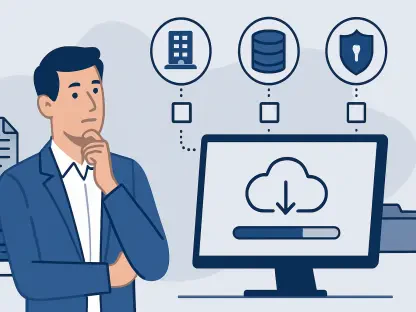

Operational technology requires a distinct security philosophy because its failure results in physical consequences that traditional IT systems do not encounter. When a standard cloud application suffers a breach, the immediate concern is data exfiltration or privacy violations, but when the software managing a federal courthouse or a research laboratory fails, the risks escalate to the physical safety of occupants and the integrity of critical equipment. Modern federal facilities are no longer just concrete and steel; they are complex digital ecosystems where lighting, air filtration, and secure access are all orchestrated by integrated platforms. As agencies transition from fragmented legacy systems to unified, cloud-based operational technology (OT), the government faces a paradox: the same connectivity that enables unprecedented energy efficiency also introduces a concentrated point of failure that could be exploited to cause real-world damage across entire building portfolios.
The Technological Shift: From Siloed Hardware to Unified Cloud Platforms
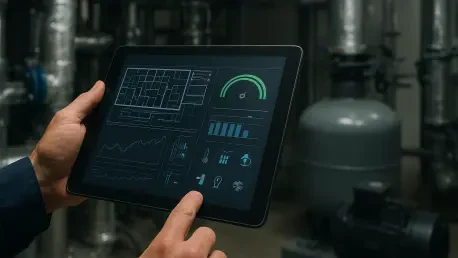
Historically, the systems governing building functions like heating and ventilation operated in isolated silos, often requiring on-site technicians to manage localized hardware controllers. This fragmentation provided a natural, albeit inefficient, form of air-gapping that limited the reach of any single technical failure. However, the current shift toward a single pane of glass architecture has centralized these functions into powerful operating systems that manage dozens or even hundreds of properties simultaneously. While this consolidation allows the General Services Administration to optimize power consumption and automate maintenance tasks at scale, it fundamentally alters the risk profile of federal infrastructure. A vulnerability in the centralized building operating system no longer affects just one mechanical room; it potentially grants an adversary the ability to manipulate environmental controls or bypass physical security measures across an entire geographic region, turning a software bug into a widespread public safety hazard.
Addressing the Unique Risks: Why Building Software Requires Specialized Defense
Bridging this gap requires a departure from the traditional IT security framework, which has long prioritized the confidentiality of information over the availability of services. In the world of building software, the ability of a system to remain operational and responsive is paramount, as even a temporary loss of control over air circulation or fire suppression systems can have catastrophic results. This fundamental difference means that federal security frameworks must be fine-tuned to account for the unique operational requirements of industrial controls. Policymakers and security auditors must move beyond checking boxes related to data encryption and focus more on how these platforms handle real-time physical commands and emergency overrides. Recognizing that building software is a distinct category of infrastructure is the first step toward creating a defense-in-depth strategy that protects the nation’s physical assets from the increasing sophistication of cyber-physical threats emerging today.
The Compliance Challenge: Navigating the High Stakes of FedRAMP High
To operate within the federal ecosystem, software providers must navigate the Federal Risk and Authorization Management Program, specifically aiming for the High-impact designation required for critical systems. This tier demands compliance with hundreds of stringent security controls, necessitating thousands of pages of documentation and rigorous third-party assessments. For an agile technology startup, the challenge is rarely a lack of technical capability or inherent security within their product; rather, it is the massive administrative burden and the multi-year timeline required to prove compliance to federal standards. The financial investment required to maintain a team of specialized compliance experts and pay for authorized auditors can easily run into the millions of dollars. This creates a scenario where the government’s procurement process inadvertently favors administrative endurance over technological superiority, potentially leaving the nation’s most sensitive buildings reliant on older, less efficient systems.
The Competitive Barrier: How Administrative Moats Stifle Innovation
This bureaucratic bottleneck has created a market environment where access acts as a competitive moat, protecting established incumbents from the disruptive innovations of smaller companies. When the barrier to entry is defined by the depth of a company’s balance sheet rather than the efficacy of its code, the federal government loses its ability to leverage the best the private sector has to offer. This dynamic is particularly problematic in the realm of operational technology, where innovation in artificial intelligence and machine learning is rapidly improving how buildings respond to environmental shifts and security threats. To remain resilient, the federal acquisition process must evolve to lower these barriers without compromising on safety standards. Ensuring that the starting line for government competition is accessible to any innovator capable of meeting the technical benchmarks is essential for maintaining a secure and modern building portfolio that can withstand the challenges of the current digital landscape.
The Strategic Solution: Leveraging Infrastructure Inheritance for Rapid Deployment
One of the most effective strategies for overcoming the authorization hurdle is the implementation of infrastructure inheritance, a model that allows new software to leverage the security foundations of pre-authorized platforms. Programs like FedStart represent a paradigm shift, enabling smaller building-software companies to host their applications within highly secure environments that have already received federal approval. By building on top of an established infrastructure, the newcomer inherits a significant portion of the required security controls, from physical data center security to network monitoring protocols. This allows the innovative company to focus exclusively on securing the specific functions of their application, such as the logic governing HVAC systems or lighting controls, rather than reinventing the entire security stack from scratch. This collaborative approach significantly compresses the timeline for authorization, moving it from years to months, while ensuring that the entire stack meets requirements.
Modular Procurement: Integrating Specialized Tools into Secure Ecosystems
The success of these inheritance models demonstrates that the perceived trade-off between rapid deployment and high security is a false choice. By utilizing modular procurement strategies, the government can integrate specialized tools into its secure cloud ecosystems more efficiently than through traditional, standalone certification paths. This method also encourages a healthier competitive landscape, as niche providers can bring their expertise to federal agencies without being crushed by the weight of infrastructure-level compliance. Moving forward, the General Services Administration and other agencies managing large physical portfolios should actively seek out these types of partnerships to modernize their facilities. As the complexity of building systems continues to grow, the ability to rapidly verify and deploy secure software will be the deciding factor in whether federal infrastructure becomes more efficient or remains trapped in a cycle of legacy vulnerabilities that are increasingly difficult to defend.
Future-Proofing Assets: Moving Toward Continuous Security Validation
True security for the nation’s physical infrastructure requires a transition from the current model of static, periodic audits toward a system of continuous validation and real-time monitoring. Historically, a FedRAMP authorization represented a snapshot in time, where a platform was proven secure at the moment of assessment but might develop vulnerabilities shortly thereafter. In the high-stakes world of operational technology, where software directly interacts with physical hardware, this point-in-time approach is increasingly insufficient. Modern building operating systems must be subjected to automated, machine-readable evidence collection that provides constant visibility into their security posture. By adopting these modernization principles, federal policymakers can ensure that the software controlling critical facilities is resilient against a rapidly evolving threat landscape. Continuous monitoring allows for the immediate detection of anomalies, providing a level of protection that manual documentation simply cannot match.
Building Resilience: The Path Forward for Federal Infrastructure Security
The path forward required federal leadership to establish a predictable roadmap for the authorization of high-impact operational systems, ensuring that private sector investment remained aligned with national security priorities. Policymakers recognized that building software was not merely a sub-category of traditional SaaS, but a distinct pillar of national defense that required specialized oversight and tailored security frameworks. By expanding programs that reduced the administrative cost of entry and prioritizing machine-readable evidence, the government successfully fostered a meritocratic marketplace where innovation flourished alongside safety. These actions ensured that the nation’s most sensitive buildings were managed by the most advanced, cloud-native technology available rather than just the most established vendors. Ultimately, the transition toward a more agile and transparent authorization process allowed the government to secure its digital-physical frontier, transforming federal facilities into intelligent, resilient environments.