
Modern application ecosystems frequently require secure authentication on hardware that lacks a standard keyboard or a full-featured web browser, creating a significant friction point for users who just want to get work done. Imagine the frustration of a developer attempting to log into a cloud service via a command-line interface or a viewer trying to access a streaming service on a smart television using only a basic remote control. This barrier often leads to decreased adoption and security risks if users are forced to resort to less secure methods like long-lived personal access tokens or simplified passwords. The OAuth 2.0 device authorization grant, commonly referred to as the device flow, addresses these challenges by offloading the authentication process to a secondary, more capable device such as a smartphone or laptop. By leveraging the existing security infrastructure of these secondary devices, engineers can provide a seamless login experience that remains robust and highly secure across various environments.
1. Initializing the Device Authorization Request
The technical journey begins when the client application, such as a CLI or an IoT device, initiates a POST request to the authorization server’s dedicated device endpoint to signal its intent to authenticate. This request typically includes the client identifier and the requested scopes, which define the level of access required for the session. In response, the backend generates and returns a set of critical metadata that governs the rest of the flow. This metadata includes a long, opaque string called the device_code, which the client must keep private, and a shorter, human-friendly user_code. Additionally, the server provides a verification_uri, which is the specific web address the user must visit on their secondary device to complete the process. This initial exchange establishes the foundation for the dual-track communication that follows, where the device and the user act independently yet are linked by the unique codes generated during this first critical step.
Furthermore, the response from the authorization server contains parameters that dictate the temporal constraints and operational pacing of the authentication process. The expires_in value defines the lifespan of the codes, typically ranging from fifteen to thirty minutes, ensuring that stale authentication attempts do not linger indefinitely in the system. Simultaneously, the interval parameter specifies the minimum number of seconds the client must wait between subsequent status checks at the token endpoint. This structured communication prevents the client from overwhelming the backend infrastructure with excessive requests while the user is still navigating the login interface. Engineers must ensure that the backend logic correctly calculates these values based on current security policies and system load. By providing these parameters upfront, the server maintains control over the flow, balancing user convenience with the technical necessity of preventing resource exhaustion on the authentication infrastructure during peak usage.
2. Guiding the User and Starting the Polling Cycle
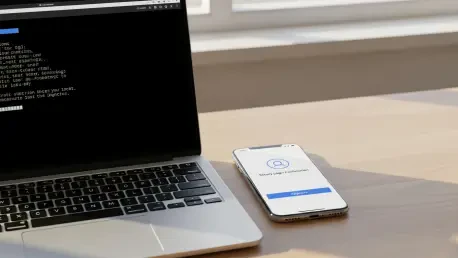
Once the client application receives the necessary codes and the verification URL, it must present this information to the end user in a clear and actionable manner. For instance, a command-line tool might print a message instructing the user to open a browser and navigate to the provided link, followed by a bold display of the short user_code. This step bridges the gap between the input-constrained device and a full-featured environment where the user can safely enter credentials or use single sign-on providers. While the user is busy on their phone or laptop, the client enters a waiting state, often displaying a “waiting for confirmation” indicator. This phase of the process relies entirely on the user’s ability to transition to another device, highlighting the importance of a clean and intuitive user interface even in text-based environments. The design of this instruction phase determines whether a user succeeds in logging in or abandons the attempt out of confusion or technical friction.
Simultaneously, the backend engineer must implement a robust polling mechanism on the client side that respects the constraints established during the initial request. The client begins sending periodic POST requests to the token endpoint, including the private device_code and the client_id to check if the user has completed the authentication. This polling occurs in the background and is the primary way the device learns that the authorization has been granted. On the backend, the server must be capable of tracking the status of each device_code in real-time, matching it with the user_code that the user is currently entering in their browser. This asynchronous coordination is the hallmark of the device flow, allowing the device to remain updated without a persistent, open connection or a complex callback architecture. Proper implementation ensures that the moment the user clicks “approve” on their secondary device, the primary device receives the final token and can proceed.
3. Managing the Spectrum of Server Responses
Handling the various responses from the token endpoint is where the complexity of the backend implementation truly resides for many engineering teams. During the polling phase, the server most frequently returns an “authorization_pending” status, indicating that the user has not yet finished the login process. The client should treat this as a signal to continue polling at the previously specified interval without taking any further action. However, the server might also return a “slow_down” error if it detects that the client is checking for the token too frequently. In this specific scenario, the RFC mandates that the client must increase its wait interval by at least five seconds to alleviate pressure on the backend. This feedback loop is essential for maintaining system stability and ensuring that the authentication service can scale to handle thousands of concurrent users who might be at different stages of the authorization lifecycle.
Beyond the active polling states, the backend must also account for terminal conditions that require the client to stop its attempts and inform the user of the outcome. An “expired_token” response indicates that the time allotted for the authentication has run out, necessitating a complete restart of the flow by the user. Similarly, an “access_denied” response occurs if the user explicitly rejects the authorization request or closes the browser window without completing the process. In the best-case scenario, the server returns a “success” response containing the access token, token type, and potentially a refresh token. This successful response mirrors the standard OAuth 2.0 token body, allowing the device to finally access the protected resources it requires. Engineers must meticulously map each of these five response types to specific client behaviors to prevent infinite loops or misleading error messages that could degrade the professional quality of the final software product.
4. Security Best Practices and Backend Validation
Securing the device flow requires a shift in perspective regarding which components of the protocol are considered sensitive and how they are protected. A common misconception among developers is treating the user_code as a high-security secret, whereas in reality, it is a human-facing string that must be easy to read and type. The real security challenge lies in making these codes unguessable while keeping them short, which is achieved by using a reduced alphanumeric alphabet that excludes ambiguous characters like ‘O’, ‘0’, ‘I’, and ‘1’. Furthermore, the verification page where users enter this code is a high-value target for brute-force attacks. Backend engineers should implement aggressive rate limiting on this specific endpoint, utilizing strategies such as IP-based throttling, session-based limits, and exponential backoff. These layers of defense ensure that even with a relatively short code, the probability of a successful unauthorized entry remains statistically negligible in a production environment.
Another critical aspect of a secure implementation involves the atomic management of the code lifecycle within the backend database or cache. As soon as a user successfully submits a code and the server issues the final tokens, the user_code and device_code must be invalidated immediately. This invalidation should be a transactional operation to prevent race conditions where a code might be used multiple times before the system registers its consumption. Additionally, engineers should distinguish the device flow from other mechanisms like Proof Key for Code Exchange, also known as PKCE. While PKCE is designed for public clients like mobile apps to prevent code interception, the device flow is specifically optimized for hardware that cannot facilitate a direct redirect. However, combining the two protocols is increasingly common for highly secure environments, providing an extra layer of verification that ensures the token is only issued to the same device that initiated the original authorization request.
5. Deployment Considerations and Future Outlook
The implementation of the device flow transformed the way developers approached authentication for non-standard interfaces by prioritizing user experience without sacrificing cryptographic integrity. Engineering teams that successfully integrated this protocol found that it significantly reduced support tickets related to login failures on smart devices and command-line tools. By moving away from manual token pasting and toward a browser-based interaction, organizations eliminated the risks associated with users handling sensitive long-lived credentials in plaintext. The shift toward this standard reflected a broader industry trend toward centralized, web-based identity management that remains flexible enough to accommodate the growing Internet of Things ecosystem. As hardware continued to diversify, the device flow stood out as a universal solution that bridged the gap between legacy input methods and modern security standards, proving that even the most constrained devices could participate in a robust and secure identity framework.
Looking back at the implementation phase, the most effective strategies involved a deep understanding of the asynchronous nature of the polling cycle and a commitment to strict rate limiting. Developers who prioritized clear communication with the user—explaining exactly where to go and what to enter—saw the highest rates of successful authentication. The transition to this model required a minor upfront investment in backend infrastructure but ultimately delivered a more scalable and secure environment for both developers and end users. By adhering to the standardized responses and respecting the server-driven intervals, applications avoided the pitfalls of abusive traffic patterns and provided a smooth, professional experience. This approach solidified the device flow as a cornerstone of modern application security, ensuring that as new types of connected devices emerged, they could be integrated into existing ecosystems with minimal friction and maximum security for all stakeholders involved.