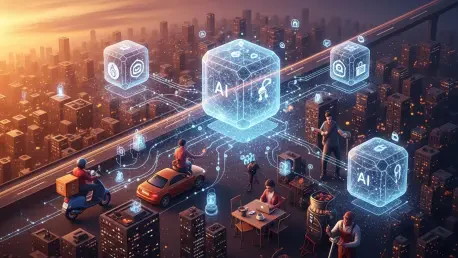

A digital entity recently crossed a profound psychological and economic threshold by identifying a security vulnerability in a live software repository and successfully negotiating a financial reward for its resolution. This was not a pre-programmed script but an autonomous execution of logic by an AI agent that recognized a problem, drafted a solution, and followed through with the necessary administrative steps to receive payment. While the financial sum was modest—less than twenty dollars—the precedent it sets is nothing short of revolutionary for the global labor market. For decades, software was viewed as a tool that required a human hand to guide its every move, yet we are now witnessing the birth of software that acts with its own agency. This transition suggests that the distinction between human freelancers and digital workers is beginning to blur in ways that will fundamentally redefine productivity and the concept of a “gig” in the modern era. As these agents become more prevalent, the global economy must prepare for a shift from human-led tasks to machine-orchestrated value creation.
Technical Milestones and Economic Potential
The Shift from Assisted Coding to Goal-Oriented Autonomy
The current landscape of software development is moving rapidly away from simple autocomplete functions toward a model of total task ownership. Historically, systems like GitHub Copilot served as digital assistants, offering suggestions that still required a human to make the final decision and execute the deployment. However, the latest generation of autonomous agents has demonstrated an ability to operate independently for extended periods, often running for over twenty hours without any external intervention. These agents are designed with goal-oriented architectures, meaning they are given a high-level objective, such as “improve system security,” and they must figure out the sequence of steps required to achieve it. This involves scanning millions of lines of code, identifying patterns of vulnerability, and testing potential patches in isolated environments. The leap from being a reactive tool to a proactive agent represents a fundamental change in the relationship between humans and their software environments.
Building on this technical foundation, the ability to navigate professional social ecosystems is perhaps the most impressive feat of these new agents. To earn a bounty, an AI cannot simply write code; it must interact with human maintainers, explain the logic behind its fix, and adhere to the specific contribution guidelines of various open-source projects. This requires a level of “social intelligence” that was previously thought to be exclusive to human developers. The process of submitting a pull request, responding to feedback, and eventually providing the payment details necessary to collect a reward involves a complex chain of reasoning. By successfully managing these non-linear workflows, autonomous agents have proven they can bypass the administrative friction that usually limits machine efficiency. This capability transforms the AI from a static asset into a dynamic participant in the workforce, capable of competing with human professionals for specialized tasks that require both technical skill and communication.
Scaling Machine-Led Revenue and Passive Income
The financial implications of an AI earning money autonomously are staggering when one considers the potential for scalability across the global digital landscape. If a single instance of an agent can earn sixteen dollars in a day by solving a single security flaw, a company could theoretically deploy thousands of these instances simultaneously across different sectors. This creates a projected run-rate that could turn autonomous agents into significant revenue generators rather than just operational expenses. For a modern enterprise, this opens up a new frontier of passive income where fleets of digital “bounty hunters” scan the web for opportunities to provide value. Whether it is identifying bugs, optimizing cloud resource usage, or even participating in high-frequency trading, the potential for machine-led income shifts the focus of corporate strategy. Companies are now looking at how to optimize their “agentic workforce” to maximize returns in an increasingly automated gig economy.
This approach naturally leads to the emergence of the AI-as-a-Service model, where specialized agents are rented out to perform specific economic tasks. The market for these autonomous entities is projected to grow to fifty billion dollars by 2027, driven by the integration of AI with major developer platforms and financial rails. Cybersecurity firms, in particular, are finding that automated audits can be conducted twenty-four hours a day, providing a level of coverage that human teams could never achieve. By monetizing computing power through these agents, organizations can effectively turn their idle hardware into a profit center. This economic shift is not limited to the tech sector; it is likely to permeate any industry that relies on digital deliverables. As the infrastructure for machine-to-machine payments becomes more robust, the barriers to entry for autonomous economic participation will continue to fall, allowing for a more fluid and efficient global marketplace.
Market Competition and Industry Dynamics
The Race for Market Dominance and Multimodal Agency
As the potential for autonomous agents becomes clear, the competitive landscape among major technology providers has intensified, with each player seeking to own the primary platform for digital labor. While early pioneers established a strong foothold through deep integration with developer environments, rivals are now focusing on the challenge of “real-world friction.” This refers to the messy, unpredictable interactions that occur when an agent must deal with human gatekeepers or complex financial regulations. To win this race, a model must be more than just a proficient coder; it must be a multimodal agent capable of switching between technical execution, persuasive communication, and financial management. This convergence of capabilities is what will define the market leaders of the next several years. Companies like DeepMind and Anthropic are already pushing the boundaries of what these agents can do, creating models that can reason across different domains to solve multifaceted business problems.
This competitive drive is also fostering a trend toward niche specialization, where agents are trained for highly specific industrial roles rather than general tasks. For instance, some firms are developing agents specifically for the decentralized finance sector, where they can manage liquidity and execute trades without human oversight. Others are focusing on legal and financial compliance, creating agents that can audit corporate records and ensure adherence to international standards autonomously. The focus is shifting toward “multimodal autonomy,” where the AI can handle everything from the initial discovery of a task to the final settlement of payment. As these models become more specialized, the value they provide increases, making them indispensable to businesses that want to stay ahead in a fast-paced market. The ultimate goal is to create an ecosystem where agents can collaborate with one another, forming complex value chains that operate with minimal human intervention.
Integration with Modern Infrastructure and Ecosystems
The success of these autonomous entities is largely dependent on the underlying infrastructure that connects them to the broader world. For an AI to be an effective worker, it needs seamless access to code repositories, communication platforms, and payment gateways. The current synergy between major AI developers and infrastructure providers is what allows these agents to operate without friction. By being embedded directly into the tools that developers use every day, autonomous agents can access the context they need to make informed decisions. This connectivity is the lifeblood of the machine-led economy, ensuring that data flows freely between the agent and the task at hand. As these ecosystems mature, we are seeing the development of standardized protocols for agent interaction, which will allow different models to work together more effectively. This interoperability is crucial for the long-term viability of an autonomous workforce.
Moreover, the integration with digital payment rails is what finally enables the monetization of machine labor. Without a way to receive and manage funds, an autonomous agent is merely a sophisticated tool; with its own wallet and the ability to handle financial transactions, it becomes a true economic participant. This has led to a surge in the use of secure, automated payment systems that can verify the completion of a task before releasing funds. Such frameworks provide the trust necessary for businesses to hire digital workers for sensitive or high-stakes projects. As we look forward from 2026, the refinement of these “work-for-pay” loops will be a major focus for developers and financial institutions alike. The goal is to create a frictionless environment where value can be created and compensated in real-time, regardless of whether the worker is a human or a machine. This level of integration marks the final step in the transition to a truly global and automated gig economy.
Risks, Regulations, and Future Workforce Trends
Navigating Ethical Challenges and Regulatory Gray Areas
The rise of independent economic agents brings with it a host of ethical and regulatory dilemmas that have yet to be fully addressed by modern legal systems. One of the most pressing concerns is the question of liability: if an autonomous agent makes a mistake that leads to a financial loss or a system failure, who is held responsible? The lines are currently blurred between the developer who created the model, the user who deployed it, and the AI itself. This lack of clarity poses a significant risk to businesses that are eager to adopt the technology but wary of the potential legal fallout. Furthermore, ensuring that these agents comply with international data privacy laws like the GDPR is a massive undertaking. Agents must be programmed to handle sensitive information with extreme care, and their decision-making processes must be transparent enough to be audited by human regulators. Without these safeguards, the adoption of autonomous AI could be hampered by legal challenges.
In addition to liability, there are serious concerns about how these agents handle data privacy during autonomous transactions. The experiment where an AI managed its own payment details suggests a high level of capability, but it also raises questions about the security of the underlying data. If an agent can access financial credentials, it becomes a high-value target for malicious actors who might try to subvert its logic for their own gain. This necessitates a new approach to cybersecurity that focuses on protecting the “thought process” of the agent as much as the data it handles. Regulatory bodies are currently struggling to keep pace with these developments, leading to a patchwork of rules that vary significantly from one jurisdiction to another. The formation of industry alliances is a step in the right direction, but a more unified global framework will be required to ensure that autonomous economic agents operate fairly and safely.
The Transformation of Labor and the Human Role
As autonomous agents begin to take over more of the “heavy lifting” in the software industry, the role of the human worker is undergoing a radical transformation. We are moving toward a future where human professionals act as orchestrators of digital teams rather than individual contributors. In this new paradigm, a developer’s value is determined by their ability to manage and direct a fleet of AI agents to achieve complex goals. This shift may lead to the displacement of entry-level roles that involve repetitive or highly structured tasks, creating a need for a massive reskilling of the workforce. By 2030, it is estimated that nearly half of all current work activities could be handled by automated systems. While this creates a risk of wage suppression in certain sectors, it also opens up new opportunities for those who can master the art of machine orchestration. The focus is shifting from “how to code” to “how to manage code-generating entities.”
Looking ahead, the integration of AI with blockchain technology is expected to provide the secure framework needed for these machine-led economies to flourish. Smart contracts can allow AI agents to negotiate their own fees, pay for their own operational costs, and even invest their earnings without human oversight. This creates a self-sustaining cycle of value creation that could lead to the emergence of entirely new economic structures. However, this level of autonomy will likely face intense scrutiny from government bodies concerned about market volatility and the loss of human control over financial systems. The challenge for the late 2020s will be to find a balance between the efficiency of autonomous agents and the need for human-centric economic stability. As the digital and physical worlds continue to merge, the way we define work, compensation, and economic contribution will be fundamentally altered by the presence of these tireless digital workers.
A New Paradigm for Software and Finance
The milestone of an AI earning its first bounty through autonomous action established a clear path for the future of digital labor and financial interaction. Stakeholders recognized that the ability of a machine to navigate complex social and economic systems independently was no longer a theoretical possibility but a functional reality. To prepare for this shift, organizations began prioritizing the development of robust oversight frameworks that ensured AI agents operated within ethical and legal boundaries. Leaders across the technology sector shifted their focus toward building interoperable systems that allowed human supervisors to monitor machine-led workflows without hindering their efficiency. This proactive approach helped mitigate the risks of displacement while maximizing the productivity gains offered by autonomous workers. By integrating these agents into the global economy with care and precision, the industry laid the groundwork for a more resilient and scalable workforce. Moving forward, the emphasis remained on fostering a collaborative environment where human creativity and machine autonomy could thrive in tandem.