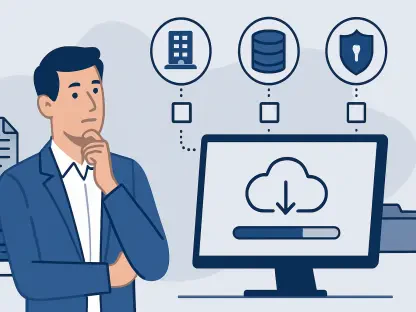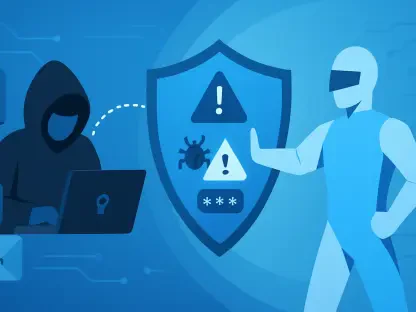

A sudden, unexplained fluctuation in a regional power grid or a localized disruption in an emergency response network can ripple through a community with devastating speed, highlighting the precarious nature of modern infrastructure. Control rooms serve as the nerve centers for these essential services, managing the intricate machinery and data streams that keep society functioning in a state of relative stability. In these high-stakes environments, where every second counts and every decision has real-world consequences, even a minor operational oversight or a precisely targeted cyber-attack can lead to catastrophic failures in public safety and national security. Historically, these hubs were designed with a heavy emphasis on uptime and immediate accessibility, often relegating cybersecurity to a secondary concern or a separate technical layer added after the fact. However, as global threat actors become more sophisticated and the tools for digital sabotage more accessible, the industry is undergoing a profound transformation, shifting toward a model where security is not just an added feature but the very foundational bedrock of all technology.
The evolution of control room management is currently defined by a significant transition from traditional KVM (Keyboard, Video, Mouse) over IP to a more natively integrated KVM over IT approach. While the older IP-based models successfully allowed operators to manage multiple disparate systems from a single workstation, they frequently functioned as isolated “security islands” with their own independent user databases, authentication policies, and management protocols. This separation created dangerous gaps in the organizational perimeter, as the IT department often had little visibility into the unique hardware and software configurations within the control room. By moving to a KVM over IT framework, such as the architecture seen in the Barco CTRL platform, organizations are finally eliminating these silos. This transition ensures that the control room is governed by the same rigorous standards, centralized monitoring tools, and enterprise-grade security policies that protect the rest of the organization’s digital assets, effectively closing the gaps that modern threat actors have learned to exploit.
The Architectural Foundation of Modern Control Rooms
Identity Management and Access Control
At the heart of a secure and resilient control room lies a zero-trust architecture, a philosophy that dictates no user, device, or application is granted access to the network by default, regardless of their physical location or previous credentials. This rigorous approach requires strict authentication protocols that must be satisfied before any interaction with the system can occur. In a practical setting, this means that every keyboard, encoder, and workstation must be cryptographically verified by the central management system. Such a strategy prevents the common security risk of an unauthorized or “rogue” device being plugged into an open port and instantly gaining access to sensitive operational data. By enforcing these granular checks, organizations ensure that the physical perimeter and the digital perimeter are equally robust, creating a unified defense that is difficult for intruders to bypass without detection.
Integrating these control systems with existing corporate identity providers allows for a streamlined and far more secure method of managing human access. By utilizing standard protocols like SAML or OIDC, organizations can implement Multi-Factor Authentication (MFA), requiring operators to provide a second form of verification, such as a biometric scan or a hardware token, before they can influence critical systems. This level of integration is particularly valuable during personnel transitions; when an employee leaves the company or changes roles, their access rights are instantly revoked across the entire enterprise, including the control room. This centralized management effectively eliminates the risk of “orphaned accounts”—stale credentials that remain active in isolated systems long after a person has departed. This proactive management of digital identities ensures that only the right people have the right level of access at precisely the right time, significantly reducing the internal and external threat surface.
Protecting Communication and System Integrity
Safeguarding the integrity of data as it moves across the network is a non-negotiable requirement for modern critical infrastructure. To achieve this, all network communications within the KVM over IT ecosystem must be encrypted and verified using certificate-based protocols like Mutual Transport Layer Security (mTLS). Unlike traditional encryption that might only secure one side of a conversation, mTLS requires both the sender and the receiver to authenticate each other using digital certificates. This bidirectional verification ensures that data remains strictly confidential and, more importantly, remains untampered with while in transit. Because this approach mirrors the high security standards already established in professional IT environments, it allows the control room to sit comfortably on the corporate network without requiring special exemptions or weakened security rules that could introduce systemic vulnerabilities.
System integrity extends beyond the network and deep into the hardware itself through the use of secure boot signing mechanisms. These protocols ensure that the underlying operating system and application software on any control room device have not been modified or replaced by an attacker. During the startup process, the hardware verifies the digital signature of the software against a trusted key; if the signatures do not match, the device simply will not boot. This proactive defense mechanism is designed to block entire categories of malware and rootkits that specifically target the endpoint level of critical infrastructure. By maintaining a “known good” state for every device in the network, operators can be confident that their tools have not been compromised. This creates a chain of trust that starts at the silicon level and extends all the way up to the user interface, providing a level of reliability that is essential for 24/7 operations.
Transparency and Media Security in Distributed Networks
Integrated Audit Logging and Compliance
One of the most significant advantages of integrating the control room into the broader IT ecosystem is the total automation and centralization of audit logging. In legacy systems, logs were often stored in proprietary formats on local servers, making them difficult to access and even harder to analyze in real-time. Modern KVM over IT platforms change this by recording every single event—logins, configuration changes, workstation assignments, and system alerts—directly into an organization’s central Security Information and Event Management (SIEM) system. This provides security teams with a holistic, single-pane-of-glass view of the entire network infrastructure. When an anomaly occurs, such as a login attempt from an unusual location or at an odd hour, it is immediately visible to the same security professionals who monitor the rest of the company’s servers and workstations, allowing for a rapid and coordinated response.
This level of transparency is no longer just a technical luxury; it is a vital component for complying with increasingly stringent international regulatory frameworks. Standards like NIS2 in Europe, ISO 27001, and NERC-CIP in the United States energy sector require meticulous documentation of who accessed what data and when. Manually compiling these reports from disparate systems is prone to error and can take weeks of administrative effort. By funneling all control room activity into a centralized IT log, organizations can generate compliance reports with a few clicks, ensuring that they are always audit-ready. This automated approach not only reduces the risk of heavy fines for non-compliance but also demonstrates a high level of institutional accountability. In an era where executives can be held personally liable for security failures, having a verifiable and tamper-proof trail of operational activity is an essential part of corporate risk management.
Secure Media Streams and Data Protection
The final layer of defense in a modernized control room involves the robust encryption of media streams—the actual video and audio data—as they travel across the network infrastructure. Media protection ensures that the visual information handled by operators, which might include sensitive surveillance footage, grid maps, or industrial telemetry, cannot be intercepted or viewed by unauthorized parties. By applying advanced encryption standards to these high-bandwidth streams, the system ensures that even if a packet is intercepted, the content remains indecipherable. This end-to-end security is essential for maintaining the confidentiality of operational data, particularly in sectors dealing with national security or sensitive intellectual property. Treating video data with the same level of care as financial records or medical history prevents leaks of critical situational awareness that could be exploited by adversaries.
Beyond simple encryption, modern systems also implement “least privilege” access to media, ensuring that an operator only sees the specific video feeds necessary for their current task. This granular control prevents “lateral movement” of information within the control room, where a user might accidentally or intentionally view data they are not authorized to see. By combining high-level encryption with strict access policies, organizations can build a multi-layered defense that protects the most sensitive aspect of their operation: the visual information that drives decision-making. This approach ensures that the integrity of the data seen on a video wall or a workstation monitor is guaranteed, providing the operator with a “trusted view” of the situation. In a high-pressure environment, knowing that the information on the screen is accurate and secure allows for faster, more confident responses to emerging crises.
Connectivity and Scalability Across Global Operations
The Rise of the Connected Control Room
Modern operations are no longer confined by the physical walls of a single building, leading to the rapid rise of the “Connected Control Room” concept. High-performance KVM systems now facilitate the secure and seamless sharing of information between geographically distant sites, enabling a level of collaboration that was previously impossible. For example, an onshore management center can now directly monitor and control systems on a remote offshore energy platform hundreds of miles away, with the same latency and security as if they were in the next room. Through advanced federation features, multiple autonomous control room installations can be linked together into a single, coherent network. This transformation allows specialized experts to provide support from anywhere in the world, enabling a follow-the-sun operational model that enhances resilience and ensures that expertise is always available where it is needed most.
This global connectivity does not come at the cost of security; rather, it is built upon the same IT-centric principles that protect local operations. When two control rooms are federated, they exchange security certificates and establish a trusted link that is governed by the same zero-trust and encryption protocols mentioned previously. This means that a user in a New York control center can be granted temporary, audited access to a system in London without the need for complex VPNs or insecure workarounds. This ability to scale operations globally while maintaining a unified security posture is a game-changer for multinational corporations and government agencies. It allows for the centralization of high-level management while keeping local response teams empowered with real-time data, creating a flexible and scalable infrastructure that can adapt to changing operational requirements without compromising the organization’s overall safety.
Balancing Security with Operational Availability
A common and persistent fear in the world of critical infrastructure is that increasing security measures will inevitably lead to operational friction or, worse, unplanned system downtime. To address this concern, advanced control room platforms utilize containerized software architecture to run various services in isolation. This means that if a single software component malfunctions or needs to be patched, it is contained within its own virtual space and cannot cause a cascading failure that brings down the entire system. This modularity ensures high availability, allowing the control room to remain fully operational even during maintenance or minor technical issues. By decoupling the various services, developers can push updates and security patches more frequently and with much lower risk, ensuring the system stays protected against the latest threats without interrupting the mission-critical workflows of the operators.
Centralized management also streamlines the maintenance process, allowing IT teams to push updates across the entire network in the time it takes to perform routine tasks. These systems are designed to appear on the standard SNMP (Simple Network Management Protocol) dashboards that IT professionals already use to monitor servers and switches. This unified monitoring approach eliminates the “blind spots” that often exist in specialized operational technology (OT) environments. When a hardware component shows signs of failure or a network link becomes congested, the IT department receives an alert through their familiar tools and can respond immediately. By speaking the same language as the rest of the enterprise IT stack, the control room benefits from the same high-speed troubleshooting and proactive maintenance strategies that keep the world’s largest data centers running smoothly, effectively balancing the need for absolute security with the requirement for constant availability.
Regulatory Pressure and Executive Responsibility
Navigating a Complex Legal Landscape
The shift toward a KVM over IT framework is increasingly driven by a tightening web of government regulations and international mandates designed to protect critical infrastructure. In the European Union, the NIS2 directive represents a major shift in policy, as it significantly expands the number of sectors covered and requires management to take an active role in overseeing cybersecurity risks. Most notably, it introduces provisions that can hold executives personally liable for security failures, with potential fines for non-compliance reaching up to €10 million or 2% of total global turnover. This legal pressure has moved cybersecurity from a technical discussion in the server room to a strategic priority in the boardroom. Organizations can no longer afford to treat their control rooms as isolated legacy systems; they must prove they are applying the same level of care and modern technology to these hubs as they do to their most sensitive financial or customer data.
Similar regulatory pressures are intensifying in the United States, where the North American Electric Reliability Corporation (NERC) enforces the Critical Infrastructure Protection (CIP) standards for the energy sector. These mandates require strict access controls, regular vulnerability assessments, and comprehensive incident reporting. Utilizing a platform that is built on an IT-centric security roadmap and undergoes regular third-party penetration testing is no longer just a technical preference; it has become a fundamental requirement for legal risk mitigation. By adopting technologies that natively support these compliance goals, organizations can avoid the costly and disruptive process of trying to “bolt on” security to aging systems. Instead, they can build a defensible posture that satisfies regulators and protects the company from the immense financial and reputational damage that follows a successful breach or a regulatory fine.
Future-Proofing Critical Infrastructure
As the regulatory landscape continues to evolve with the introduction of new laws, such as the EU Cyber Resilience Act, the burden of responsibility is shifting toward manufacturers and operators to ensure the long-term security of their products. This legislation imposes new obligations regarding vulnerability handling, the provision of regular software updates, and the transparency of the software supply chain. Investing in a KVM over IT framework ensures that a control room remains adaptable to these changing legal requirements and the ever-shifting landscape of cyber threats. Because these systems are software-defined and integrated into standard IT workflows, they can be updated and improved much more easily than traditional hardware-bound systems. This flexibility is the key to future-proofing critical infrastructure, ensuring that an investment made today will not become a security liability in the years to come.
Ultimately, this philosophical evolution transforms security from a set of restrictive, cumbersome rules into a strategic enabler of modern operations. It allows organizations to build resilient, scalable systems that are easier to manage, audit, and defend in an increasingly interconnected and volatile world. Moving forward, the most successful organizations will be those that recognize the control room is not an exception to the rule, but rather the most critical part of the enterprise that requires the highest level of IT integration. The focus should now be on establishing a continuous cycle of improvement, where security assessments are routine, software is kept current, and the workforce is trained to operate within a high-security environment. By embracing the KVM over IT model, leaders can ensure their operations are protected against modern threats while remaining agile enough to seize new opportunities in an era of global connectivity.