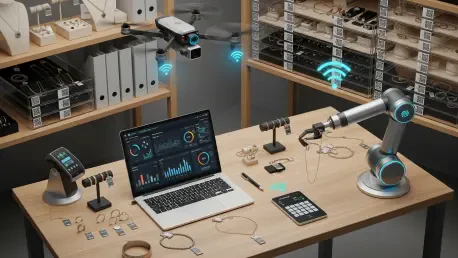

The traditional allure of a high-end jewelry boutique often masks a back-office reality that has historically been defined by grueling manual labor and high-stakes administrative pressure. For generations, the meticulous task of logging every diamond, gemstone, and precious metal alloy relied upon handwritten ledgers or tedious keyboard entry, a method that left significant room for human error and delayed financial reporting. As the industry navigates the landscape of 2026, a profound shift is occurring, where these legacy practices are being systematically replaced by sophisticated, data-centric systems. This transition is not merely about digitizing paperwork; it represents a comprehensive overhaul of how luxury assets are tracked, valued, and secured within an increasingly competitive global market. By integrating advanced software and hardware, retailers are finding they can finally bridge the gap between old-world craftsmanship and modern operational efficiency.
Streamlining Operations: The Role of Artificial Intelligence
The most immediate impact of artificial intelligence in the jewelry sector is the near-total elimination of manual data entry during the inventory intake process. In years past, a single shipment containing hundreds of unique items could require a staff member to spend nearly nine hours entering SKUs, stone weights, and pricing into a central database. Modern AI-powered tools, such as those developed by Luxe Software, have effectively reduced this multi-hour burden to a matter of minutes through advanced optical character recognition and machine learning algorithms. By simply capturing a photograph of a vendor invoice, the system can autonomously parse complex product details and populate the store’s inventory management system with high precision. This allows employees to step away from the keyboard and refocus their efforts on high-value activities, such as providing personalized consultations to clients or developing creative marketing strategies for high-margin pieces.
Beyond the initial intake of goods, the adoption of unified operating systems is providing jewelers with a holistic view of their business health that was previously unattainable. Contemporary platforms now consolidate customer relationship management, sales tracking, and inventory logistics into a single, intuitive interface where data is represented visually through dynamic graphs and real-time dashboards. These systems are often linked directly to global market indices like RapNet, ensuring that the valuation of gold and diamond stock reflects the current trading price in real-time. This connectivity is particularly vital for managing “memo” or consignment goods, as it allows owners to instantly identify aged inventory that has remained unsold. With this level of transparency, management can make swift, data-driven decisions regarding whether to offer promotional discounts or to reclaim the intrinsic value of an item by melting it down for its raw materials.
Revolutionizing Logistics: Beyond the Traditional Barcode
While the barcode has served as a reliable staple for ensuring pricing accuracy over the last several years, its inherent limitations are becoming more apparent in a high-volume retail environment. Barcodes require a direct line of sight and individual scanning, which remains a bottleneck when conducting full-store audits or verifying large shipments in a secure vault. In contrast, Radio Frequency Identification (RFID) technology allows for the simultaneous scanning of hundreds of items without the need for physical contact or visual alignment. Using portable readers or fixed antennas, a jeweler can perform a comprehensive inventory count of an entire showroom or a safe in a fraction of the time it would take to scan tags one by one. This technological leap ensures that stock levels are accurate to the minute, reducing the likelihood of discrepancies that can lead to financial losses or missed sales opportunities when a specific piece cannot be located quickly.
The implementation of RFID extends far beyond logistical convenience, serving as a cornerstone for modern security protocols and loss prevention strategies. Systems from companies such as WJewel or AsReader provide a persistent digital “paper trail” by monitoring the movement of tagged items throughout the premises in real-time. If a high-value piece is moved from a secure display case to a private viewing room, the system logs the transition automatically, providing management with a detailed history of every interaction with that asset. This level of visibility is a powerful deterrent against internal and external theft, as any unauthorized movement can trigger immediate alerts. Furthermore, in the event that an item is misplaced, the precision of RFID tracking allows staff to pinpoint its last known location with remarkable accuracy. This creates a secure environment where the focus remains on the beauty of the jewelry rather than the constant anxiety of manual asset protection.
Data-Driven Sales: The Rise of Smart Hardware
As high-end jewelry retailers transition toward more informal, “lounge-style” interactions, the hardware used to present luxury pieces has evolved to match this sophisticated consumer behavior. Traditional sales over a fixed glass counter are increasingly being supplemented by portable, tech-enabled displays like the Argos smart trays. These units utilize integrated RFID sensors to track every item placed on the tray during a customer presentation, providing a seamless bridge between the physical and digital worlds. As a salesperson shows various rings or necklaces to a client, the tray automatically records which specific SKUs were handled, how long they were viewed, and whether the interaction resulted in a completed transaction. This technology allows for a high degree of mobility within the store, enabling sales associates to create a comfortable, personalized atmosphere without ever losing track of the valuable inventory being presented to the customer.
The granular data collected by smart hardware is providing unexpected insights into store performance that go well beyond simple inventory tracking. By analyzing conversion rates—the ratio of items shown to items sold—retailers can identify environmental factors that may be hindering sales performance. For instance, data might reveal that a specific consultation room has a lower success rate despite showing the same high-quality merchandise as other areas of the store. Upon investigation, a jeweler might discover that improper lighting or a poor acoustic environment is dampening the customer experience. By correcting these physical issues based on digital evidence, businesses have seen significant spikes in sales volume and client satisfaction. Ultimately, while AI and RFID provide the analytical backbone for these improvements, they are designed to support, not replace, the human expertise required to judge the fine nuances of a stone’s brilliance or the craftsmanship of a unique setting.
Strategic Integration: Future-Proofing the Retail Model
For jewelry retailers looking to maintain a competitive edge in 2026 and beyond, the path forward involves a calculated investment in scalable technology that prioritizes data interoperability. It is no longer sufficient to have disparate software tools that do not communicate; the modern standard requires a unified ecosystem where inventory, marketing, and security data flow seamlessly. Retailers should begin by auditing their current intake processes to identify where AI-driven automation can most effectively reduce administrative overhead and minimize human error. Additionally, implementing RFID at the point of manufacture or during initial tagging can provide long-term benefits across the entire supply chain. By prioritizing systems that offer real-time market valuation and integrated CRM features, business owners can ensure they are equipped to react quickly to market fluctuations and evolving consumer preferences while maintaining the highest standards of asset security.
The successful transformation of the jewelry industry was ultimately achieved by embracing a philosophy that combined traditional luxury with advanced digital precision. Business owners who moved away from manual ledgers and embraced AI-driven processing realized significant improvements in their operational margins and employee retention. The integration of RFID technology effectively neutralized the logistical bottlenecks that once hindered frequent stock audits, while smart hardware provided the behavioral insights necessary to refine the customer experience. These advancements ensured that the focus remained on the artistry of the pieces while the background operations functioned with unprecedented accuracy and speed. As the market became more data-centric, those who adopted these tools found themselves better positioned to navigate the complexities of global supply chains and high-value retail environments. The industry successfully demonstrated that technology and craftsmanship can exist in harmony to create a more resilient and transparent marketplace.