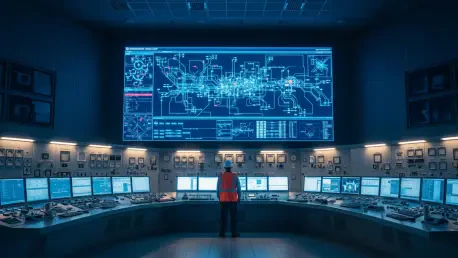

The quiet humming of a power plant’s control room belies a growing instability that stems not from mechanical wear, but from a profound loss of institutional memory. As the final wave of veteran operators who understood every manual override and idiosyncratic patch of decades-old machinery begins to step away, the energy sector finds itself at a precarious intersection of history and high-tech vulnerability. This mass departure is creating a vacuum of operational technology (OT) expertise at the exact moment when global cyber threat actors are intensifying their focus on physical infrastructure. The industry is currently witnessing a stark reality where the sophisticated code used to manage modern smart grids is being deployed alongside antiquated hardware that was never intended to see the light of the public internet. This creates a systemic risk where the bridge between physical safety and digital security is crumbling under the weight of a demographic shift that threatens the very foundations of national energy resilience and security.
Operational Vulnerabilities: The Recovery Paradox
Knowledge Retention: The Challenge of Memory Loss
The fundamental danger lies in the fact that many recovery plans, while looking robust on paper, fail spectacularly when they are subjected to the chaotic reality of a modern ransomware event. While utility companies frequently maintain digital backups of their programmable logic controllers, the actual utility of these files is often illusory without the original engineers present to interpret the complex logic that governs them. This specific phenomenon, often called the “Recovery Paradox,” occurs when a system is technically restored to its previous state, yet there is no longer an expert on-site who understands the logic behind why specific configurations were implemented in the first place. In these scenarios, new operators find themselves forced to reverse-engineer their own processes under the immense pressure of a live outage, which significantly increases the risk of human error and prolonged downtime that could have been avoided with better knowledge transfer and documentation protocols.
System Restoration: The Crisis of Specialized Recovery
Beyond the internal lack of knowledge, the reliance on external specialized integrators creates a logistical nightmare during widespread regional cyberattacks that target multiple facilities. Many critical systems are designed with proprietary architectures that require the physical presence of original manufacturers or highly specialized third-party integrators for a safe and successful restart after a crash. In a scenario where multiple utility providers are hit simultaneously, the availability of these rare external experts becomes a crippling bottleneck that can transform a minor scheduled outage into a months-long crisis for the community. Because these industrial plants sit at the center of incredibly complex and interconnected supply chains, a prolonged stoppage at a single refinery or chemical plant ripples outward with devastating efficiency. These delays cause profound economic damage that impacts everyone from upstream energy suppliers to everyday consumers who rely on these services.
Supply Chain Fragility: Cascading Economic Consequences
The increasing frequency of attacks on utilities, which have seen a surge of nearly 70 percent in the last year, has forced a re-evaluation of the financial and operational risks associated with aging infrastructure. Despite the rising stakes, a significant imbalance persists in how organizations allocate their security budgets, with the vast majority of spending still directed toward traditional enterprise IT systems. This disparity leaves refineries, chemical plants, and pipeline operators dangerously exposed, as the control systems managing these facilities often have lifespans that far outlast the typical refresh cycle of standard office equipment. When a corporate laptop is compromised, the business might suffer a delay in emails, but when a turbine controller is seized by ransomware, the physical consequences can lead to catastrophic hardware failure. The industry must reconcile the fact that the digital protection of physical assets requires a specialized level of investment.
The Digital Frontier: Expanding Attack Surfaces
Shadow OT: The Hidden Danger of Unmanaged Devices
Cyber vulnerabilities are frequently introduced through seemingly low-priority devices, such as facility security cameras, smart lighting, and building sensors, which attackers use as launchpads. These devices often constitute what is known as “Shadow OT”—hardware that is not recorded on official network drawings and remains largely invisible to the high-level enterprise monitoring tools used by the C-suite. Over time, plant staff may stop noticing the accumulation of temporary workarounds, undocumented wireless access points, and forgotten connections, creating a landscape where critical assets are directly reachable from the public internet. Attackers take advantage of this invisibility to move laterally through the network, shifting from a simple guest Wi-Fi connection to the sensitive core of the industrial control system. Without a comprehensive and automated inventory of every single device connected to the network, operators are essentially flying blind, leaving the back door open for sophisticated threat actors.
Cultural Friction: Engineering Safety vs. Digital Security
There is a fundamental and growing tension between the traditional engineering mindset, which prioritizes physical stability, and the modern requirements of digital security and patching. In the physical world, mechanical components generally fail according to predictable parameters and wear-and-tear models, allowing for robust safety standards that can remain unchanged for decades. However, cyber threats evolve at a speed that traditional engineering certifications and long-term equipment lifecycles simply cannot match, requiring constant software patching and regular risk re-evaluation. The industry is now being urged by security experts to adopt a “process safety” template for cybersecurity, where digital defensive protocols are run in parallel with physical safety measures. This approach treats a code vulnerability with the same level of urgency as a leaking valve or a pressurized pipe, integrating digital hygiene into the daily safety culture that has successfully protected industrial workers.
Asset Visibility: Bridging the Gap Between IT and OT
The current technical gap is exacerbated by the fact that many industrial control systems operate on legacy protocols that were never designed to provide the telemetry needed for modern security monitoring. For decades, the “air gap” strategy—physically isolating industrial networks from the internet—provided a sense of security that has now been rendered obsolete by the push for data-driven efficiency and remote management. As plants integrate more Internet of Things devices to optimize production, the boundary between the secure internal network and the outside world becomes increasingly porous. Achieving true resilience requires implementing deep packet inspection and non-intrusive monitoring tools that can identify anomalous behavior without disrupting the delicate timing of the industrial process. Without this level of granular visibility, security teams cannot distinguish between a legitimate maintenance command and a malicious attempt to sabotage a high-pressure system.
Strategic Resilience: Building a Sustainable Future
Regulatory Evolution: Insurance as a Security Mandate
In the absence of comprehensive federal mandates for all industrial sites, insurance providers have emerged as a primary regulatory force driving change within the energy sector’s security posture. Underwriters now conduct rigorous annual security audits that directly influence premium costs and coverage eligibility, creating a new standard where the lack of documentation is treated as a lack of control. Operators who cannot provide an automated asset inventory, a documented patch cadence, or proof of regular incident response drills face significantly higher costs or may be denied coverage entirely. This market-driven pressure is forcing a move away from purely ceremonial compliance toward functional security measures that reflect the real-time state of the plant floor. As insurance companies become more sophisticated in their understanding of industrial risks, the financial incentive to secure legacy systems is finally outweighing the cost of inaction, providing a catalyst for modernization.
Talent Cultivation: Internal Conversion Strategies
Addressing the talent crisis requires a strategic shift toward internal conversion and the upskilling of existing employees rather than relying solely on the increasingly competitive external recruitment market. Since it can take nearly two decades to develop a technician who is fluent in both complex network architecture and the nuances of physical industrial processes, plants must train their current staff. This approach ensures that the most valuable site knowledge—the “how and why” of a specific plant’s operation—is preserved by those who are already intimately familiar with the facility’s quirks. By pairing veteran engineers with younger IT professionals in cross-functional teams, organizations can facilitate a transfer of knowledge that bridges the generational divide. This internal development not only fills the immediate vacancy left by retiring experts but also builds a more resilient workforce that views the plant as a single, integrated system.
A Roadmap for Resilience: Future-Proofing Infrastructure
The energy sector eventually recognized that industrial cybersecurity had to be treated as a fundamental engineering and reliability problem rather than a secondary administrative IT concern. To build a truly resilient program, leaders focused on maintaining absolute visibility over every asset on the network and strictly controlled what those devices were allowed to communicate with. By reframing cybersecurity as a critical component of uptime and personnel safety, the industry successfully developed a roadmap that protected the physical processes essential to modern society. Organizations that survived this transition were those that prioritized the documentation of legacy logic and invested in the next generation of hybrid experts. They moved beyond simple firewall installations and embraced a culture of continuous monitoring and proactive defense. These steps ensured that even as the veteran workforce departed, the systems they built remained secure, operational, and capable.