
The rapid transition from traditional software assistance to fully autonomous digital agents is fundamentally altering how modern enterprises conceptualize their digital infrastructure and security posture. Cisco Systems Inc. has recognized this paradigm shift by introducing AgenticOps, a strategic operational framework unveiled at the recent Cisco Live conference to address the complexities of a world where AI agents now interact, modify configurations, and operate independently. As organizations move beyond simple generative text tools toward agentic systems capable of executing complex workflows without constant human oversight, the need for a unified management plane has become critical. The launch of the Cisco Cloud Control platform represents a major milestone in this journey, offering a centralized environment designed to orchestrate networking, security, and computing resources while managing the massive data volumes generated by autonomous entities. This move acknowledges that the speed of digital threats in the current landscape necessitates a machine-speed response, as manual intervention can no longer keep pace with the efficiency of frontier AI models.
The Foundation: Autonomous Management
Integrating Data Fabric: Agentic Intelligence
AgenticOps serves as a sophisticated operating model where AI agents perform high-level orchestration under a framework of strictly defined human policy control. This collaborative approach focuses on bridging the gap between discovery and remediation by enabling AI to conduct real-time root-cause analysis across fragmented IT environments. When a performance bottleneck occurs in a hybrid cloud setup, these agents do not merely alert a human operator; they analyze telemetry, suggest optimal reconfigurations, and, within sanctioned boundaries, execute fixes immediately. This systemic capability significantly reduces the window of vulnerability that attackers often exploit during the delay between a system failure and its manual repair. By offloading the heavy lifting of infrastructure maintenance to these intelligent agents, IT administrators are empowered to pivot their focus from repetitive troubleshooting to higher-level strategic planning and policy governance.
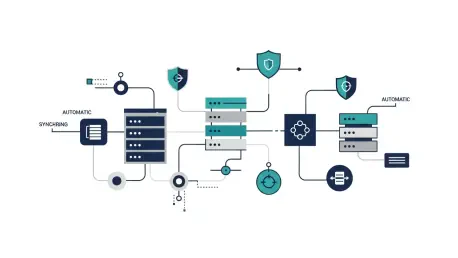
The success of this orchestration depends heavily on the seamless interaction between different layers of the technology stack, which is why the Cisco Data Fabric acts as the connective tissue for agentic operations. This fabric provides a consistent data environment where agents can access the context necessary to make informed decisions without being confined by traditional architectural silos. Because these agents operate within a unified ecosystem, they can maintain state and context as workloads shift between on-premises servers and various cloud providers. This continuity ensures that an agent managing a database in one region has the same policy awareness and operational intelligence as an agent managing a web server in another. Consequently, the enterprise gains a more resilient and agile infrastructure that adapts to changing demands in real time, transforming the network from a static utility into a dynamic, self-optimizing asset.
Harnessing Unified Telemetry: The Splunk Integration
The integration of Splunk technology into the broader Cisco Data Fabric has created a specialized machine data lake that is essential for training high-fidelity AI models. By aggregating vast amounts of cross-domain telemetry, this system provides the granular insights that generalized, off-the-shelf AI models typically lack. Domain-specific intelligence allows agents to recognize subtle patterns in network traffic or application behavior that might signal an impending failure or a sophisticated cyberattack. This localized knowledge ensures that the actions taken by the agents are not only effective but also deeply aligned with the specific operational nuances of the organization. As a result, the AI moves beyond generic automation and becomes a highly specialized tool tailored to the unique environment of the enterprise, significantly increasing the reliability of autonomous decision-making processes.
Transparency and trust are the cornerstones of this data-driven strategy, particularly when agents are granted the authority to modify critical infrastructure. To address the inherent “black box” nature of some AI systems, Cisco has implemented rigorous auditing mechanisms that document every decision and action taken by an agent within the Splunk environment. This capability ensures that every autonomous operation is fully explainable and traceable, allowing human supervisors to review the logic behind a specific configuration change or security block. By providing a clear audit trail, enterprises can satisfy regulatory compliance requirements and build the internal confidence necessary to scale AI operations. When administrators can see exactly why an agent chose a specific path, the trust gap closes, allowing for more ambitious deployments of autonomous technology across sensitive and high-stakes business functions.
Building and Securing: Custom AI Ecosystems
Enabling Specific Workflows: Cloud Control Studio
Organizations are no longer limited to standardized AI implementations; they can now build custom, policy-aware workflows using the Cisco Cloud Control Studio and the AI Canvas. These environments provide a low-code workspace where developers and IT operators use Agent Builder and App Builder tools to design specialized agents that address unique business challenges. For example, a financial services firm can create an agent specifically designed to monitor transaction latency and automatically adjust cloud resource allocation during peak trading hours. By utilizing natural-language prompts, the platform democratizes the creation of advanced AI workflows, allowing staff members who may not be expert programmers to contribute to the automation strategy. This approach fosters a culture of innovation where the people closest to the operational problems are the ones empowered to build the AI-driven solutions.
A critical aspect of these custom workflows is the emphasis on human-in-the-loop operations, ensuring that the transition between autonomous action and human intervention is seamless. When an AI agent encounters a scenario that exceeds its programmed policy limits or requires a subjective judgment call, the Cloud Control Studio preserves the full context of the event for the human operator who takes over. This handoff prevents the loss of valuable information that often occurs when shifts change or when a problem is escalated between different technical teams. By integrating with established third-party platforms like ServiceNow and PagerDuty, these custom agents fit directly into existing enterprise ticketing and alert systems. This ensures that while the AI handles the majority of the operational volume, humans remain the final authority, maintaining the necessary oversight to manage complex or unprecedented architectural issues.
Implementing Security Controls: Machine-Speed Protection
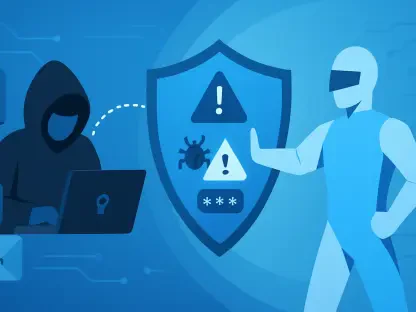
To counter the increasing velocity of cyber threats enabled by adversarial AI, Cisco introduced Live Protect, a technology designed to apply security controls to active infrastructure without disruption. Traditional security patching often requires maintenance windows and system reboots, creating periods of vulnerability that modern threats can easily exploit. Live Protect changes this dynamic by allowing security agents to inject protections directly into running processes, effectively shielding vulnerabilities as soon as they are identified. This “live” approach to security ensures that the defense mechanism moves as quickly as the threat itself, maintaining continuous system uptime while closing security gaps in milliseconds. In a world where minutes of downtime can result in millions of dollars in lost revenue, the ability to secure a system without taking it offline provides a massive competitive advantage.
Supporting these real-time protections is DefenseClaw, a robust governance framework that monitors the behavior of local AI agents to prevent them from becoming liabilities. As agents gain more autonomy, the risk of data exposure or the accidental creation of backdoors increases if their actions are not properly governed. DefenseClaw acts as a dedicated security layer that audits agent behavior against corporate security policies, ensuring that no agent inadvertently leaks sensitive information or violates compliance standards. If an agent attempts to perform an action that is deemed risky or outside of its established parameters, the framework can instantly revoke its permissions and alert security teams. This multi-layered security strategy ensures that the benefits of autonomous operations are not outweighed by the risks, providing a secure foundation for the next generation of enterprise AI.
Sustaining and Resilience: Future-Proofing the Era
Optimizing Observability: Operational Costs and Quality
As the scale of AI deployments grows, the financial and operational sustainability of these systems has become a primary concern for executive leadership. Cisco expanded its observability toolset to provide deep visibility into token usage and the associated costs of interacting with large language models. These tools allow organizations to monitor the efficiency of their AI agents, ensuring that they are not consuming excessive resources or performing redundant queries that inflate operational expenses. By treating AI as a resource that must be managed with the same fiscal discipline as hardware or cloud storage, companies can ensure their AI initiatives remain viable over the long term. This focus on cost-transparency helps IT leaders justify the investment in agentic technologies by providing clear data on the return on investment and operational efficiency gains.
Beyond cost management, the focus on data quality has emerged as a vital component of maintaining reliable and consistent AI performance. Cisco’s observability platforms now include safety benchmarks that evaluate the accuracy and reliability of agent decisions based on the quality of the incoming telemetry. Clean, high-fidelity data is the primary fuel for successful AI; without it, even the most advanced models can produce inconsistent or incorrect results. By providing tools that can detect and filter out noisy or corrupted data before it reaches the AI agent, the platform ensures that the autonomous system is making decisions based on the most accurate information available. This commitment to data integrity reduces the risk of operational errors and ensures that the AI remains a dependable partner in managing complex infrastructure, even as the volume of telemetry continues to explode.
Preparing for Resilience: Quantum Threats and Assessments
The threat landscape is constantly evolving, and the emergence of quantum computing has introduced new challenges, particularly the “harvest now, decrypt later” tactic used by sophisticated actors. Cisco proactively addressed this by committing to make its core product portfolio quantum-safe, ensuring that the encryption methods used today can withstand the processing power of future quantum computers. By integrating post-quantum cryptography into its networking and security hardware, the company established a defensive perimeter that protects sensitive data from being decrypted years after it was captured. This forward-looking security posture is essential for organizations that handle long-term sensitive data, such as government agencies or healthcare providers, who must ensure that their digital assets remain secure for decades to come.
To assist organizations in this transition, Cisco launched Quantum Ready Assessments and Resilient Infrastructure Services to provide a clear roadmap for modernization. These services evaluated the current state of an organization’s encryption and suggested the necessary upgrades to achieve quantum resilience without disrupting existing operations. The initiative helped businesses understand which parts of their infrastructure were most vulnerable and prioritized the deployment of quantum-resistant technologies. By combining these advanced security measures with the autonomous capabilities of AgenticOps, the company offered a comprehensive strategy for building a digital environment that was both self-managing and capable of resisting the most advanced threats. This comprehensive approach ensured that enterprises were prepared not only for the challenges of today’s AI-accelerated world but also for the technological shifts on the horizon.