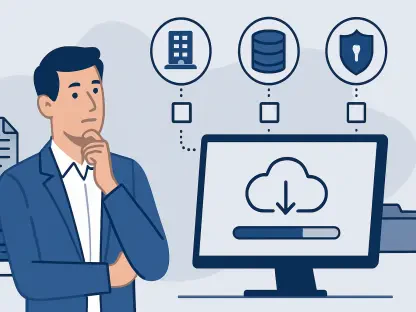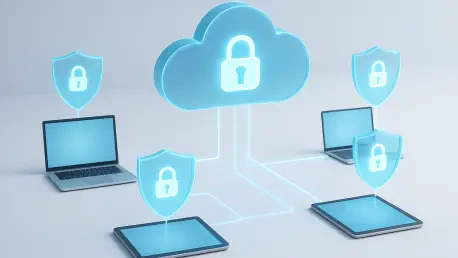

The shift toward Zero Trust Network Access is driven by the urgent need to verify device posture and user identity continuously throughout every active session. As the traditional network perimeter has effectively dissolved, organizations can no longer rely on the antiquated “castle-and-moat” security philosophy that once dominated corporate IT strategy. In the current landscape, the complexity of managing a distributed workforce requires a transition from broad, network-level access to granular, application-specific permissions. This evolution ensures that even if a single set of credentials or a mobile device is compromised, the potential for lateral movement across the internal infrastructure is virtually eliminated. Businesses are now prioritizing solutions that offer seamless integration between identity providers and endpoint management systems, creating a unified defense that adapts in real-time to changing threat levels. By focusing on the principle of least privilege, modern secure access platforms allow administrators to define exactly which resources a user can see, reducing the visibility of the internal network to external attackers and significantly lowering the risk of large-scale data breaches that have plagued legacy systems in recent years.
Specialized Solutions for Modern Workforces
Simplicity: Peer-to-Peer Mesh Networking
Tailscale has redefined the expectations for remote connectivity by leveraging a peer-to-peer mesh architecture that bypasses the limitations of traditional centralized concentrators. Built on the modern WireGuard protocol, this approach allows devices to establish direct, encrypted tunnels with one another, regardless of their physical location or the complexity of the local network environments they inhabit. For technical teams and decentralized startups, this removes the “hub-and-spoke” bottleneck that often leads to high latency and single points of failure in older VPN configurations. The management interface facilitates a “zero-config” experience where administrators can invite users and define access policies through a centralized control plane without ever touching the underlying routing hardware. This shift toward a software-defined mesh ensures that as an organization grows, the network scales horizontally, maintaining high performance and low overhead for the IT department while providing users with a transparent connection that feels like a local area network.
The security benefits of such a mesh network extend beyond simple encryption, as the identity-driven nature of the platform ensures that every node on the network is explicitly authenticated before a connection is permitted. Unlike traditional VPNs that might grant a user an IP address on a subnet and trust them from that point forward, mesh solutions maintain a constant awareness of the device’s identity and its authorized destinations. This is particularly advantageous for organizations utilizing a mix of multi-cloud environments and on-premises servers, as it creates a consistent overlay network that ignores the physical boundaries of the underlying infrastructure. By automating the rotation of cryptographic keys and integrating directly with existing single sign-on providers, these solutions reduce the administrative burden associated with manual certificate management. The result is a robust, self-healing network that provides superior uptime and security without the need for specialized networking expertise, allowing smaller enterprises to maintain the same level of protection as global conglomerates.
Persistence: High-Availability Connections in Mobile Fields
Absolute NetMotion continues to serve as a critical infrastructure component for organizations that operate in demanding mobile environments where cellular connectivity is frequently interrupted. Its primary strength lies in its ability to maintain session persistence, allowing active applications to remain functional even when a device loses its signal or transitions between different network types, such as shifting from a municipal Wi-Fi hotspot to a 5G carrier network. This prevents the constant re-authentication loops that frustrate field workers in sectors like emergency services, logistics, and utilities, where a lost connection can lead to delayed response times or data entry errors. By intelligently managing the data stream and caching information during brief outages, the software ensures that the end-user experience remains uninterrupted, effectively masking the inherent instability of modern mobile communications. This reliability is coupled with deep visibility into the performance of the cellular network, providing IT administrators with the telemetry needed to troubleshoot connectivity issues in specific geographic zones.
Beyond simple connectivity, the platform offers advanced traffic steering capabilities that allow organizations to prioritize mission-critical applications over background data usage. In a scenario where bandwidth is limited, the system can ensure that a primary database sync or a voice-over-IP call receives priority over non-essential software updates or web browsing. This granular control over the data pipe is essential for maximizing the utility of limited mobile data plans and ensuring that remote employees remain productive regardless of their environment. Furthermore, the solution integrates comprehensive device health checks, refusing to establish a connection if the endpoint does not meet specific security criteria, such as having an active firewall or the latest security patches installed. This proactive approach to endpoint hygiene ensures that the mobile workforce does not become a vector for malware, bridging the gap between the flexibility of mobile work and the rigorous security requirements of the modern corporate environment.
Management: Cloud-Native Platforms for Growing Enterprises
NordLayer has established itself as the go-to solution for mid-sized organizations that require a professional-grade secure access layer without the complexity of managing physical appliances. By providing a cloud-native service that includes dedicated gateways and fixed IP addresses, it allows businesses to implement IP whitelisting for their various software-as-a-service platforms, ensuring that only authorized remote traffic can reach sensitive corporate tools. This model is particularly effective for companies that have moved entirely away from on-premises servers and need a unified way to secure access to a diverse array of cloud resources. The centralized dashboard provides a simplified view of the entire organization’s security posture, making it easy to onboard new employees, assign them to specific teams, and grant them access to only the resources they need to perform their roles. This ease of use does not come at the expense of security, as the platform supports modern encryption standards and integrates seamlessly with major identity providers to enforce multi-factor authentication across the entire user base.
The cost-effectiveness of this cloud-hosted model is a significant driver for adoption among rapidly scaling companies that need to predict their security expenditures accurately. Because the service is billed on a per-user basis, organizations can scale their secure access capabilities up or down as their headcount changes, avoiding the heavy capital expenditure associated with purchasing and maintaining high-capacity hardware VPN concentrators. Additionally, the platform simplifies the process of establishing secure site-to-site connections between different office locations, creating a cohesive corporate network that spans the globe without the need for complex manual configurations. This accessibility allows IT managers to focus on high-level security policy rather than the minutiae of server maintenance and software patching. By offloading the operational burden to a specialized provider, businesses can ensure that their remote access infrastructure is always up to date with the latest security enhancements, reducing the window of opportunity for attackers who frequently target unpatched or misconfigured gateway devices.
Enterprise-Grade Security and Infrastructure
Integration: Global Scale and Deep Packet Inspection
Cisco Secure Client remains the cornerstone of remote access for large-scale enterprises that demand deep integration with a wide array of networking hardware and security telemetry. The solution is designed to handle the immense throughput requirements of global organizations, providing a stable bridge for tens of thousands of simultaneous users who need to access a complex web of legacy applications and modern cloud services. Its greatest advantage is the level of visibility it provides to security operations centers, as it feeds detailed information about user behavior and device status into broader security analytics platforms. This allows for the automated detection of anomalous activity, such as a user attempting to access sensitive financial data from an unrecognized location or a device suddenly exhibiting signs of a malware infection. For organizations that have already invested heavily in the Cisco ecosystem, the ability to enforce consistent security policies across both wired office connections and remote VPN tunnels creates a unified defense posture that is difficult to replicate with disparate tools.
Palo Alto Networks takes a security-first approach with its GlobalProtect solution, which emphasizes the continuous inspection of all traffic entering the corporate network through remote gateways. Rather than simply creating an encrypted tunnel, the system routes traffic through next-generation firewalls that apply advanced threat prevention techniques, including sandboxing for unknown files and deep packet inspection to identify hidden exploits. This ensures that a remote employee receives the same level of protection as if they were sitting behind the primary corporate firewall, effectively extending the security perimeter to the individual endpoint. The integration with the Prisma Access cloud service allows for a hybrid approach where traffic can be inspected at the nearest regional hub, reducing latency while maintaining a high security bar. This architecture is particularly vital for industries dealing with highly sensitive data, such as finance and defense, where the risk of data exfiltration through encrypted tunnels is a primary concern for security administrators who need to maintain strict control over every byte of data leaving the organization.
Efficiency: Hardware Acceleration and Ecosystem Value
Fortinet has positioned its FortiClient solution as a high-value entry point into modern secure access, particularly for organizations that are already utilizing their specialized security processing units. By offloading the heavy computational requirements of encryption and decryption to dedicated hardware within the firewall, Fortinet gateways can handle significantly more traffic than general-purpose servers, providing a cost-effective path for companies to scale their remote access capacity. This hardware-centric approach is often bundled with the company’s broader security fabric, allowing for a tightly integrated management experience where the firewall, switches, and remote access clients all share threat intelligence in real-time. This level of synergy allows for automated responses to threats; for example, if a remote device is detected as being compromised, the firewall can instantly revoke its access permissions across the entire network, preventing the spread of the threat before a human administrator can even intervene.
While the value proposition is strong, the reliance on specialized gateway hardware requires a disciplined approach to infrastructure management and security hygiene. Because these gateways are highly visible on the public internet, they are frequently targeted by automated scanning tools and sophisticated threat actors looking for unpatched vulnerabilities. This reality has forced organizations to adopt more aggressive patching cycles and to utilize the built-in vulnerability scanning features of the FortiClient software to ensure that the entire fleet of remote devices remains compliant with security standards. The transition toward a Zero Trust model within this ecosystem has been accelerated by the introduction of ZTNA tags, which allow administrators to create dynamic access policies based on the real-time posture of the device rather than static IP addresses. This means that a user might have access to a specific server only when their antivirus is active and their device has been recently scanned, providing a layer of protection that adjusts to the actual risk level of the connection at any given moment.
Flexibility: Unified SASE and Open-Source Control
The integration of Perimeter 81 technology into the Check Point Harmony SASE platform represents a major step toward the consolidation of secure access tools into a single, cohesive framework. This unified approach allows IT departments to manage VPN, ZTNA, and web security from a single console, reducing the “tool sprawl” that often leads to configuration errors and security gaps. For organizations currently in the middle of a multi-year migration to the cloud, this platform provides a flexible bridge, allowing them to maintain traditional VPN tunnels for legacy on-premises applications while simultaneously deploying Zero Trust access for modern web-based services. The software-defined nature of the platform means that global gateways can be spun up or down in minutes, providing local points of presence for international teams and significantly reducing the latency that often plagues centralized remote access solutions. This agility is a key differentiator for businesses that need to adapt quickly to changing market conditions or sudden shifts in their workforce distribution.
In contrast to the fully managed cloud platforms, OpenVPN Access Server continues to be the preferred choice for technical organizations that demand absolute control over their security infrastructure and data residency. By hosting the server software within their own private clouds or on-premises data centers, administrators can ensure that all traffic and configuration data remain entirely within their sphere of control, avoiding any concerns regarding third-party vendor access. The open-source foundations of the protocol provide a level of transparency and auditability that is highly valued by security researchers and government agencies. However, this level of control requires a high degree of internal expertise, as the responsibility for hardening the server, managing certificates, and keeping the software updated falls squarely on the internal IT team. For companies with the necessary technical resources, this self-hosted model provides a highly customizable and cost-effective solution that can be tailored to meet the most stringent compliance requirements without being locked into a specific vendor’s proprietary ecosystem or pricing structure.
Strategic Trends Shaping the Future of Connectivity
Convergence: The Move Toward Integrated Security Platforms
The trend of moving away from standalone security products in favor of integrated platforms has reached a critical mass, as organizations seek to simplify their defense architectures. The primary driver for this convergence is the realization that disconnected security tools often create blind spots, where an alert in one system is not correlated with activity in another, allowing sophisticated attackers to remain undetected. By adopting a Secure Access Service Edge model, businesses can unify their networking and security functions, ensuring that policies are applied consistently regardless of whether a user is in the office, at home, or traveling. This consolidation also streamlines the administrative workflow, as a single policy change can be propagated across the entire global infrastructure, reducing the risk of human error during manual updates. The focus is no longer on the individual connection method, but on the creation of a seamless “security fabric” that protects data at every stage of its journey between the user and the application.
Furthermore, this platform-based approach allows for the ingestion of a much wider array of telemetry, enabling more sophisticated risk-based access decisions. In the current environment, a security system might look at dozens of factors before granting access, including the user’s current location, the time of day, the sensitivity of the data being requested, and the historical behavior patterns of that specific account. If any of these factors appear out of the ordinary, the system can automatically trigger a step-up authentication challenge or temporarily restrict access to the most sensitive resources. This level of dynamic protection is only possible when the remote access solution is deeply integrated with identity providers, endpoint detection systems, and threat intelligence feeds. As a result, the role of the IT administrator is shifting from managing individual tunnels to defining the overarching business rules that govern the flow of information, allowing the automated platform to handle the complex task of enforcement in real-time across a global scale.
Architecture: Transitioning Away from the Vulnerable Gateway
A major architectural shift is occurring as organizations recognize that traditional VPN gateways have become some of the most heavily targeted entry points for cybercriminals. Because these systems must be exposed to the public internet to function, they are constantly subjected to automated attacks seeking to exploit known vulnerabilities or weak credentials. This has led to a surge in the adoption of ZTNA architectures that utilize “inside-out” connectivity, where the internal resources establish an outbound connection to a secure broker in the cloud rather than listening for inbound connections on the public web. This effectively makes the corporate infrastructure invisible to the public internet, removing a major attack vector and significantly complicating the reconnaissance phase of a targeted breach. By hiding the “front door” to the network, organizations can drastically reduce their external attack surface, making it much harder for unauthorized users to even identify where the corporate assets are located.
The effectiveness of this new architecture depends heavily on the vendor’s ability to maintain a global network of high-performance brokers that can handle traffic with minimal latency. As businesses move away from localized hardware, they are increasingly evaluating providers based on the density and reliability of their points of presence. This shift is also driving a change in how security budgets are allocated, with more funds being directed toward cloud-native services that offer built-in DDoS protection and automated scaling capabilities. The goal is to create a resilient infrastructure that can withstand both targeted attacks and unexpected surges in traffic without requiring manual intervention from the IT team. For many organizations, the move away from the traditional gateway is not just a security upgrade, but a strategic decision to modernize their networking stack for a world where the majority of applications are hosted in the cloud and the majority of users are no longer confined to a single physical office location.
Implementation Best Practices for Decision Makers
Standards: Establishing Rigorous Identity and Posture Checks
To maximize the effectiveness of any secure access solution, organizations must implement a foundational set of security practices that go beyond the basic installation of software. The most critical of these is the universal enforcement of multi-factor authentication, ideally utilizing modern standards like FIDO2 or hardware-based security keys that are resistant to phishing and credential stuffing. In the current landscape, relying on simple passwords or even SMS-based codes is no longer sufficient to protect against determined attackers who have become adept at bypassing legacy authentication methods. By requiring a physical token or a biometric check for every session, businesses can ensure that the person accessing the network is truly who they claim to be. This identity verification must be paired with continuous device posture assessment, where the system checks for active encryption, up-to-date antivirus software, and the presence of mandatory security configurations before a connection is allowed to proceed.
This rigorous approach to access control should also include a policy of “continuous authorization,” where the user’s permissions are re-evaluated throughout the duration of their session. If a device’s security status changes—for example, if a user disables their firewall or a new vulnerability is detected—the system should be capable of instantly revoking access or limiting it to a quarantined segment of the network. This prevents a “set-and-forget” mentality where a device is trusted indefinitely after the initial login. Additionally, IT teams must prioritize the rapid deployment of security patches for their access infrastructure, often aiming for a turnaround time of less than forty-eight hours for critical vulnerabilities. This level of operational discipline is necessary to stay ahead of exploit kits that are often released shortly after a vulnerability is publicly disclosed. By combining strong identity management with a commitment to technical excellence, organizations can build a resilient access framework that protects their most valuable digital assets from the evolving threats of the mid-2020s.
Optimization: Strategic Resource Audits and Lifecycle Management
A successful implementation of modern secure access also requires a strategic look at the existing infrastructure to identify and eliminate unnecessary complexity that could lead to security gaps. Before investing in new software, decision-makers should conduct a comprehensive audit of their current networking assets, as many modern firewalls already include the licenses and hardware capabilities required for basic ZTNA or VPN services. Leveraging these existing investments can significantly reduce the total cost of ownership and simplify the management burden by staying within a familiar ecosystem. However, this must be balanced against the need to avoid “shadow VPNs”—consumer-grade or unmanaged remote access tools that employees may have installed without IT’s knowledge. These unauthorized entry points often lack the necessary security controls and can provide a silent pathway for attackers into the heart of the corporate network, making their discovery and removal a top priority for any security audit.
Finally, the long-term success of a secure access strategy depends on the continuous lifecycle management of user accounts and access permissions. One of the most common pitfalls in corporate security is the existence of “ghost accounts”—credentials belonging to former employees or contractors that remain active long after their departure. Modern platforms address this by integrating directly with human resources databases and identity providers to automate the de-provisioning process, ensuring that access is revoked the moment a user leaves the organization. Similarly, administrators should regularly review the access logs to identify over-privileged accounts that have permissions they no longer use, applying the principle of least privilege to tighten the security perimeter over time. By treating the secure access layer as a living system that requires constant refinement and auditing, businesses ensured that their remote connectivity remained a business enabler rather than a liability. This proactive management ensured that the transition to a Zero Trust architecture delivered on its promise of a more secure and flexible digital workplace.