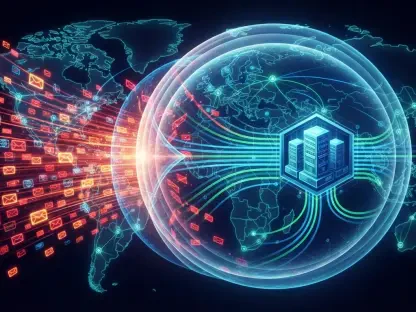

The digital economy now operates on a pulse where the latency of a single heartbeat can determine the difference between a secured transaction and a catastrophic financial breach. Information no longer sits dormant in silos, awaiting the slow churn of a batch process; instead, it flows like a river

The strategic divergence between pre-packaged artificial intelligence software and the underlying frameworks that enable custom agent development has created a complex decision matrix for modern technology leaders. As the digital landscape of 2026 solidifies, the choice between managed applications

Maintaining high standards of digital preservation should be a public good rather than a commercial commodity accessible only to large commercial publishers. In the fast-moving landscape of 2026, the scholarly publishing sector is grappling with the urgent need for more equitable access to the

While telling an agent to prioritize quality may improve the initial output, it often fails to prevent the gradual deterioration of the codebase during subsequent iterations. The rise of agentic workflows in the software development lifecycle has transformed productivity, yet it has also introduced

Transitioning to parallel deployment models became an operational necessity for inDrive after serial processing costs consumed over one hundred and seventy engineering hours within a single six-month period. This staggering loss of productivity stemmed from a massive monorepo containing over

Enterprise data centers must now integrate liquid cooling gear and environmental sensors to manage the heat generated by modern compute clusters. As artificial intelligence and high-performance computing become the standard for corporate operations in 2026, the sheer density of server racks has