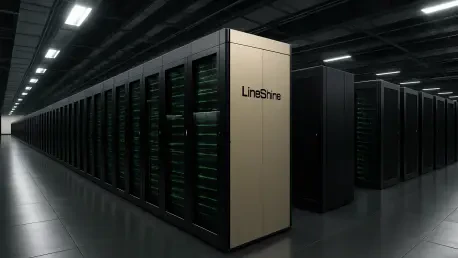
LineShine’s LX2 chiplet-based many-core processors support multiple precisions, including FP64, BF16, and INT8, to serve both traditional physics and modern machine learning. This architectural versatility allowed the system to debut in June 2026 at the National Supercomputer Center in Shenzhen
The all-hazards philosophy adopted by airport management focuses on general system resilience rather than modeling responses to specific, isolated threat types. In the high-stakes environment of 2026, Berlin Brandenburg Airport (BER) has fundamentally restructured its defense architecture to

The Critical CVSS score of 9.3 assigned by Broadcom underscores the potential impact of an exploit that targets the core memory management of the hypervisor. This vulnerability, identified as CVE-2026-59346, originates within the VMXNET3 virtual network adapter, a cornerstone of modern virtualized

The interconnected nature of modern digital services has fundamentally rewritten the rules of corporate cybersecurity, transforming every software interface into a potential gateway for systemic exploitation. Wallarm and Imperva represent the evolution of the Web Application and API Protection

Firewalling conversation history into user-specific partitions ensures that decision agents cannot access private dialogue from other sessions during a request. This fundamental shift from open-context prototypes to strictly governed production environments marks the current landscape of 2026,

Cloud-native backup solutions like Eon utilize agentless architectures to automate the discovery and classification of sensitive data without manual tagging efforts. This shift represents a broader transformation in the industry, where the focus has moved away from checking boxes on a feature